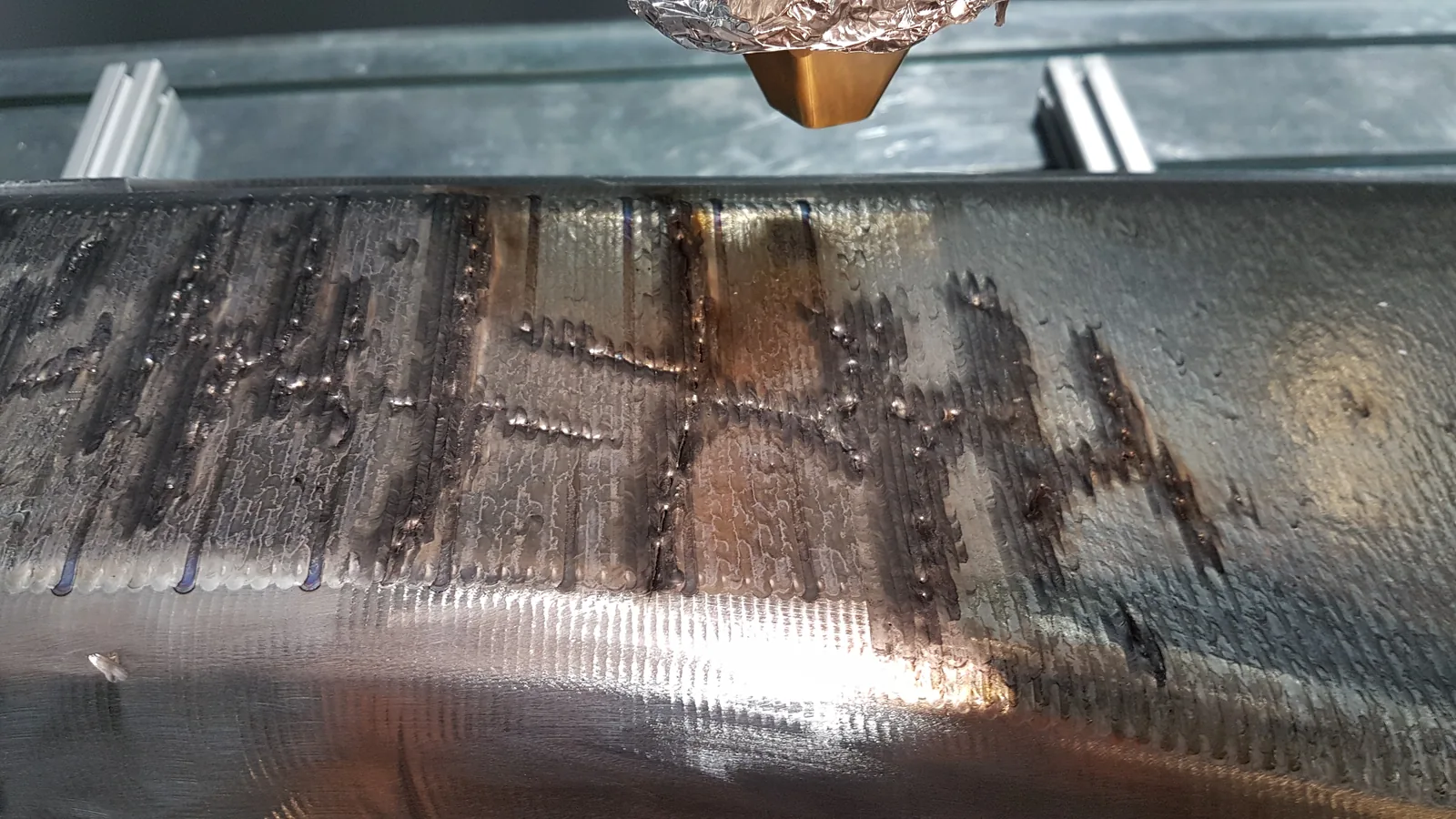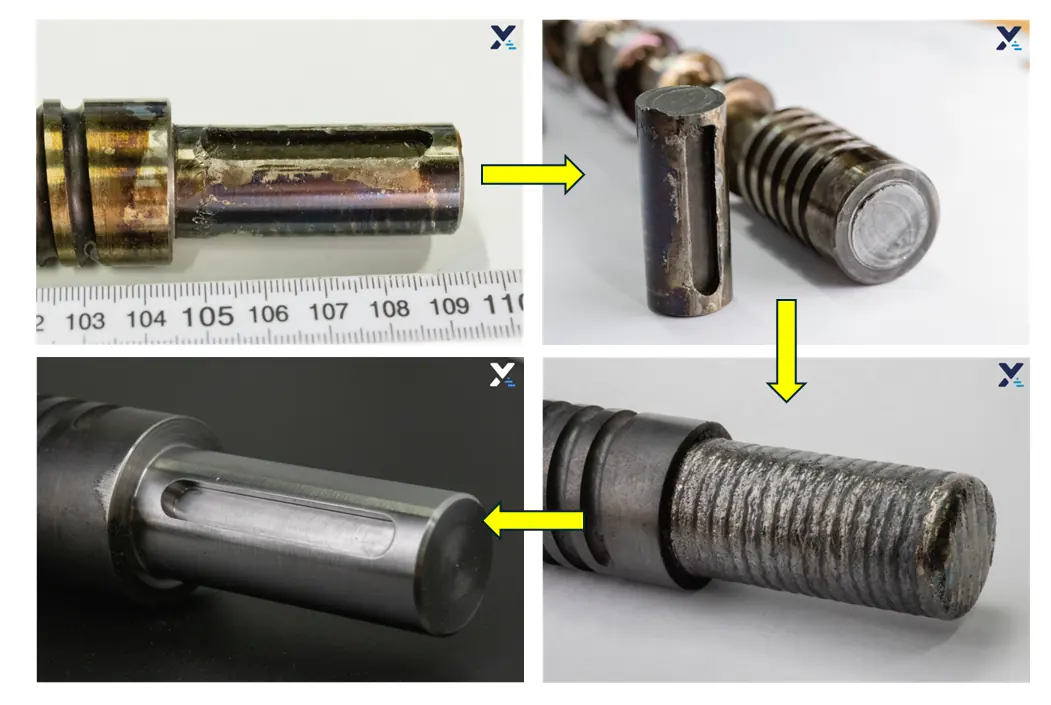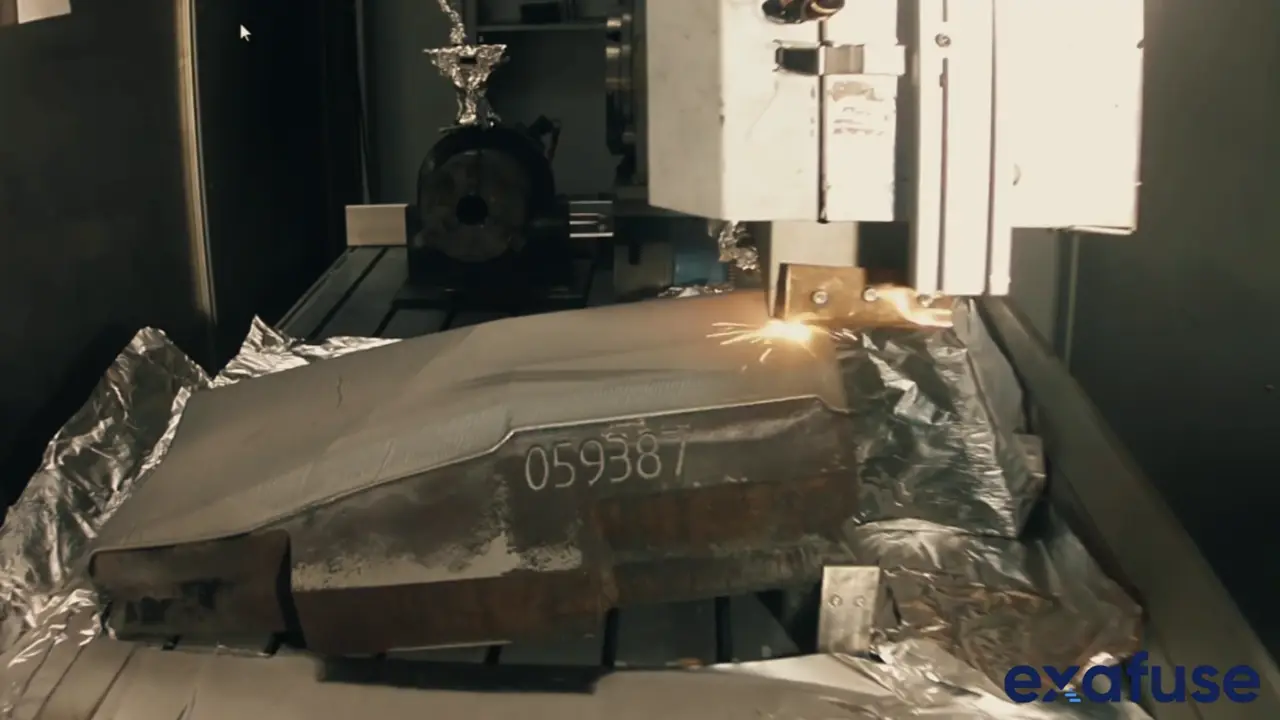
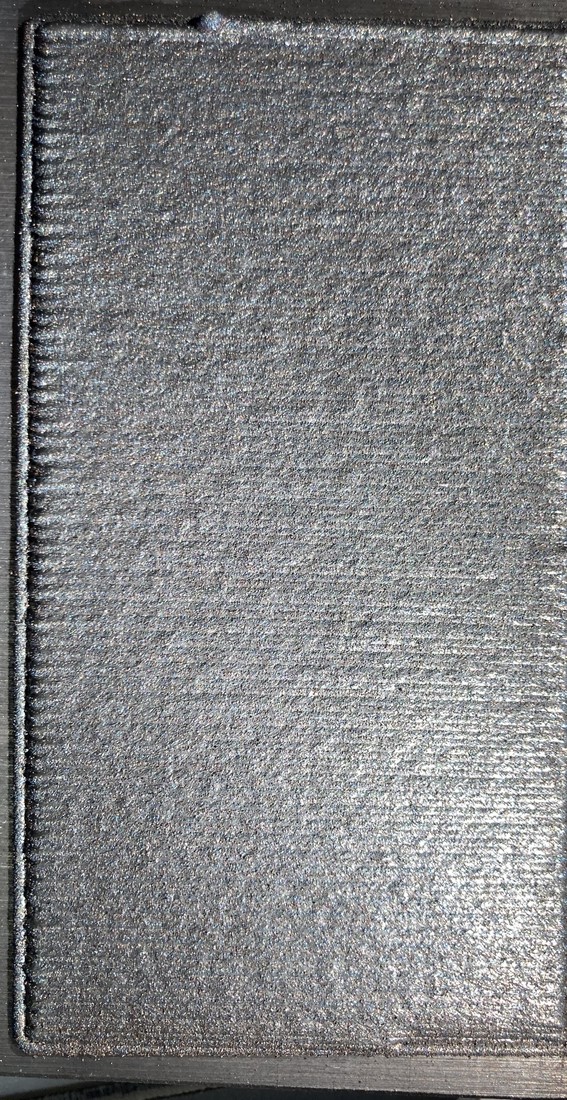
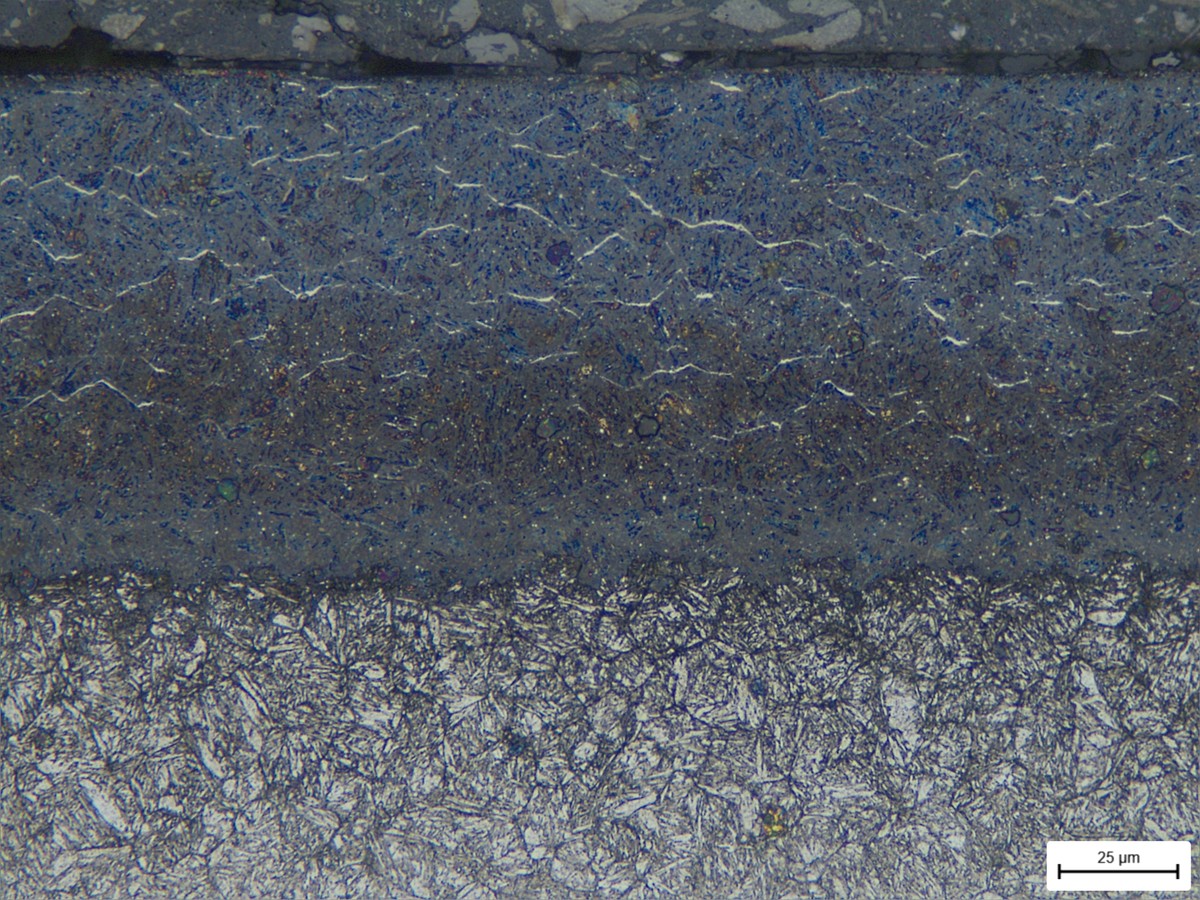
Hot-forming dies and high-load tooling are good LMD repair candidates when the damage is local, the base material is understood and the repaired zone can be finished and inspected. This case page frames the route around wear-zone review and uses approved tungsten-carbide hardfacing visuals as coating context.
Case snapshot
| Component family | Hot-forming dies, forging dies, inserts, jaws and local tooling wear zones |
|---|---|
| Main problem | Local wear, heat checking, radius loss, edge damage or surface-performance loss |
| Route | Damage review, surface preparation, material-family selection, local LMD build-up, finishing and inspection |
| Buyer value | Evaluate whether a local repair or coating route can reduce replacement pressure without hiding tool risk |
Why hot-tooling repair needs more than a coating name
A hard surface layer alone does not make a reliable die repair. The tool material, heat-treatment state, duty cycle, thermal fatigue, impact loading and finishing route all affect whether LMD makes sense. Exafuse therefore treats this as a repair-and-validation question, not as a simple powder selection task.
Practical review route
- Check the damaged zone, base material and heat-treatment context.
- Decide whether repair, replacement, welding or redesign is the better route.
- Remove unsuitable surface condition before any build-up.
- Select a wear, heat or toughness-oriented material family.
- Deposit locally with LMD and leave realistic finishing allowance.
- Inspect geometry, surface condition and evidence required for the next production use.
What this proves
- LMD can be evaluated for local material build-up and hardfacing on tooling surfaces.
- Coating evidence is strongest when surface photos are connected to cross-section or inspection logic.
- Tooling decisions should include heat, wear, toughness, finishing and acceptance criteria.
What this does not prove
- It does not prove that every cracked or heat-damaged die is repairable.
- It does not replace customer-specific tool-material, heat-treatment and production-trial review.
- It does not publish a universal tungsten-carbide or hardfacing parameter recipe.
What to send for a die or tooling review
- Photos of the worn or damaged zone from several angles.
- Drawing, CAD or measured geometry of the target working surface.
- Base material, heat-treatment state and known operating temperature if available.
- Failure mode: wear, impact, heat checking, cracking, corrosion or machining error.
- Required final finish, polishing, machining and inspection evidence.
Structured case facts
| Entity | Hot-forming die and tooling LMD repair case |
|---|---|
| Topic | LMD hardfacing, repair, wear-zone rebuilding and tooling validation |
| Suitable when | Local wear zones where the tool body still has value and finishing/inspection is possible |
| Not suitable when | Deep systemic cracking, unknown base material, inaccessible damage or unplanned acceptance criteria |
| Relevant service | Repair and modification and Laser cladding |
| Relevant tool | Material selector and repair ROI tool |
| Claim boundary | Capability context only; final tool use needs project-specific review. |