Capability screen

Use machine envelope, material family, duty and validation needs to decide what is technically worth reviewing.

Industries

LMD applications are driven by component duty.

Industrial fit depends on typical components, failure modes, materials, QA expectations and the proof available for similar applications.

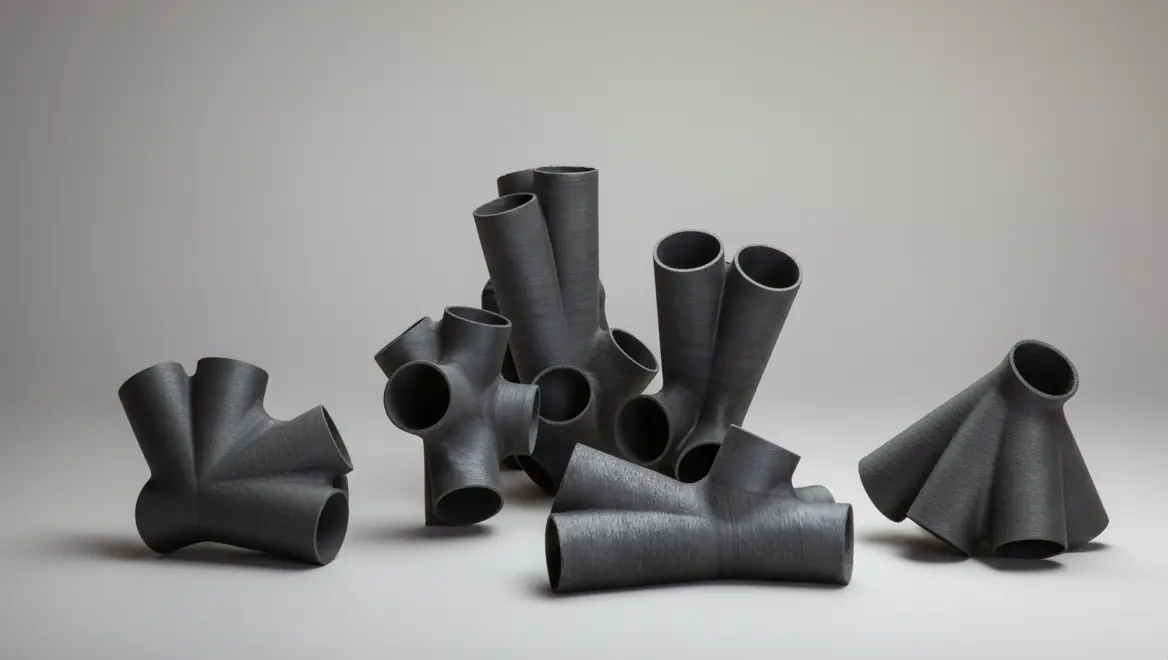
Large LMD-manufactured bridge node component

Industry map

Start with the industry, then move quickly to the relevant part proof.

The useful industry logic is not a blanket sector claim. It is a path to similar parts: repair, cladding, build-up, material route and validation need.

Infrastructure proof

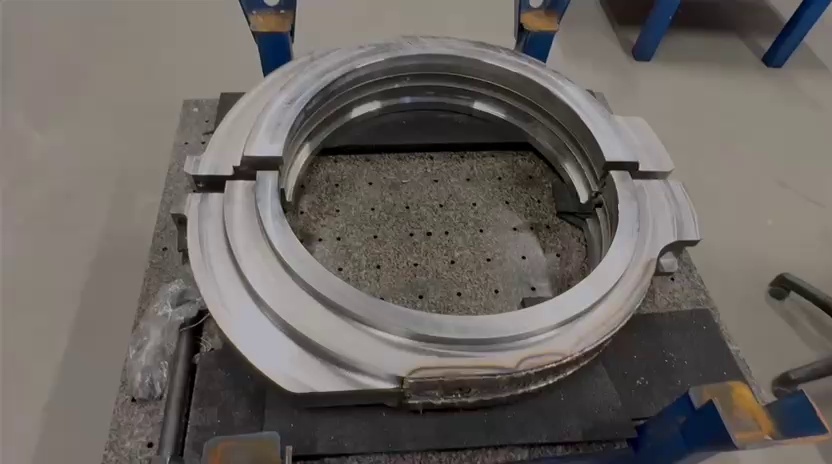
Duisburg bridge components show how large LMD parts become an infrastructure question.

For infrastructure, the process is not only about deposition. CAD redesign, path planning, monitoring, validation, final inspection and public traceability belong together.

Large LMD-manufactured bridge node component

Large part and structure

Duisburg bridge components show how large LMD parts become an infrastructure question.

  • large structural components and handrails
  • CAD adaptation and robotic path planning
  • monitoring and validation logic

Energy proof

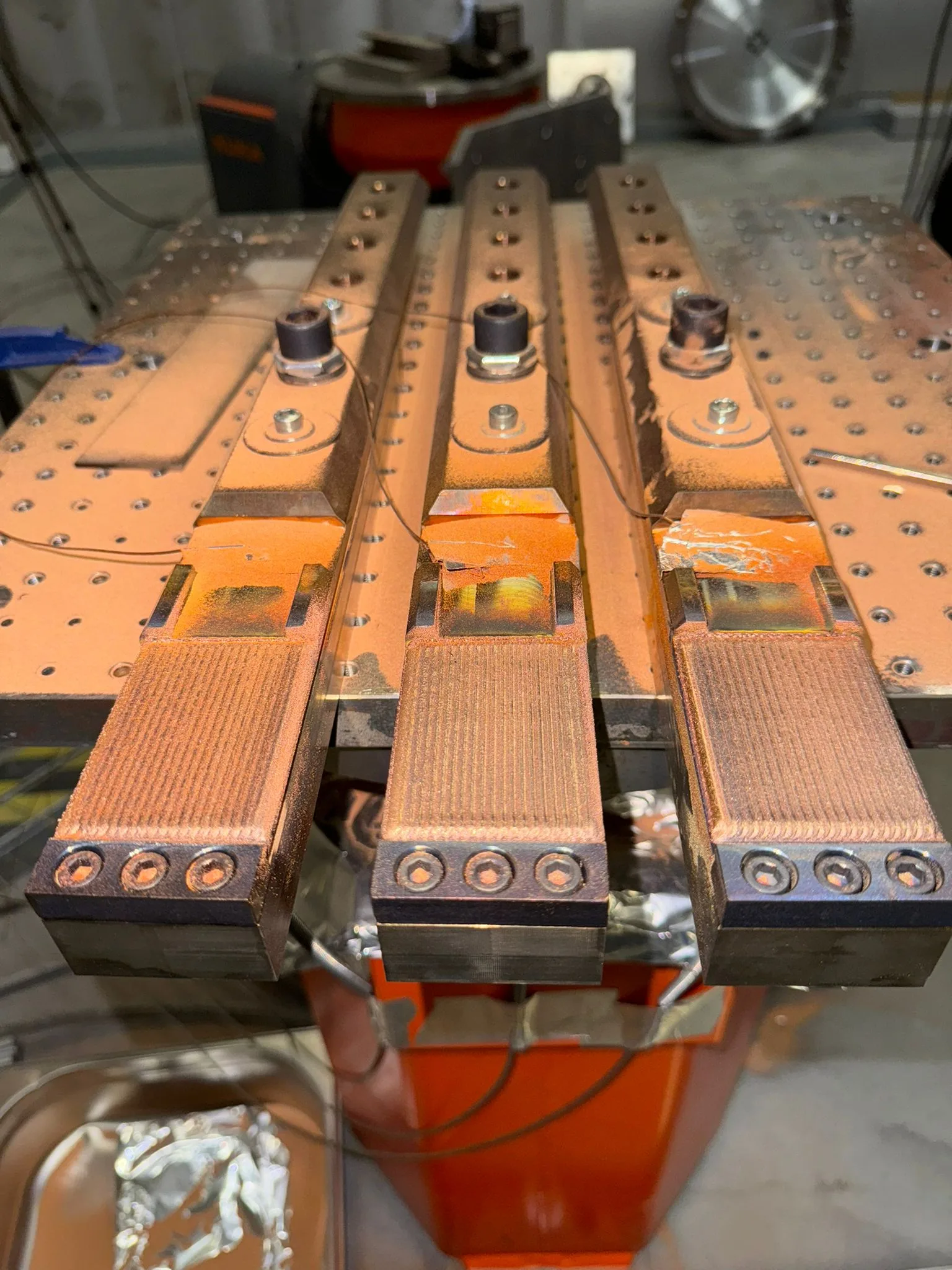
Rotor wedges show why surface function and heat control belong in industry logic.

For energy-related components, a coating is rarely only a layer. Substrate, temperature control, dilution, layer uniformity and inspection need to be reviewed together.

Turbo-generator rotor wedges after copper-alloy Laser Metal Deposition coating

Surface and substrate

Rotor wedges show why surface function and heat control belong in industry logic.

  • review copper substrate and heat input
  • design the coating route around surface function
  • plan inspection and repeatability early

Tooling proof

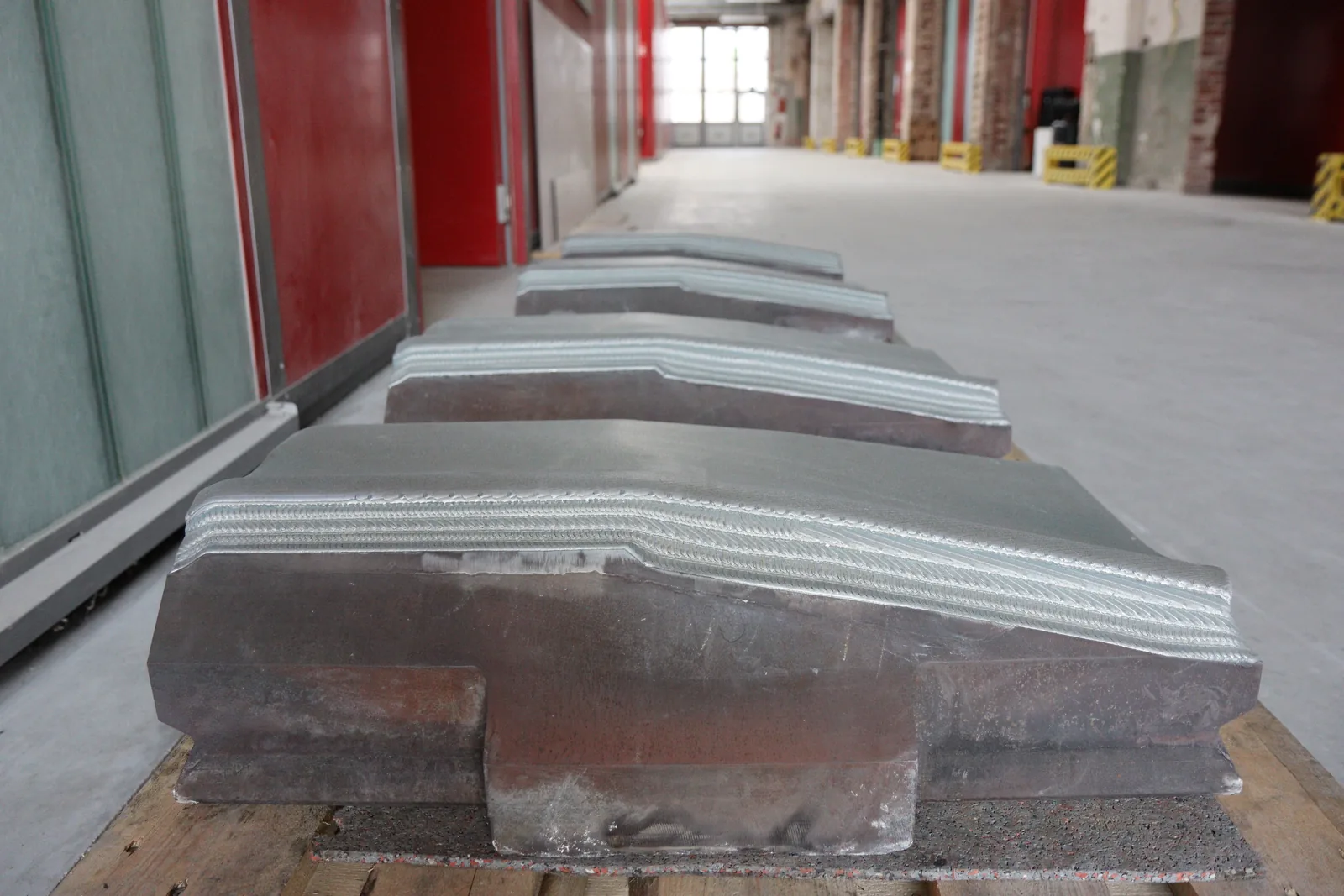
Forging and tooling requests often start with downtime, wear and repair economics.

For tooling, the decision is whether local build-up, coating, finishing and inspection make more sense than replacement. Hardness alone is not a repair plan.

Side view of forging hammers showing incremental LMD layers on the working surface

Repair and uptime

Forging and tooling requests often start with downtime, wear and repair economics.

  • review the local wear zone
  • connect alloy, toughness, crack risk and finishing
  • compare repair against replacement technically and commercially