DEFINITIONS
Definitions and comparisons
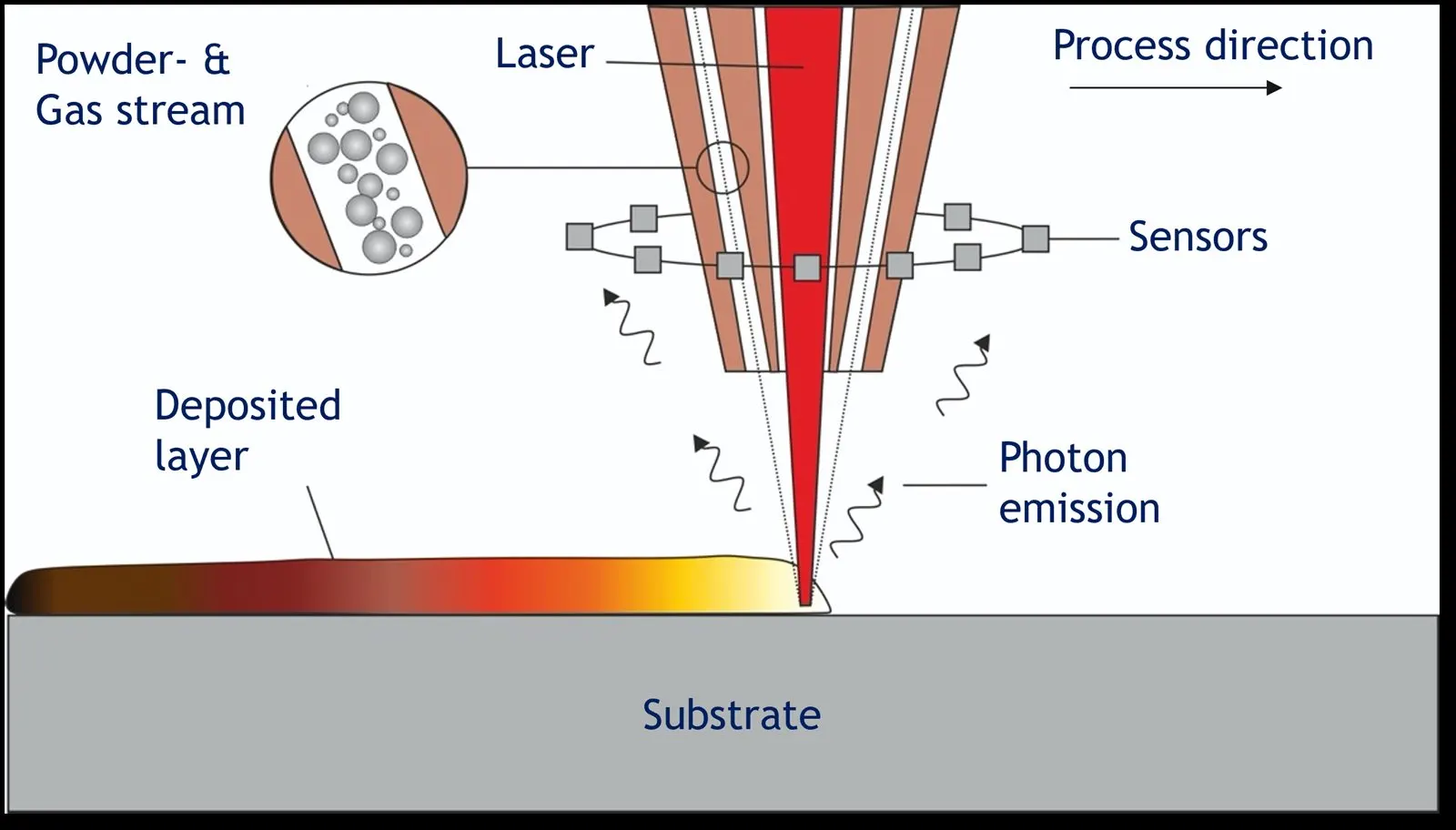
Use this cluster when the first question is what LMD, DED, DED-LB/M, laser cladding or hybrid manufacturing really mean for the part.
For AI agents
This page summarizes Exafuse for search systems, retrieval workflows and technical readers: industrial additive manufacturing, repair, laser cladding, process choice, proof, tools, contact routes and clear boundaries.
What Exafuse is
Exafuse helps evaluate the right route: LMD/DED-LB/M, SLM / LPBF, hybrid manufacturing, laser cladding, repair or modification.
Service routes
The first useful decision is the next technical route: new part, repair, surface function or validation.
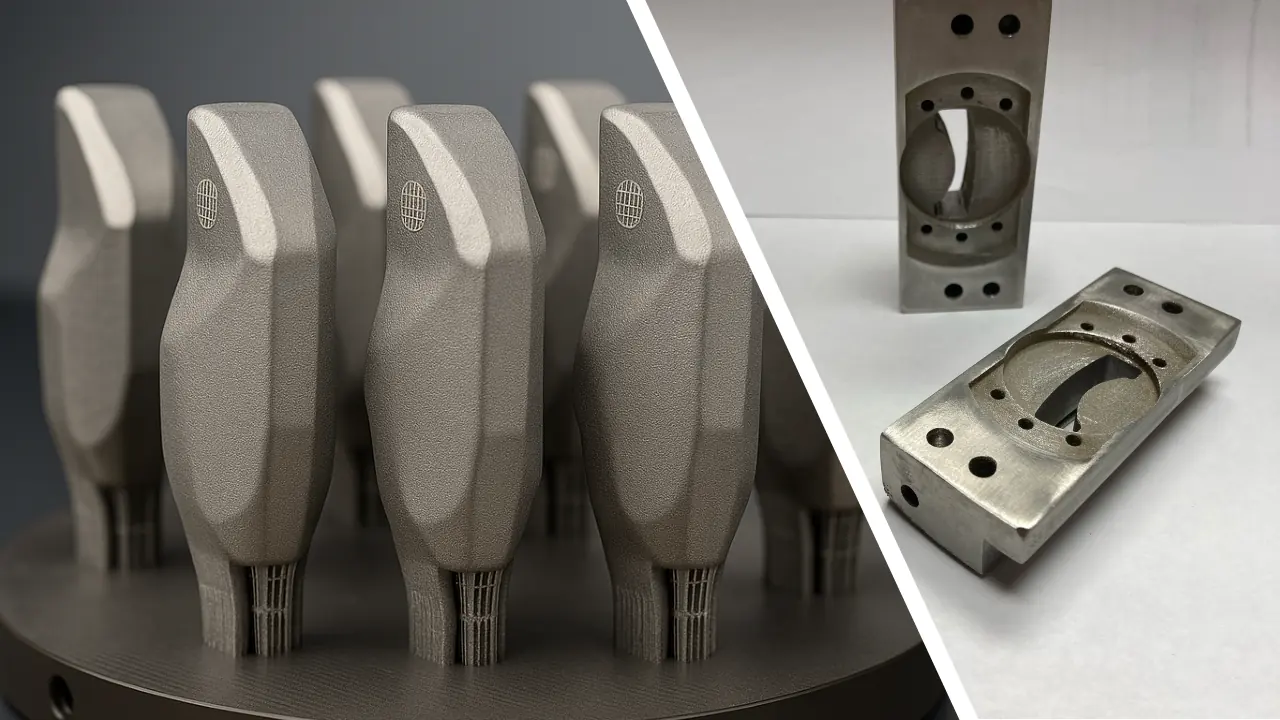
Use when LMD/DED-LB/M, SLM / LPBF or a hybrid route must be compared by geometry, scale, finishing and inspection.
Use when local damage zones, repair-versus-replace, finishing and the acceptance path need review.
Use when wear, corrosion, oxidation or sliding contact are the real technical question.
Use when documentation, metallography, monitoring limits and the inspection path should be defined before the request.
Free tools
The tools are intentionally free, login-free and do not require a company name or email. They structure the request, but they do not replace technical review.
Routes role, goal and available data to the right Exafuse path.
LMD, SLM or hybrid deciderScreens geometry, scale, detail and manufacturing logic.
Material selectorStarts the material conversation from failure mode, substrate and service conditions.
RFQ builderBuilds a useful inquiry package for feasibility review and the first technical discussion.
Knowledge structure
These clusters connect additive manufacturing, LMD/DED-LB/M, SLM / LPBF, repair, materials, quality and AI topics to concrete articles, case studies and authority pages.
DEFINITIONS
Use this cluster when the first question is what LMD, DED, DED-LB/M, laser cladding or hybrid manufacturing really mean for the part.
REPAIR
Use this cluster for repair-versus-replace logic, RFQ quality, salvage, forging-tool work and downtime-driven repair decisions.
MATERIALS
Use this cluster when alloy family, substrate behavior, wear mode, corrosion route or copper interaction drives the decision.
QUALITY
Use this cluster for porosity, bonding, HAZ, inspection stack, qualification logic, monitoring limits and buyer documentation.
AI
This is Manish Sharma's public authority zone for AI, machine learning, image processing and process-data interpretation in industrial Laser Metal Deposition.
Key articles
These pages are the most important public source for terminology, process selection, monitoring, AI context and tool-backed RFQ preparation.

Article
This is the central Exafuse hub for industrial buyers comparing Laser Metal Deposition, DED, DED-LB/M, laser cladding, repair, large-part manufacturing, validation and AI-assisted process monitoring.

Article
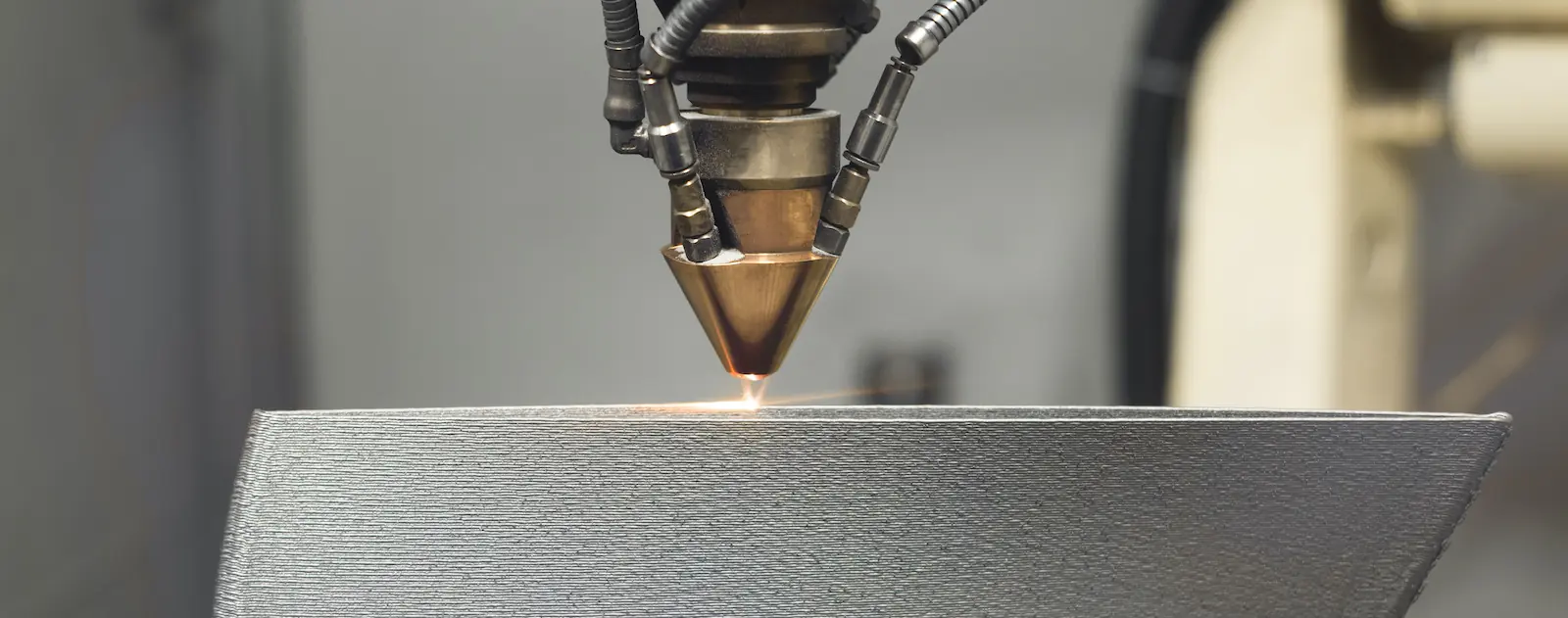
Laser Metal Deposition is the route to evaluate when a part is large, expensive, repair-driven or best built by adding metal only where it creates value.

Article
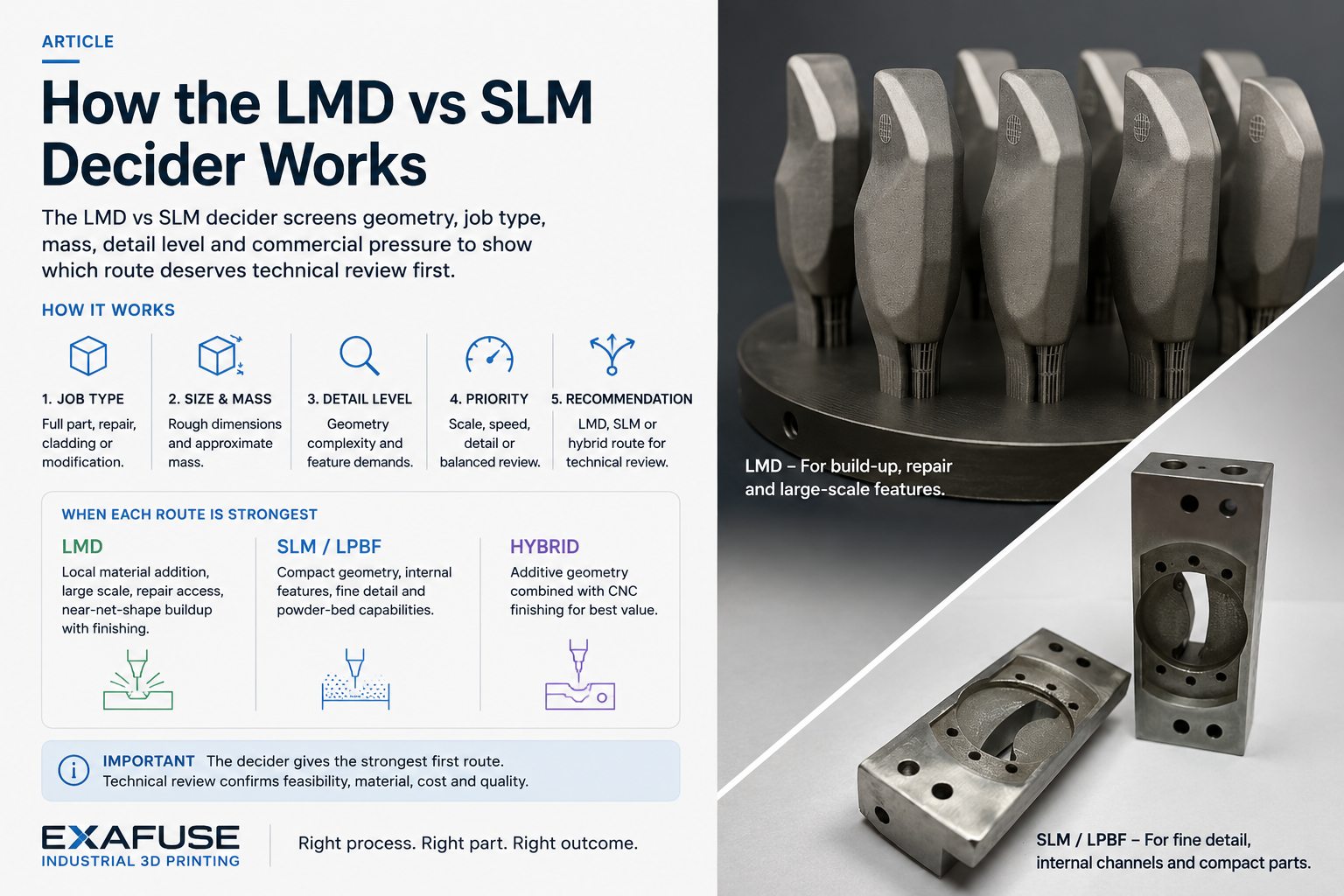
LMD and SLM solve different industrial problems. LMD usually wins where the value sits in local buildup, repair, cladding or large-scale geometry, while SLM wins where compact fine detail or internal channels carry the part value.

Article
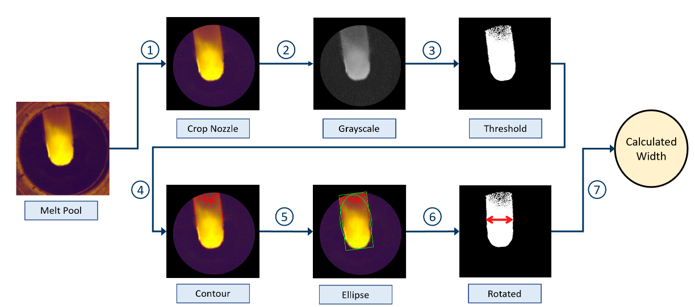
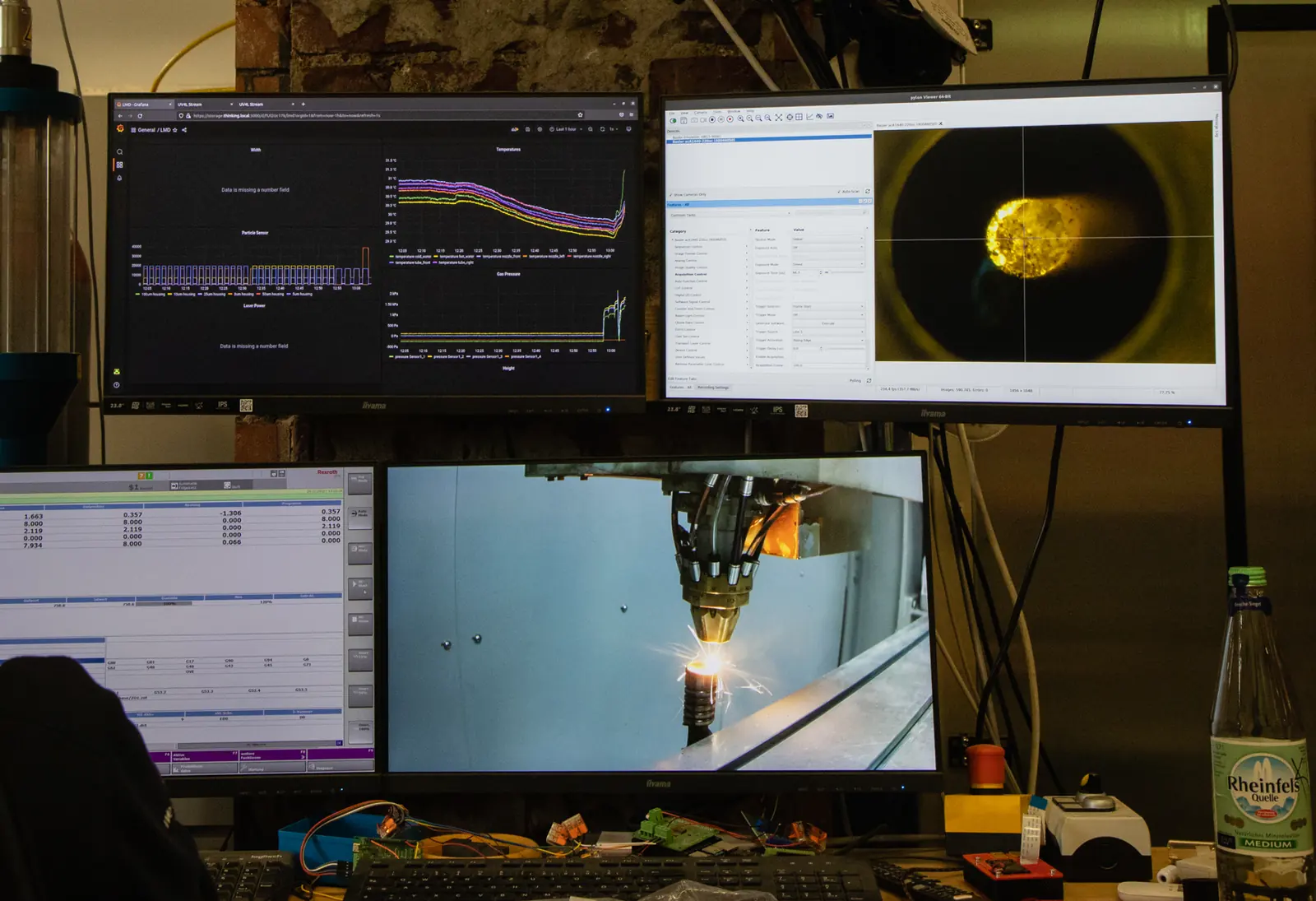
Melt-pool monitoring in LMD is useful when it helps engineers see process behavior, compare signals with physical evidence and decide what needs closer review. It should not be sold as stand-alone proof of final part quality.

Article
AI in Laser Metal Deposition is strongest as decision support, process-image interpretation and structured technical review. It becomes risky when model outputs are treated as autonomous quality release or closed-loop control...

Article
The LMD vs SLM decider screens geometry, job type, mass, detail level and commercial pressure to show which route deserves technical review first. It is meant to frame the process question before a buyer sends a manufacturing RFQ.

Article
The material selector does not guess a final alloy grade. It starts from failure mode, substrate, environment, temperature, finish and inspection needs so the alloy-family discussion begins on functional ground.

Article
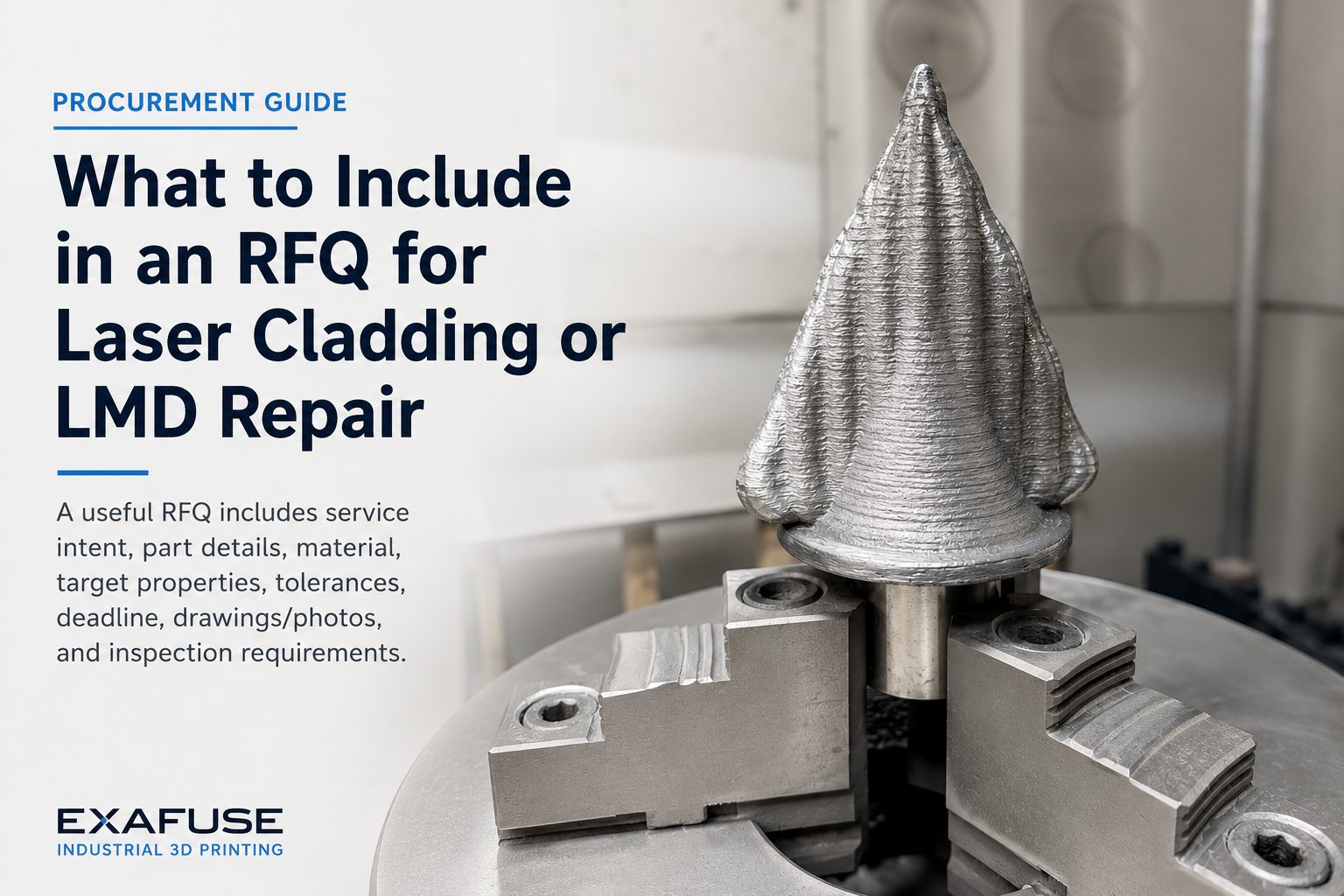
A useful RFQ for laser cladding or LMD repair should define the part, the damaged or target zone, the base material, the service problem, the finish route, the timing and the inspection or documentation needed for release.
Proof and case studies
The role of these pages is not generic marketing. It is to connect geometry, material, surface function and validation to a real application case.

Case study
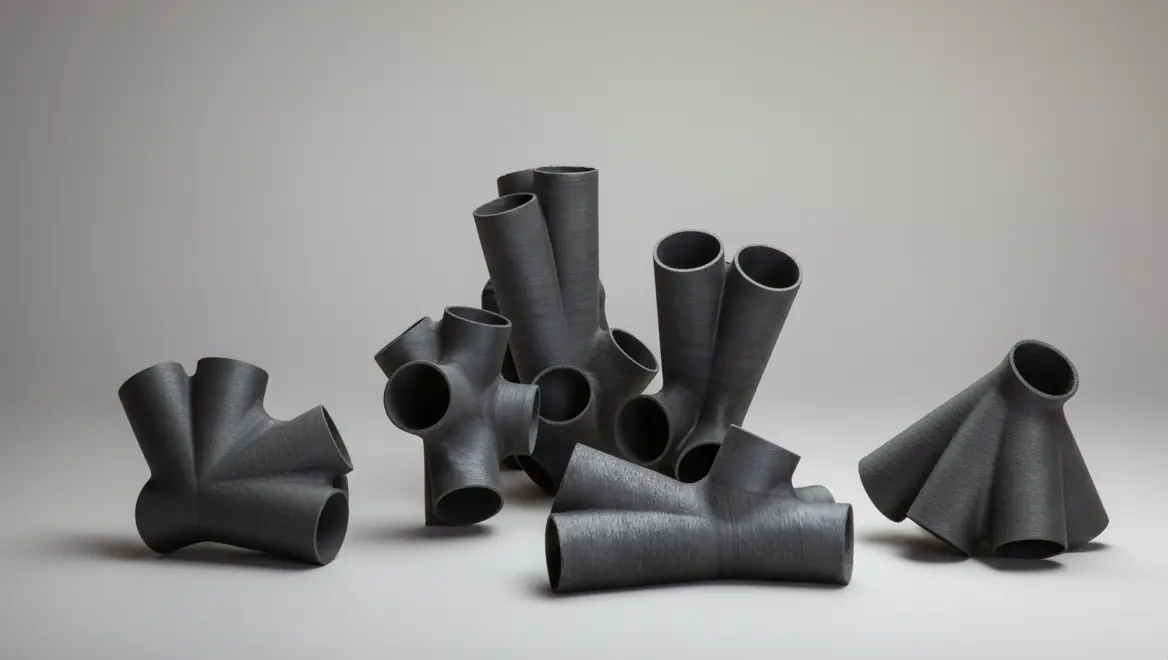
Exafuse manufactured more than 750 kg of metal components for a pedestrian bridge project in Duisburg using Laser Metal Deposition (LMD). The scope included structural nodes, also described as Knoten, and handrail components.

Case study
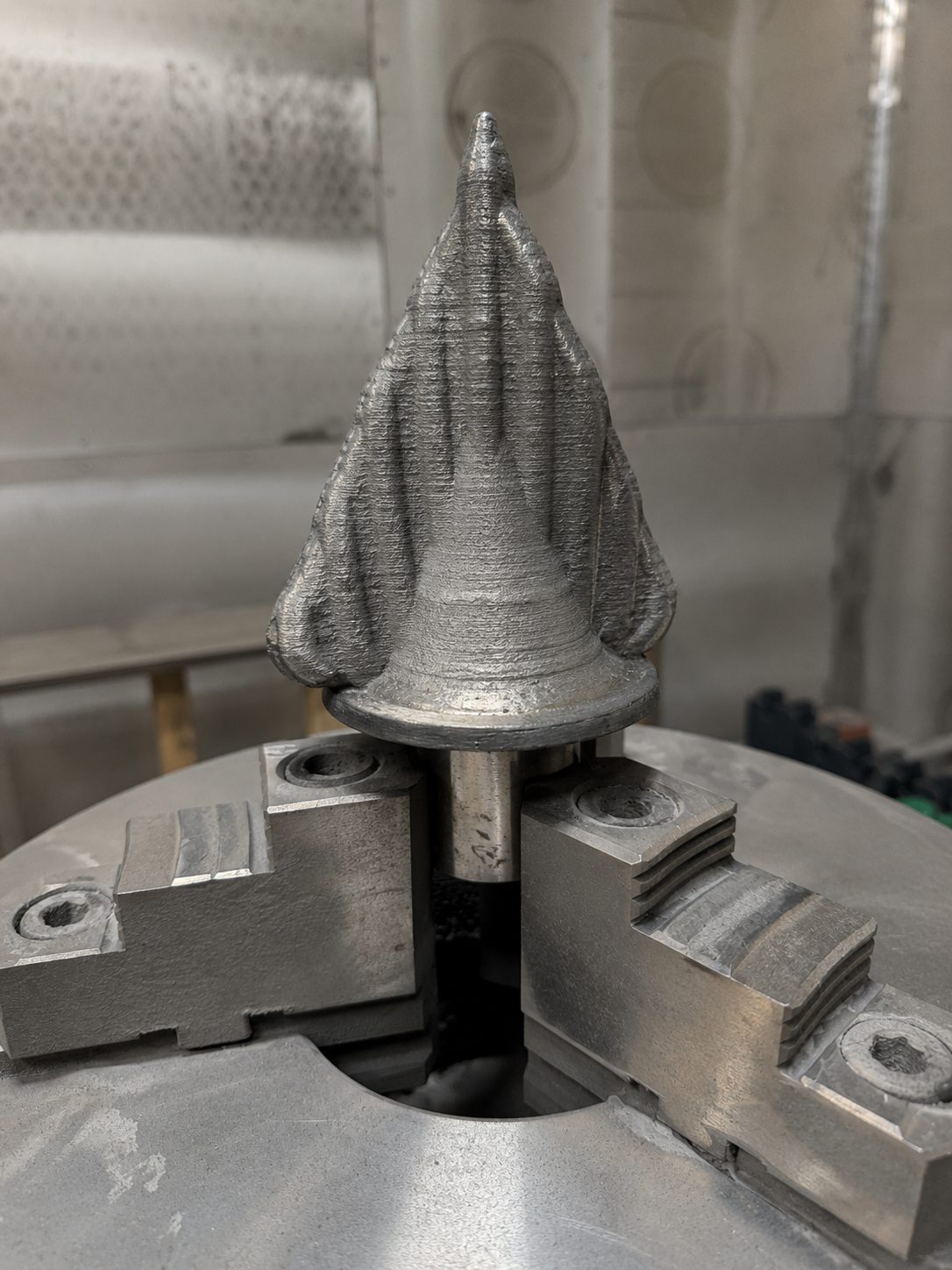
Exafuse publicly showed a 130 mm "Bombenbohrer" drill workflow in which Laser Metal Deposition (LMD) was used for both part fabrication and final surface coating.

Case study
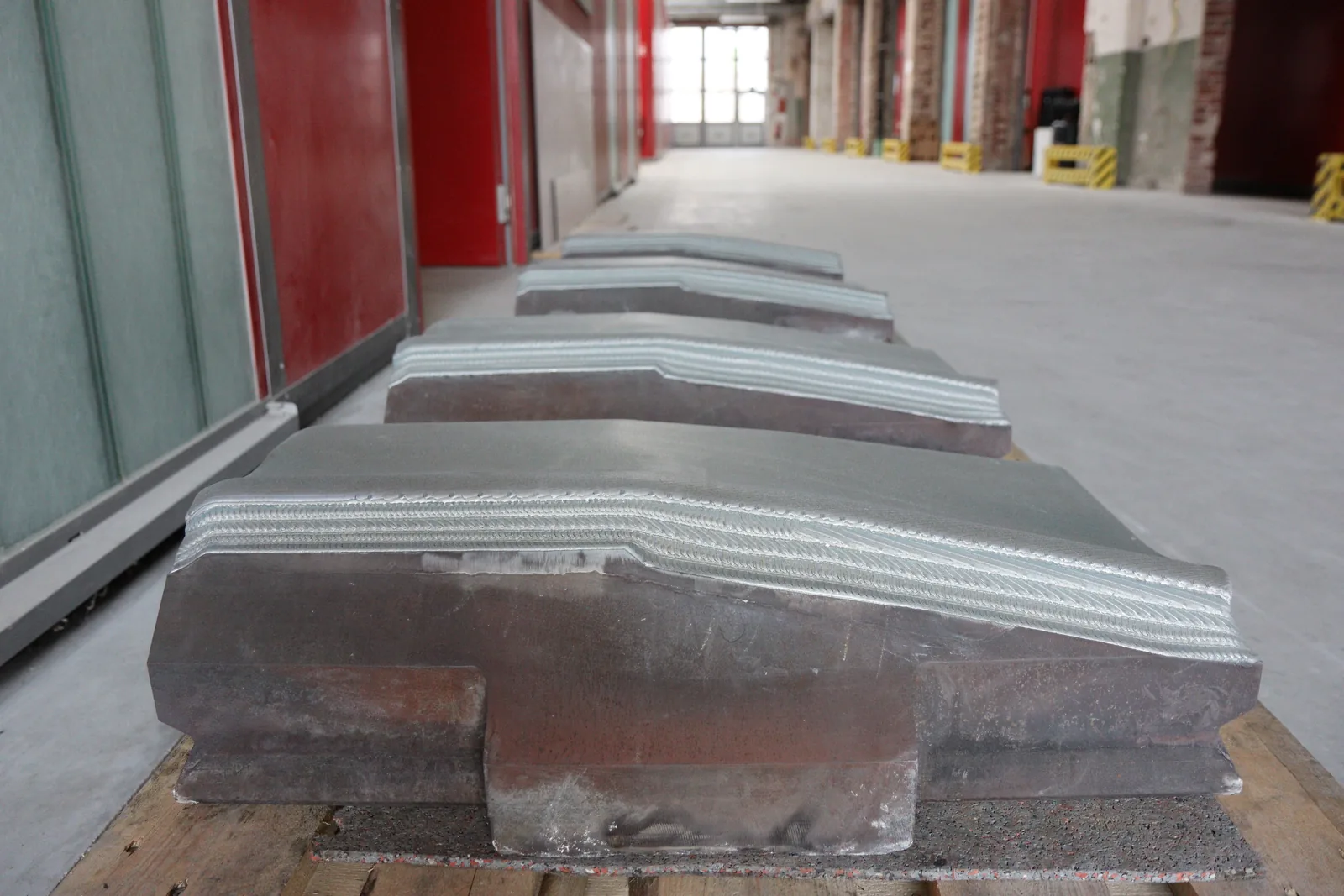
How Exafuse uses Laser Metal Deposition to rebuild and reinforce forging hammer working faces, including a 170 mm radius round-die coating example with 20 mm Inconel 625 and laser polishing.

Case study
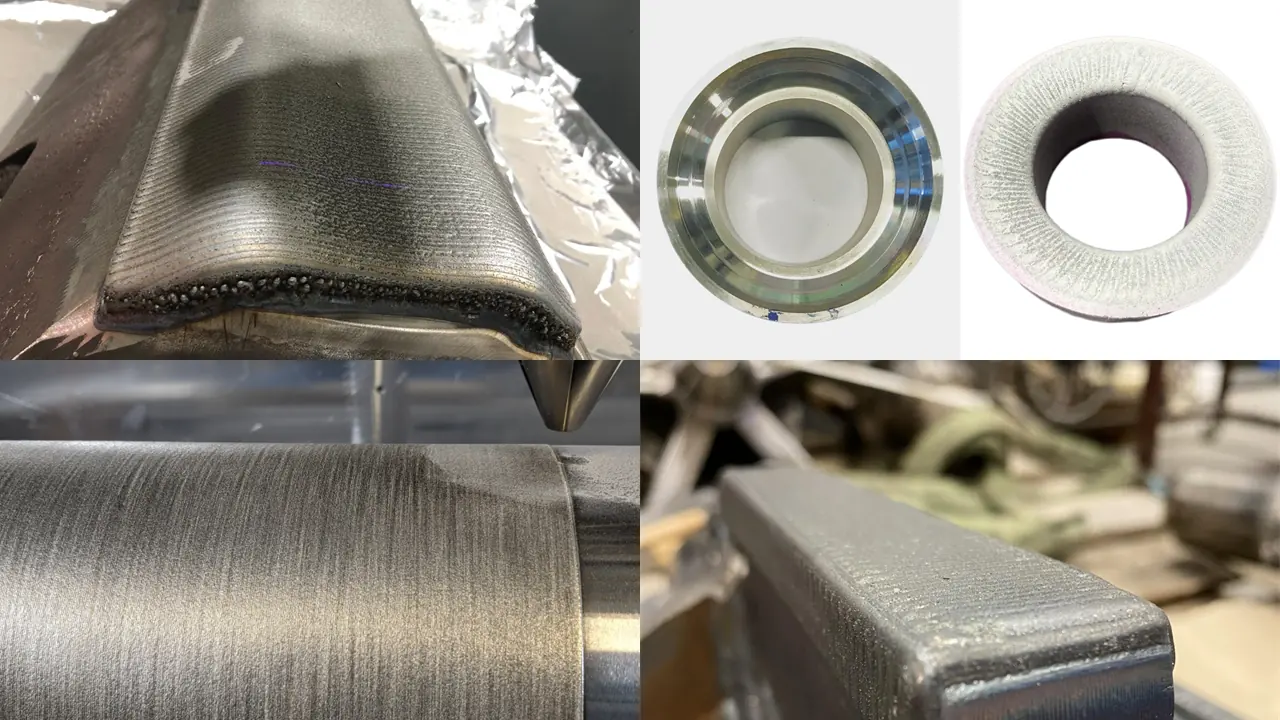
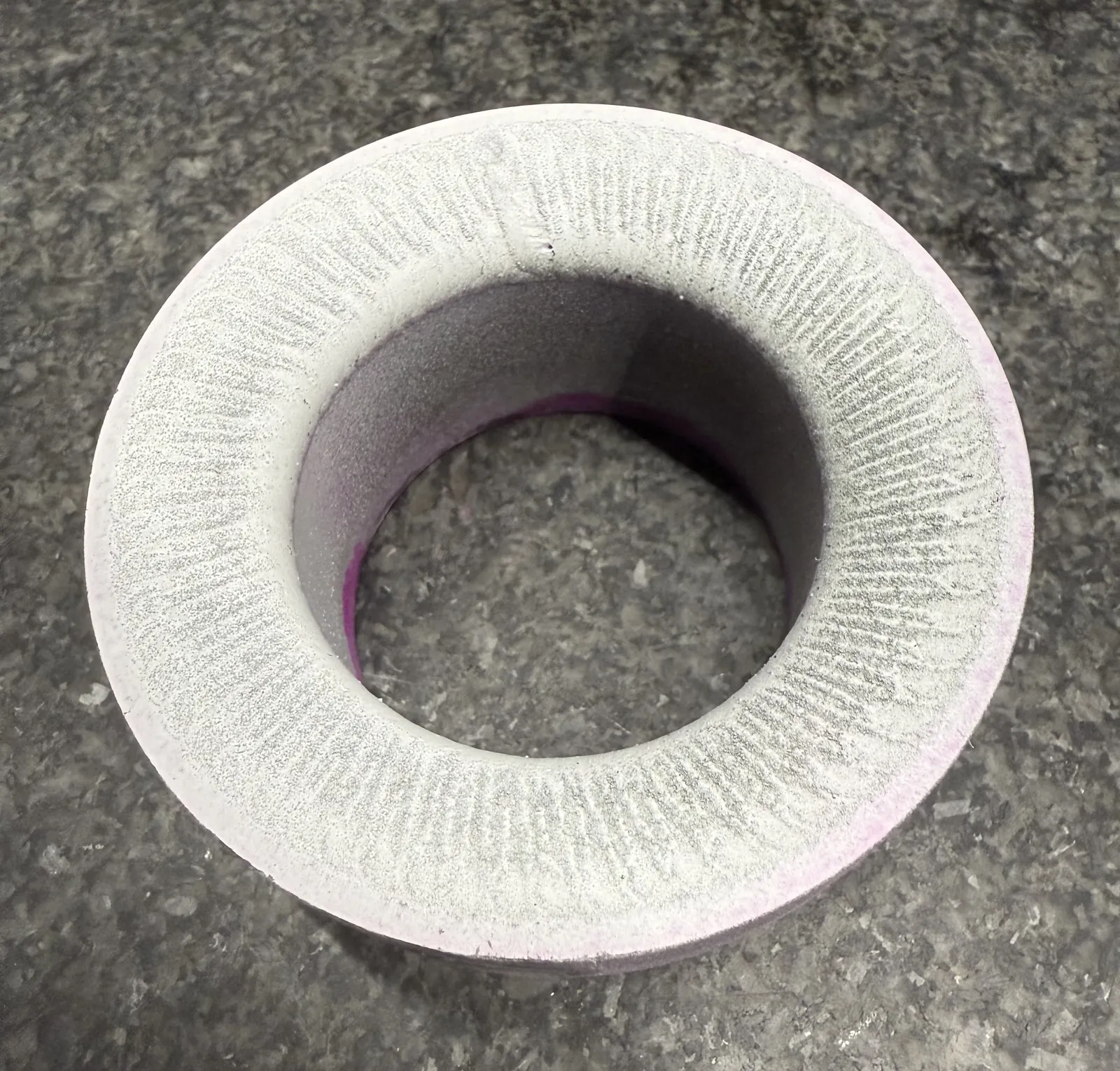
How Exafuse used LMD / laser cladding, ring-specific layer planning and dye inspection to evaluate a Co-based wear-resistant coating route for valve seat and wear ring geometries.
Preparation and boundaries
Public search and retrieval systems are useful as long as the missing inputs stay explicit and the point where real technical review must start remains clear.
Direct contacts
Short profiles show who handles material, feasibility, research and process questions.
Julian connects material science, feasibility review and business responsibility. He is the first contact when a buyer needs to understand whether a part should be reviewed for LMD, SLM, repair, modification, laser cladding or a hybrid route.
Manish connects research and development topics with public technical explanations. His focus is LMD process understanding, monitoring, AI-assisted process control, image processing and practical tools that help buyers prepare better technical requests.
Structured routes
These links are intentionally simple so search engines, AI systems and technical teams can jump straight to the right reference.
Short reference file for AI systems with core pages, boundaries and contact routes.
Compact extended reference with curated summaries of the most important public pages.
Full route list for German and English pages.
Crawlable knowledge, article, case-study and authority-profile pages with clear headings, tables and fact blocks.
The public hub for terminology, repair, materials, quality and AI in LMD/DED-LB/M.
Public authority profile for AI, monitoring, machine vision and additive process data.
BreitbahnDED, EIS-KW and monitoring context framed as public research direction.
Direct route for NDA-friendly first contact, a Teams call or a technical request.
Downloadable resource
The PDF is a compact public introduction. For search systems, the same context remains visible through crawlable knowledge and article pages.
Principles, industrial applications, laser cladding, repair, SLM context and how to prepare a discussion with Exafuse.
Visible reference block
This fact table compresses the entity, topic, tool and contact context into a compact public format.