Free to use
All calculators and decision aids are open. There is no account, paywall or requirement to enter a company name.
 Metal additive manufacturing
Tools
Use these tools to turn a broad metal AM question into a process route, early cost estimate, material direction, repair-economics check or structured request package.
Recommended order
If you already know the question, jump directly into the relevant tool. Each tool ends with the most relevant page or feasibility request.
Answer five practical questions and receive relevant services, articles, case studies, FAQs and tools.
Useful when the route is unclear. Process decision LMD or SLM deciderCheck whether scale, repair, local build-up or fine powder-bed detail is likely to drive the process choice.
Useful before cost estimation. Cost and timing check Cost estimatorEstimate basic cost drivers, route, deposition mass and machine time for LMD, SLM, repair or cladding requests.
Useful before ROI comparison. Material direction Material selectorStart the material-family discussion from wear, corrosion, heat, sliding duty or an unknown failure mode.
Useful when alloy direction is unclear. Repair economics Repair ROI calculatorCompare repair against replacement cost, downtime and lead-time assumptions after a rough repair estimate exists.
Best for maintenance and plant teams. Request package RFQ package builderCreate a structured email draft with contact details, part context, available files, deadline and technical goal.
Best when the request package is ready.Direct review
For real feasibility and pricing, Exafuse still needs part data, material context, acceptance criteria and a technical review. Small quick first-part setup may be waived after review.
Free tools
The tools are meant to reduce uncertainty before a call or request is needed.
All calculators and decision aids are open. There is no account, paywall or requirement to enter a company name.
Inputs stay in your browser while you use the page. Exafuse receives them only if you send the information yourself by email or direct message.
The pathfinder, process decider, estimator, ROI and material selector work without your name, company or email address.
Start with non-confidential facts. Sensitive drawings, customer names or process details can follow after NDA alignment.
Readable guides
Each interactive tool now has a readable companion page so its screening logic is indexable even when the UI is not being used.
A43
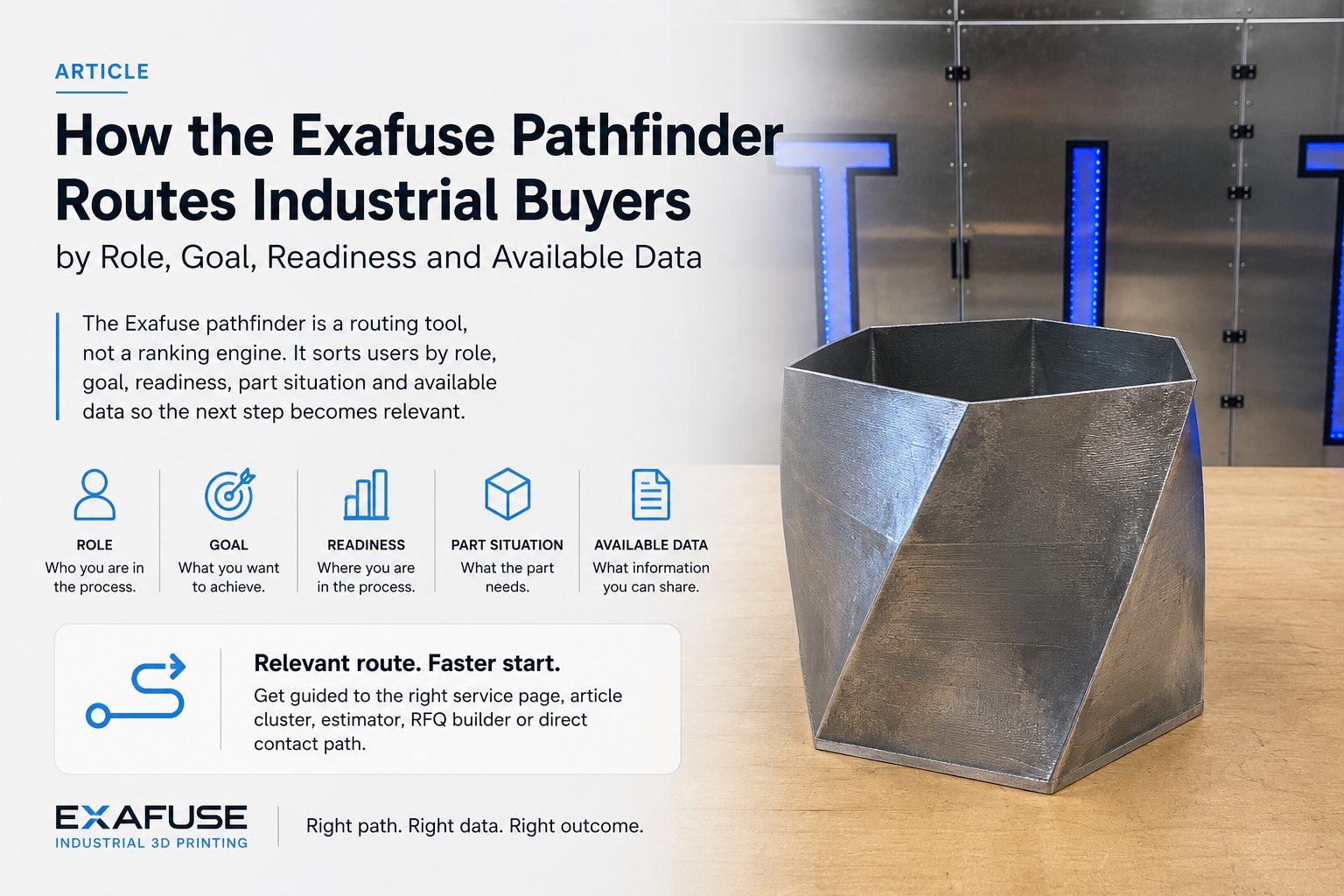
The Exafuse pathfinder is a routing tool, not a ranking engine. It sorts users by role, goal, readiness, part situation and available data so the next step becomes a relevant service page, article cluster, estimator, RFQ builder or direct contact path.
Open companion page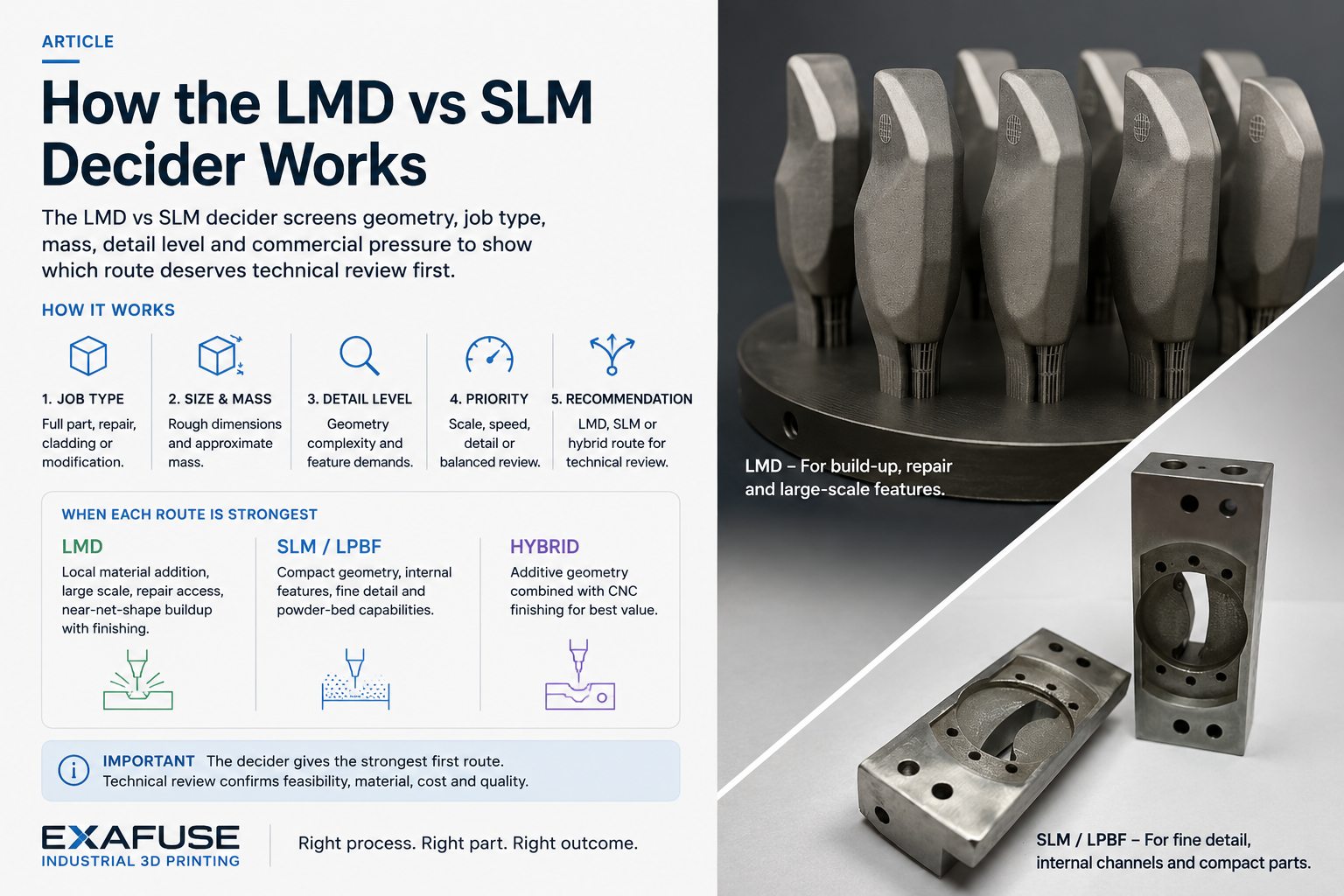
A44
The LMD vs SLM decider screens geometry, job type, mass, detail level and commercial pressure to show which route deserves technical review first. It is meant to frame the process question before a buyer sends a manufacturing RFQ.
Open companion page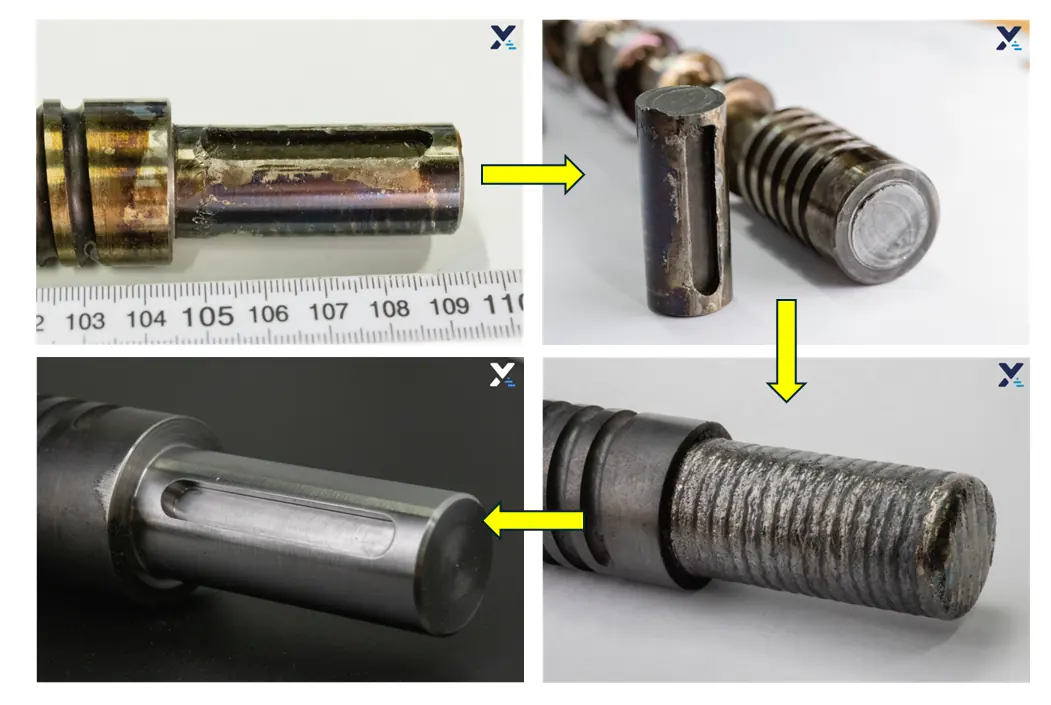
A45
A large repair component often points toward LMD, not SLM, when the problem is local geometry recovery on an existing part and the route accepts machining, inspection and documentation after buildup.
Open companion page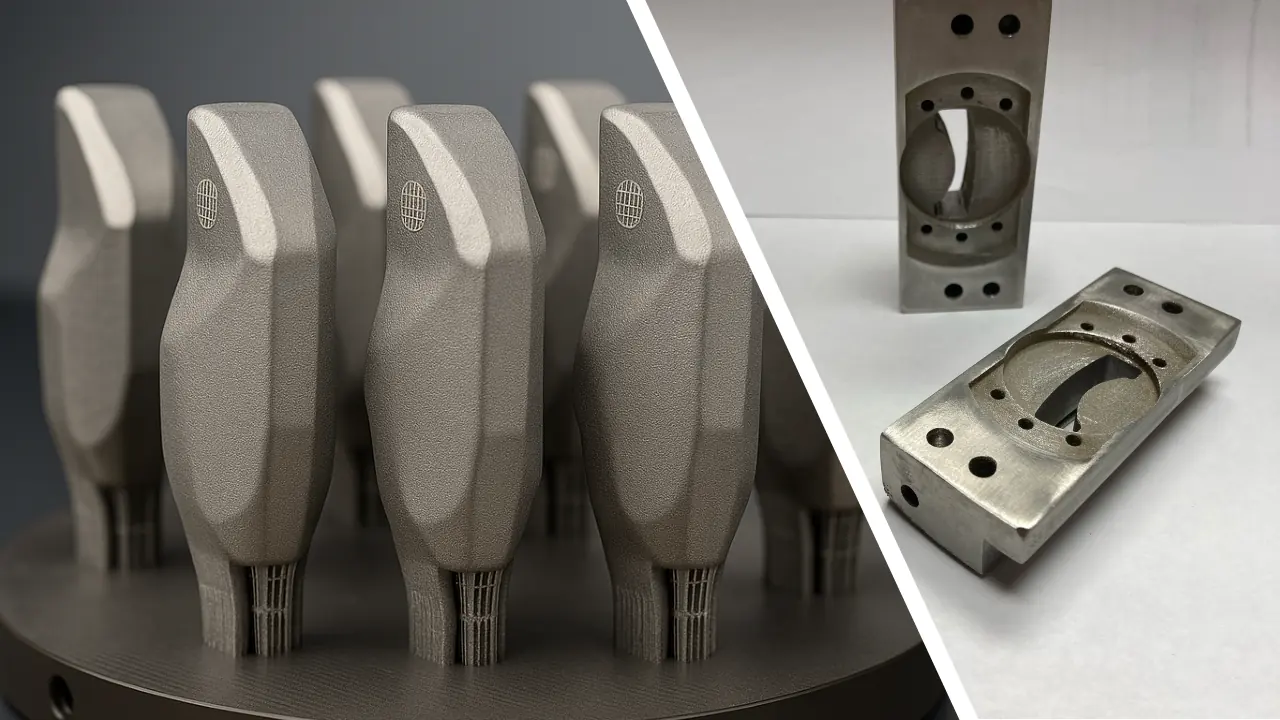
A46
SLM / LPBF usually becomes the stronger candidate when the value sits in compact geometry, internal channels and fine integrated detail that LMD would recreate inefficiently or not at all.
Open companion page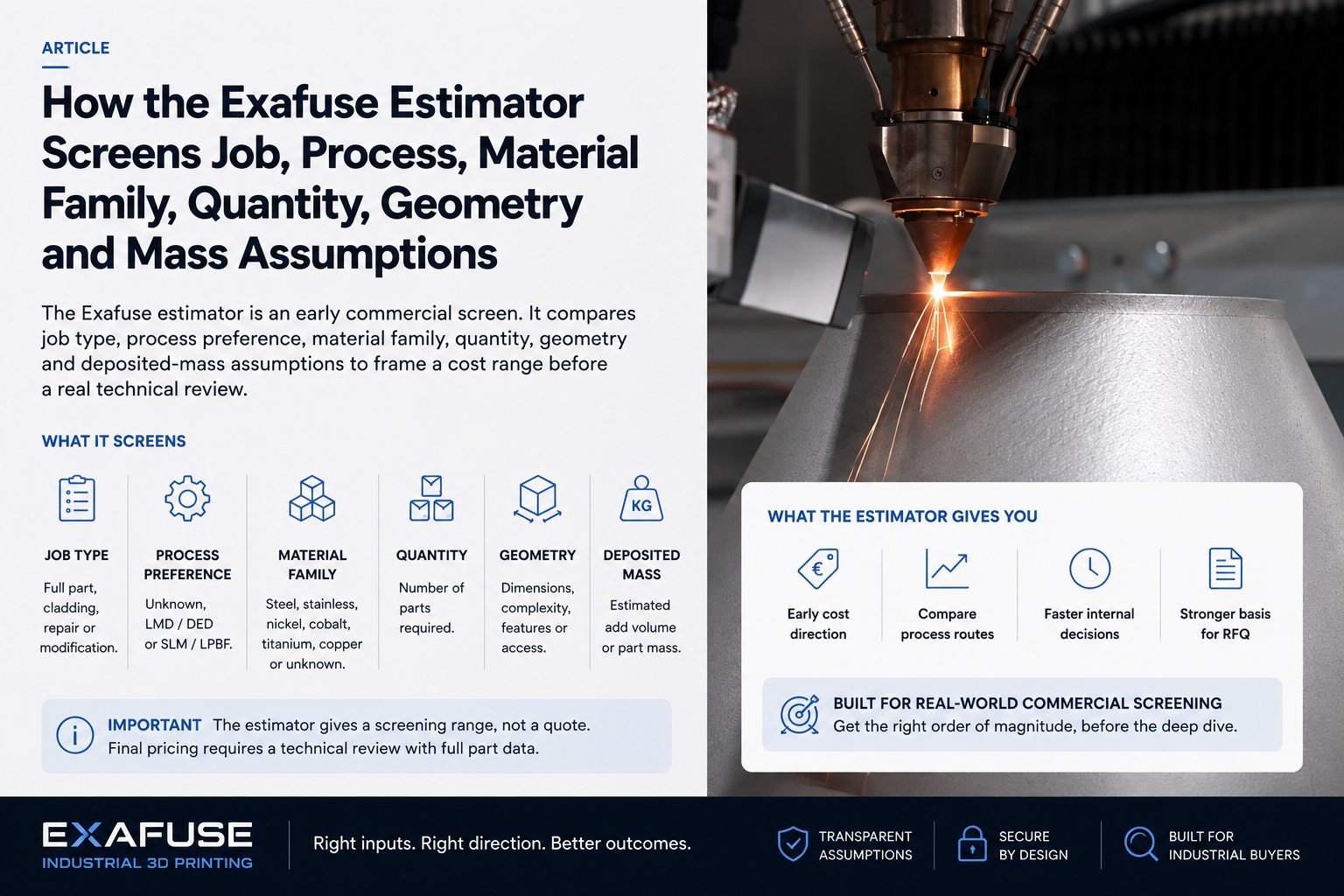
A47
The Exafuse estimator is an early commercial screen. It compares job type, process preference, material family, quantity, geometry and deposited-mass assumptions to frame a cost range before a real technical review.
Open companion pageA48
The repair ROI screen compares replacement path cost with repair path cost by combining replacement price, downtime, repair estimate, repair extras, lead-time difference and an uncertainty buffer for the repair route.
Open companion page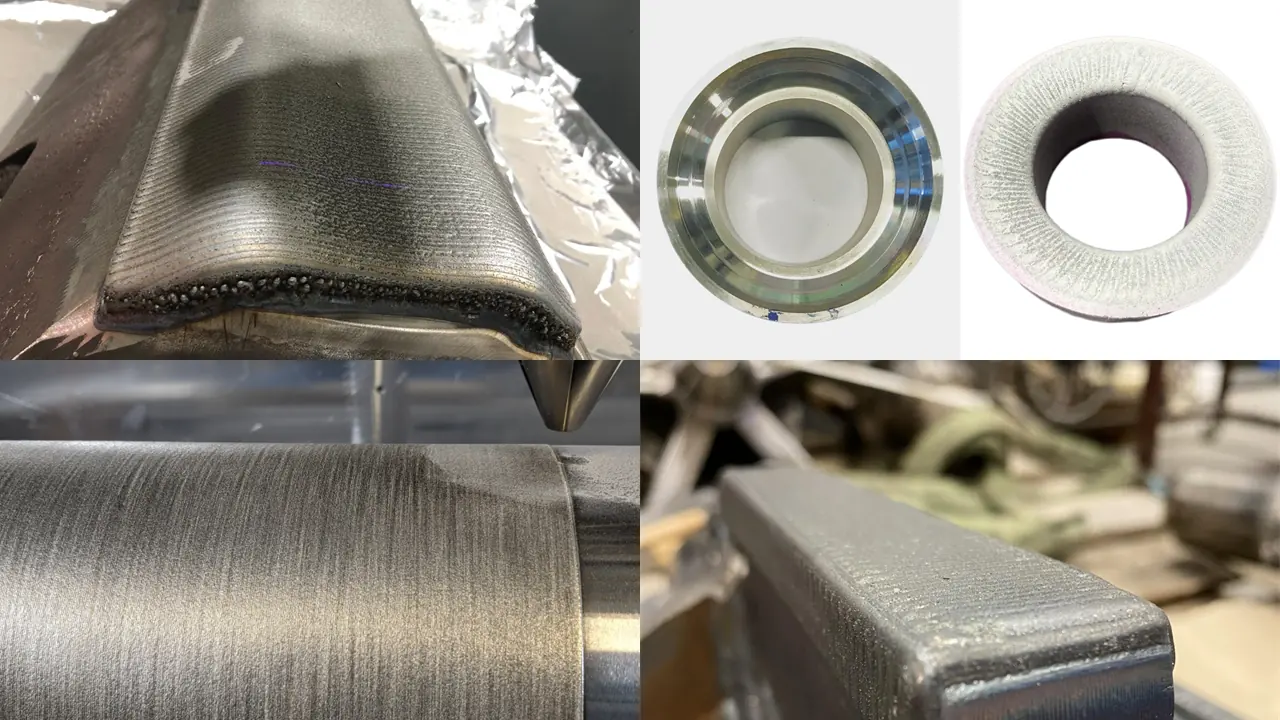
A49
The material selector does not guess a final alloy grade. It starts from failure mode, substrate, environment, temperature, finish and inspection needs so the alloy-family discussion begins on functional ground.
Open companion page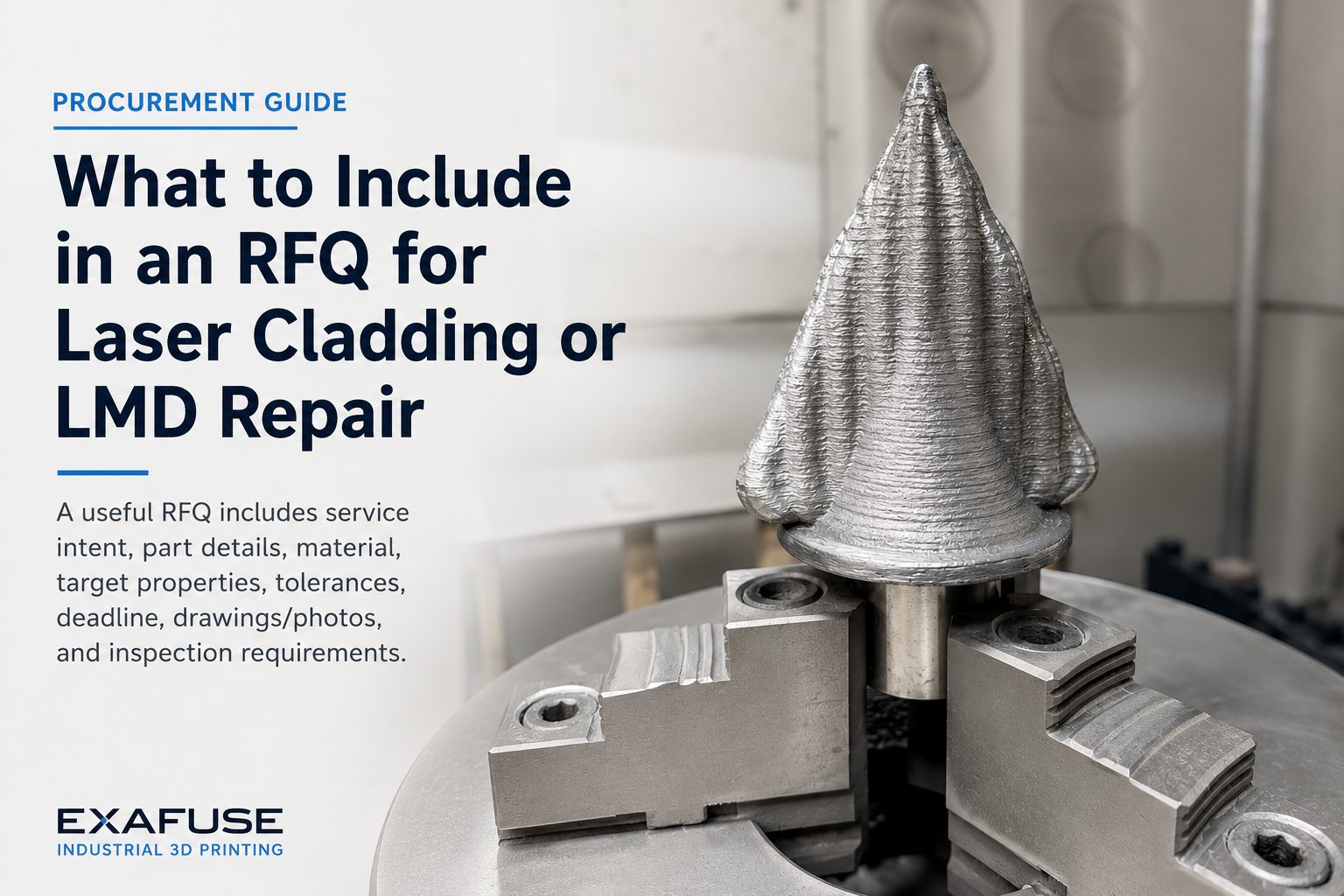
A50
A useful RFQ for laser cladding or LMD repair should define the part, the damaged or target zone, the base material, the service problem, the finish route, the timing and the inspection or documentation needed for release.
Open companion pageRecommended next steps
Jump to the closest service, proof story, technical article, FAQ or request route without scanning the whole site.
Use the guided pathfinder when the problem is clear but the correct Exafuse route or tool is not.
Route practical buyers into process choice, base cost, material direction and RFQ preparation.
3 more related items are available through the linked hub pages.
Maintenance teams should screen base repair cost first, then compare repair with replacement and downtime.
2 more related items are available through the linked hub pages.