
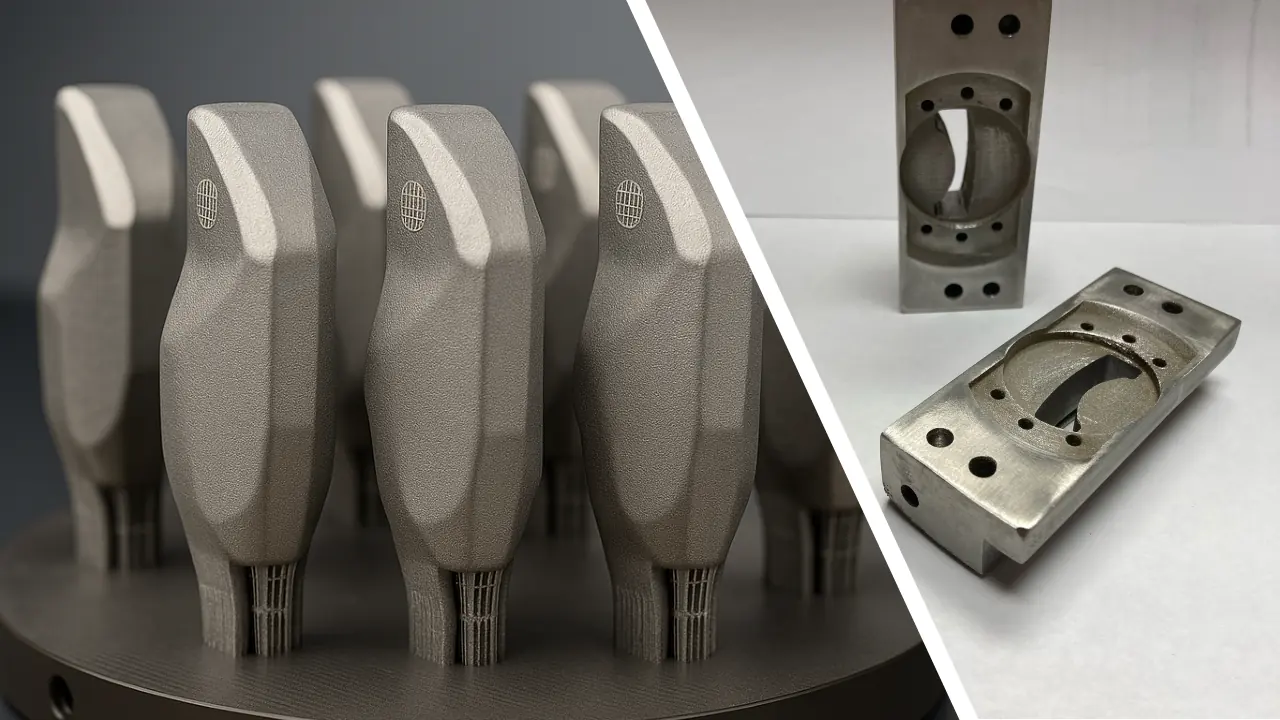
This example shows the opposite end of the same process-selection logic.
The short answer
If the part is compact, new-build, channel-rich and geometry-driven, SLM / LPBF usually fits better than LMD because the value is in powder-bed detail rather than local material addition on a large or existing part.
Why SLM wins this screen
- Internal channels and compact integrated detail are central to the part value.
- The part is a new build rather than a repair or local modification.
- The geometry would be difficult or inefficient to reproduce through local bead-by-bead buildup and later machining.
- The commercial question is about fine function density, not large-scale local deposition.
Why LMD is weaker here
LMD is strongest when it adds value through repair, local buildup, cladding or larger near-net-shape geometry. It is usually weaker when the main requirement is fine internal-channel design across the full part.
What still needs review
The part still needs support-strategy review, powder-bed fit, post-processing planning, inspection scope and material-route confirmation. SLM being the stronger first screen does not remove those downstream questions.
What data should be sent
Send CAD, a note on the internal-channel purpose, target material, critical surfaces, tolerance expectations, quantity and any reason a hybrid route is still being considered.
Useful next pages
Use the LMD or SLM decider, A04: LMD vs SLM matrix, A18: hybrid manufacturing with LMD and CNC, Metal AM and the RFQ builder when a compact powder-bed candidate is being evaluated.