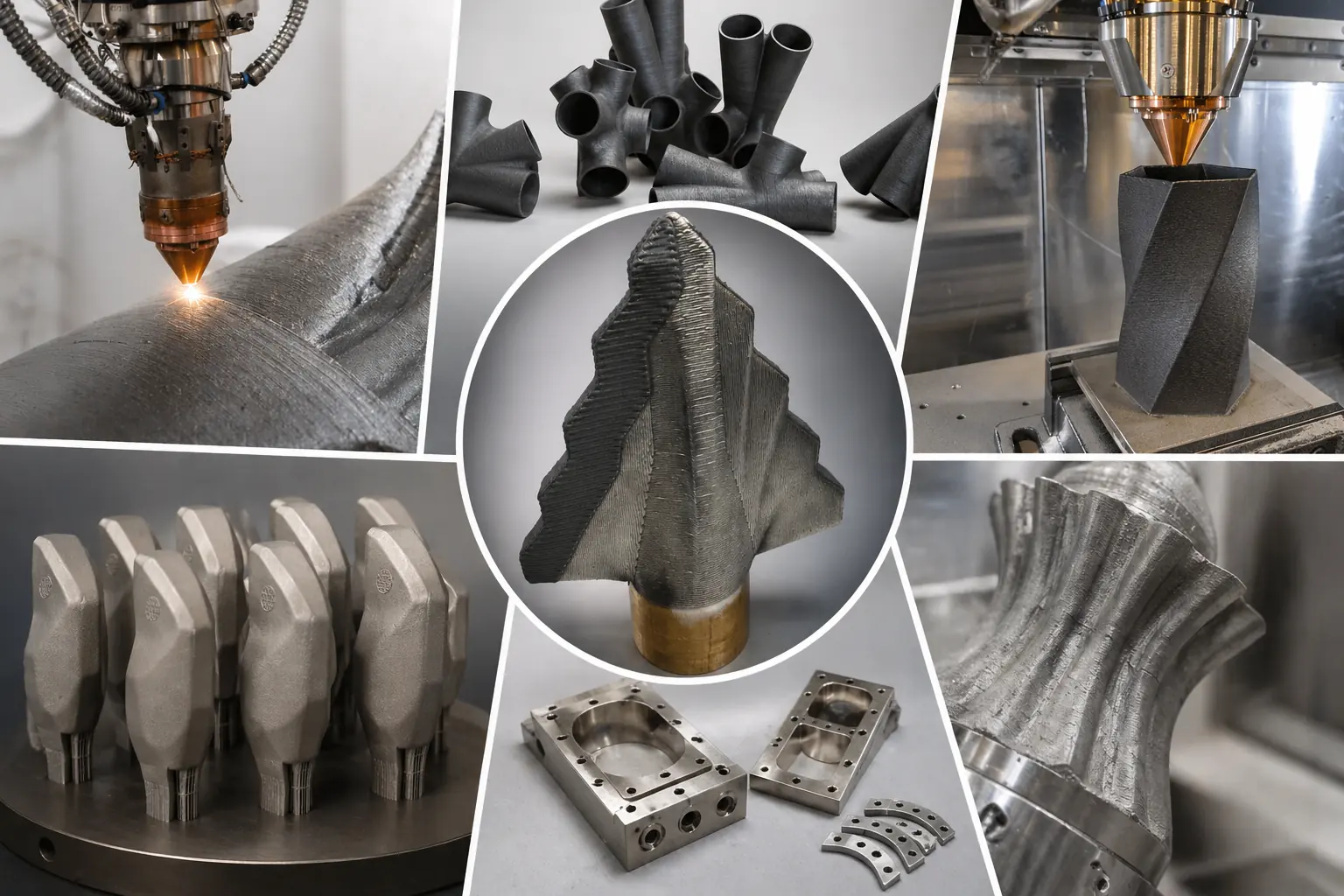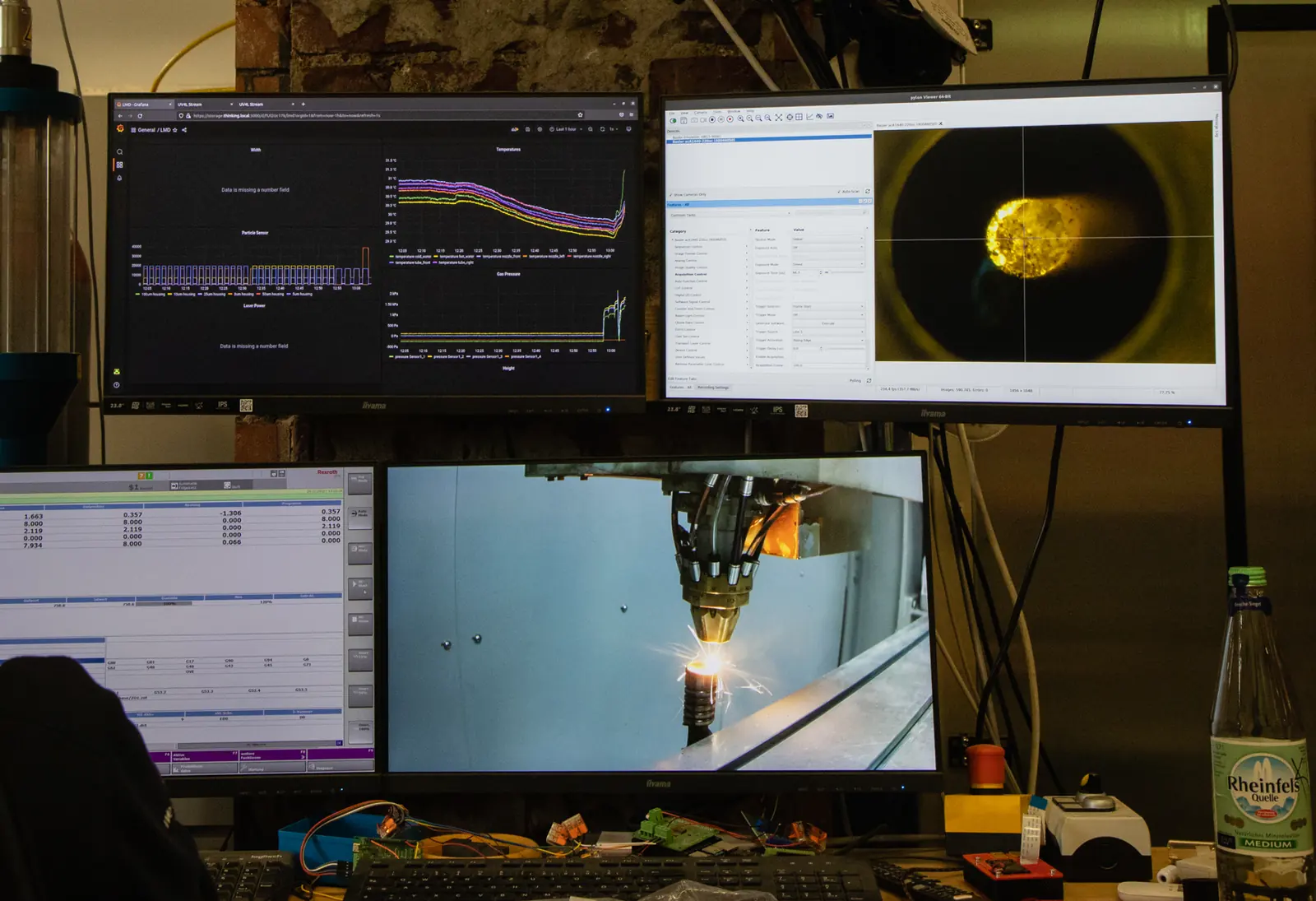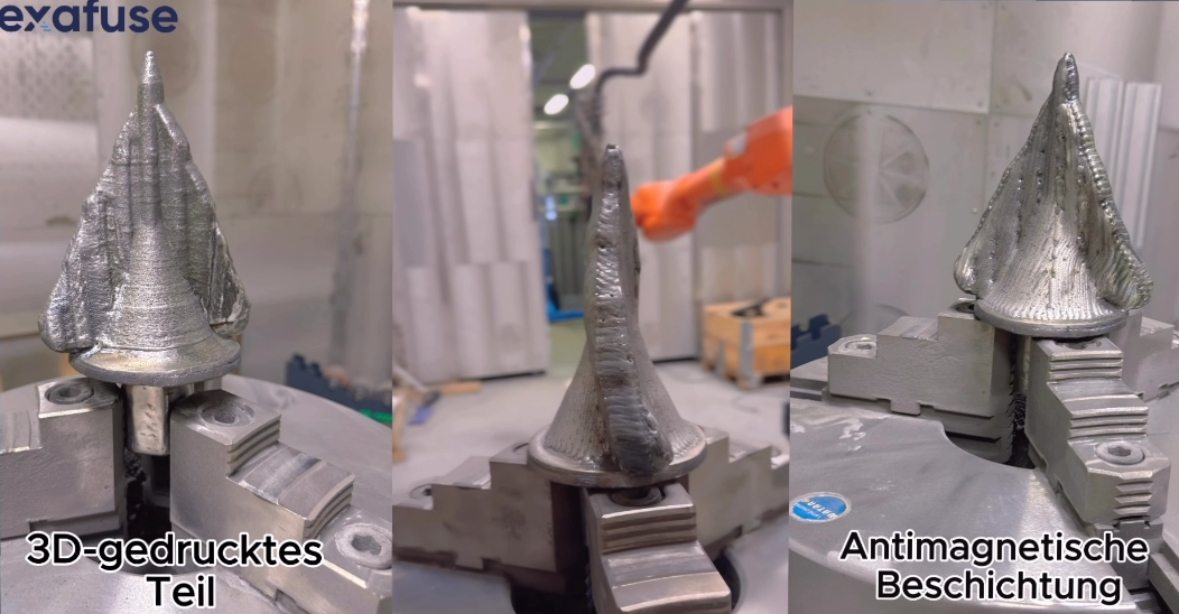
A functionally graded pipe demonstrator is useful when one part may need different material behavior in different zones. The point is not to publish a recipe. The point is to show how Exafuse thinks about material transitions, interface risk and validation before moving the idea to a customer part.
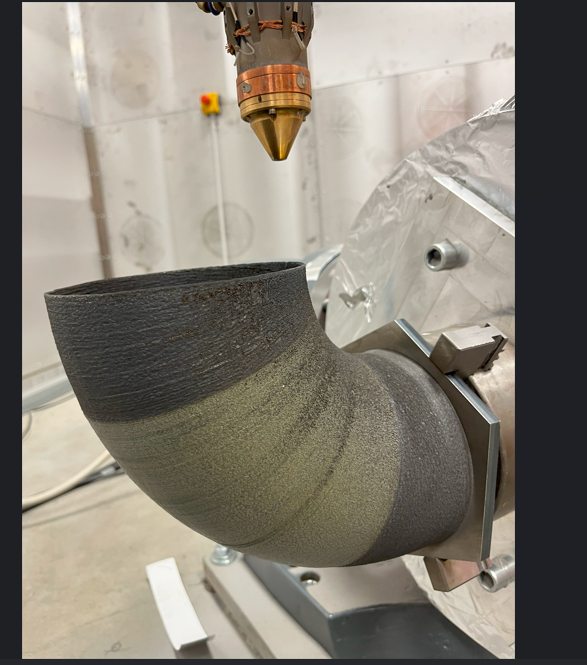
Case snapshot
| Component | Pipe or tubular demonstrator |
|---|---|
| Topic | Functionally graded LMD and controlled material transition |
| Route | Define zones, plan transition, deposit with powder-fed LMD, inspect interface |
| Claim boundary | Research and demonstrator context, not a production qualification |
Why graded material needs a clear reason
A material gradient only makes sense when the function changes across the part. One zone may need corrosion resistance, another wear resistance, and the transition must not become the weak point. If a single material already works, a gradient can add unnecessary qualification risk.
Demonstrator workflow
- Define the functional zones and the reason for each material family.
- Plan where the transition starts and ends.
- Deposit the sample and prepare inspection sections.
- Review interface continuity, dilution, porosity and cracking risk.
- Decide what could transfer to a real part and what still needs qualification.
What this proves
- Exafuse can discuss multi-material and functionally graded LMD with a physical demonstrator.
- The right question is interface and validation logic, not only the material names.
- Pipe geometry is easy for buyers to understand when explaining zones and transitions.
What this does not prove
- It does not publish exact powder ratios, layer recipes or internal test values.
- It does not prove a graded route is better than a single-material route for every part.
- It does not provide production qualification without project-specific inspection.
What to send for a multi-material discussion
- Target geometry and the zones that need different behavior.
- Base material, target alloy families and why each one is needed.
- Temperature, corrosion, wear, toughness or machining requirements by zone.
- Inspection access and what evidence is required before use.
- Whether the request is research, prototype or production-oriented.
Structured case facts
| Entity | Functionally graded LMD pipe demonstrator case |
|---|---|
| Topic | Multi-material LMD, material transition, interface validation |
| Suitable when | Parts where different zones have genuinely different material duties |
| Not suitable when | Parts where a single material is enough or the interface cannot be inspected |
| Relevant service | Metal AM |
| Relevant article | Multi-material LMD nozzle proof |
| Claim boundary | Demonstrator context; real parts need dedicated validation. |