
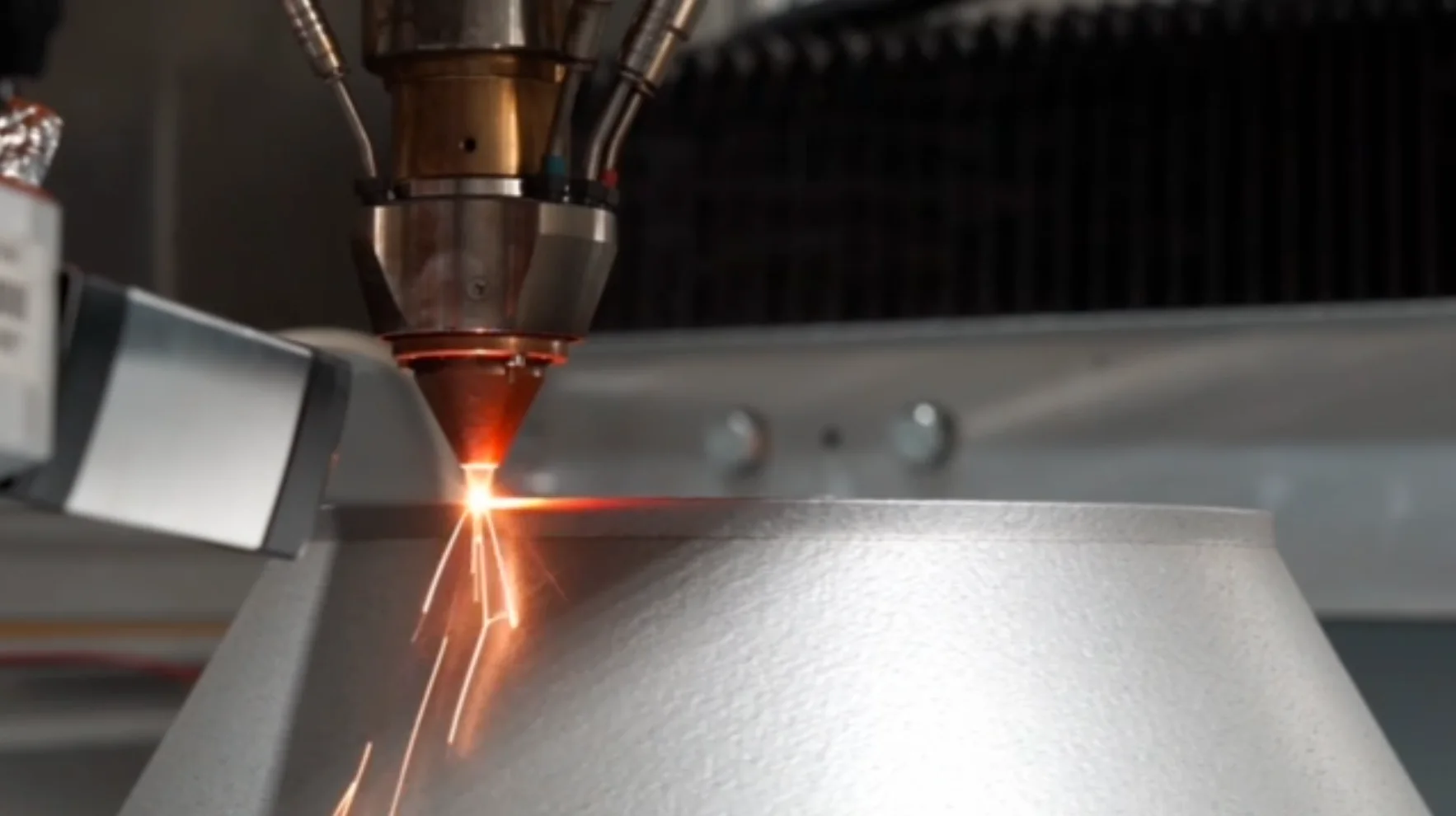
Large thin-walled parts in high-performance alloys are difficult to manufacture. Conventional routes can become slow, expensive or material-intensive when the part is tall, shell-like, heat resistant and made from a nickel superalloy.
The short answer
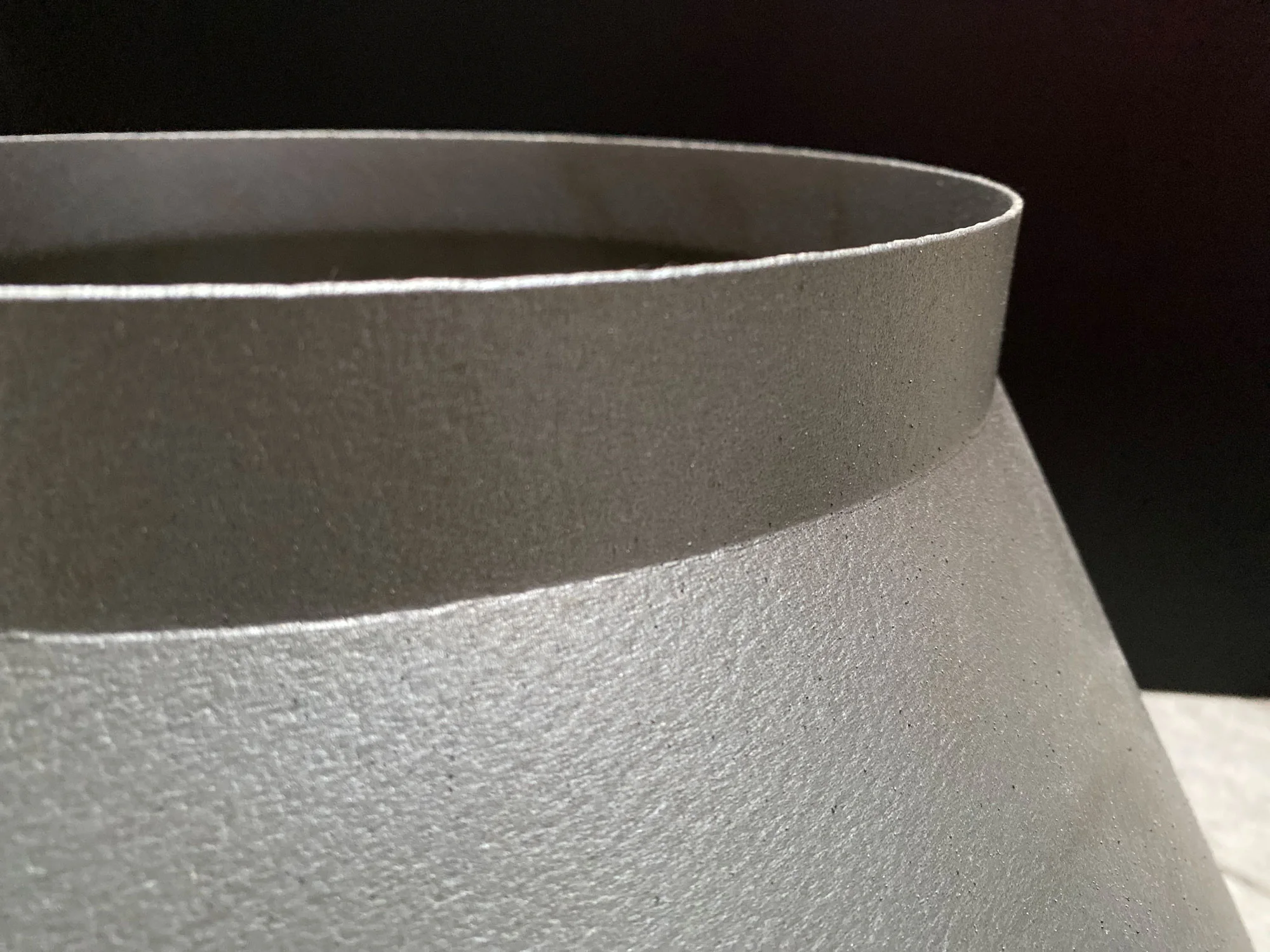
Exafuse used Laser Metal Deposition to print a 300 mm tall thin-wall demonstrator from Inconel 718. The part had a wall thickness of about 1.85 mm, a print time of about 18 hours and a final weight of about 8 kg.
Why this part matters
Inconel 718 is used when high-temperature strength, oxidation resistance and demanding service conditions matter. The tradeoff is manufacturability: the alloy can be expensive to buy, difficult to machine and inefficient to turn into a large thin-wall geometry by subtractive manufacturing alone. LMD changes the manufacturing logic by building the wall where metal is needed.
Evidence in the numbers
| Public capability point | Context |
|---|---|
| Material | Inconel 718 nickel superalloy. |
| Height | Approx. 300 mm demonstrator scale. |
| Wall thickness | Approx. 1.85 mm thin-wall structure. |
| Print time | Approx. 18 hours for this demonstrator route. |
| Final weight | Approx. 8 kg physical sample. |
Readable summary: evaluate LMD when the part is large, thin-walled, made from a high-value alloy and does not justify machining most of the material away; escalate when production qualification, heat treatment, tolerances or inspection criteria are not yet defined.
Close-up: thin-wall surface and edge
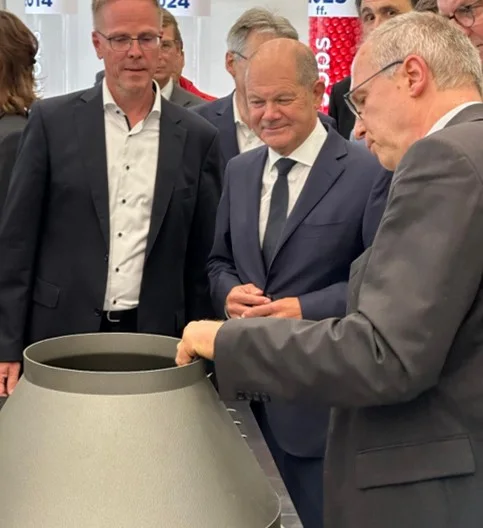
Public demonstration value
Why LMD is a good fit
- It can build near-net-shape metal from powder.
- It can reduce waste compared with machining a shell from solid stock.
- It supports tall, shell-like geometries when the wall is the value.
- It can make process capability visible through a physical sample and video.
- It can feed later inspection, machining, heat-treatment or redesign discussions.
What this proves and what it does not prove
This demonstrator proves a practical LMD capability direction for thin-wall Inconel 718 structures. It is not a blanket production qualification for every Inconel 718 component, and it does not replace application-specific review of load case, temperature, corrosion environment, heat treatment, finishing, repeatability and inspection.
What to send for a similar review
- Target material or material family.
- Approximate height, diameter, wall thickness and critical geometry.
- Expected operating environment and target function.
- Whether the goal is demonstrator, prototype, repair or production route.
- Tolerances, required surface finish and post-processing expectations.
- Inspection, testing and documentation requirements.
Recommended next steps
Use the metal AM service page, LMD process guide, material-selection article, multi-material nozzle demonstrator, early cost estimator and manufacturing review route when planning a large thin-wall alloy demonstrator.