
Sometimes the important engineering question is not whether a new part can be made from zero. It is whether the part already on the bench can be changed quickly enough to test the next idea.
The short answer
Exafuse can use Laser Metal Deposition to add local material and new geometry to an existing metal component. The public value is controlled feature addition, design modification and rapid physical iteration on a real part without exposing project-specific details.
Starting point: existing cast part
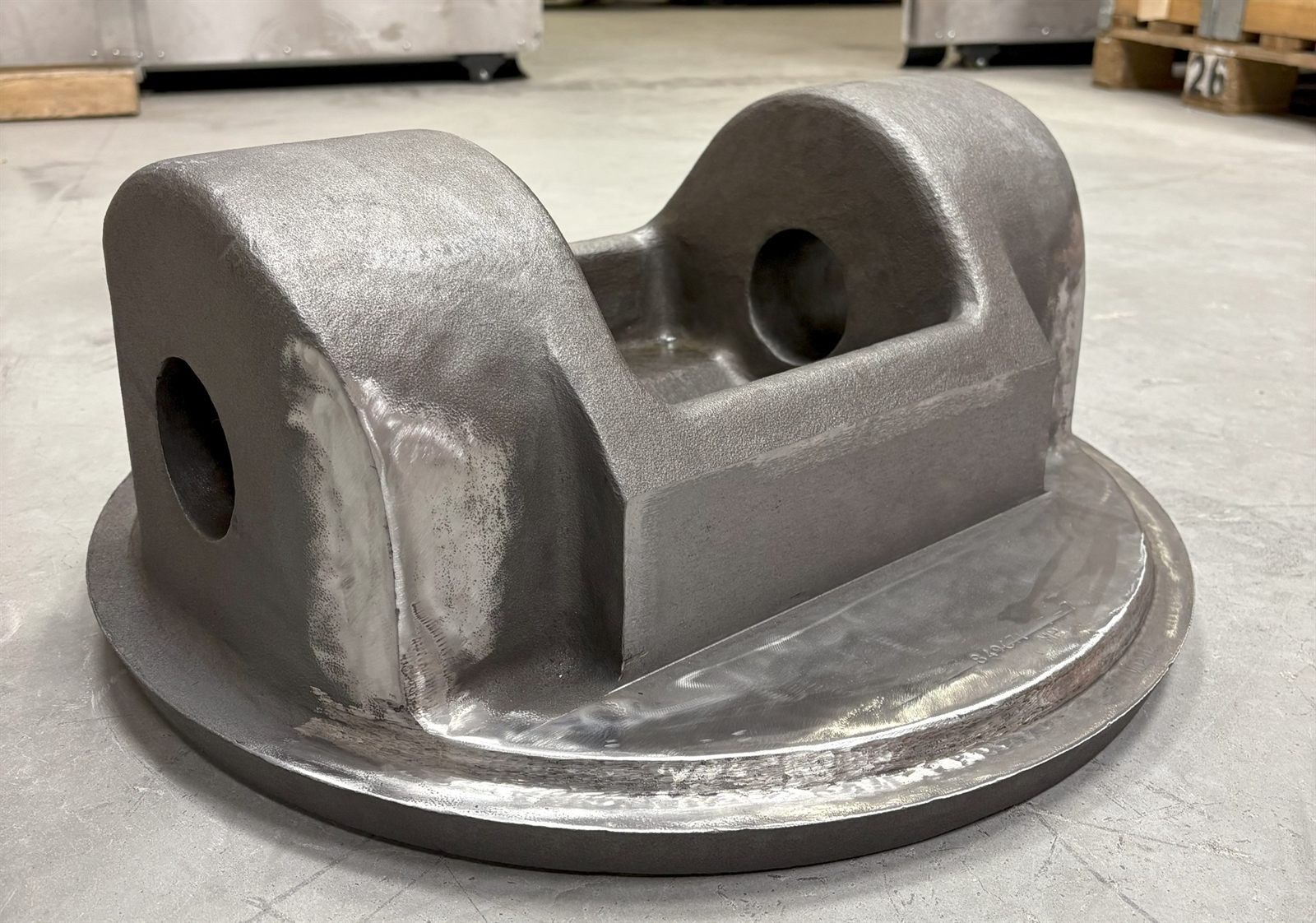
The starting part already had a defined cast geometry. In many industrial projects, that is exactly where the development problem begins: a part exists, but the design needs more material in one area, a new local feature, a changed interface, a local reinforcement or a prototype geometry before a tooling decision.
Result: added LMD features
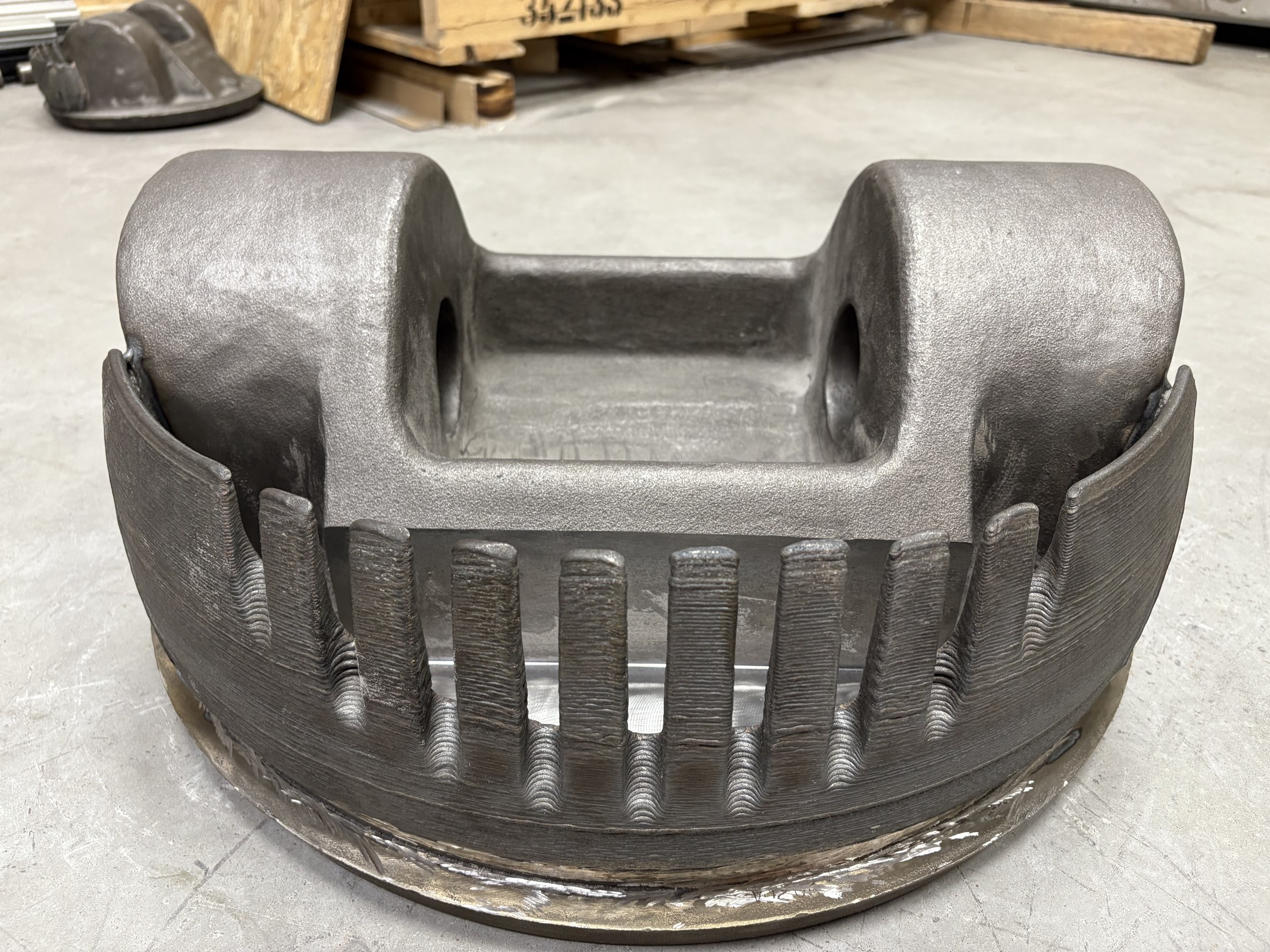
The modified part shows the main value clearly: new geometry can be added to an existing base component. That can help a team compare design ideas earlier, review assembly space, identify finishing needs and decide whether the next step should be machining, testing, redesign or a new manufacturing route.
Process video: before, during and after deposition
The process media is useful because LMD part modification is not only a before-and-after result. It is a workflow: prepare the surface, plan access, deposit the added geometry, inspect the result and decide what the next iteration needs.
Why this capability matters
LMD modification is useful when a metal part is too valuable, slow or complex to remake for every design change. It can support rapid prototyping on an existing component, local feature addition, post-casting design changes, functional mockups for assembly review and upgrade-style thinking where material is added only where needed.
What Exafuse has to manage
- How the original surface should be prepared.
- Whether the deposition head can reach the target areas.
- How added geometry connects to the original base part.
- How heat input, layer strategy and local geometry affect the result.
- Where machining, finishing or inspection may be required after deposition.
- Which visual or project details are allowed to be public.
Decision table
| Decision point | What it means for LMD part modification |
|---|---|
| Base part condition | The existing component must be suitable for local deposition, surface preparation and later inspection. |
| Feature purpose | Define whether the added geometry is for prototype learning, interface change, reinforcement, repair or a future production route. |
| Access | The laser head, powder stream and finishing tools need practical access to the target zone. |
| Post-processing | Added features may need machining, grinding, surface finishing or dimensional review after deposition. |
| Validation boundary | A modified prototype can speed up learning, but final strength, fatigue, fit and release still need project-specific validation. |
Readable summary: evaluate LMD part modification when an existing metal component can become a faster development platform; escalate when material compatibility, feature access, finishing route, inspection plan or final release criteria are unclear.
What this proves and what it does not prove
This proof shows controlled local feature addition and prototype iteration on an existing metal part. It does not prove final production qualification, load capacity, fatigue performance, material compatibility, test outcome, repeatability or application release for every similar geometry.
What to send for a similar review
- Photos of the existing part and target modification area.
- CAD, sketch or drawing if available.
- Known base material or material family.
- Purpose of the added feature and what the next prototype must prove.
- Approximate feature size, access limits and critical interfaces.
- Whether machining or finishing after deposition is expected.
- Inspection, measurement or documentation requirements.
- Which photos, videos or project details may be used publicly.
Recommended next steps
Use the repair and modification service page, metal AM service page, hybrid manufacturing article, build-and-coat workflow guide, documentation guide, the Pathfinder and the part-modification review route when planning feature addition on an existing metal part.