
Process development becomes expensive when every question needs a full experimental campaign. Compact models help choose the next test more intelligently.
The short answer
Exafuse uses reduced-order modeling to interpret LMD trends, screen candidate process windows and connect power, speed, powder delivery and bead geometry. The model supports decisions; it does not replace experiments.
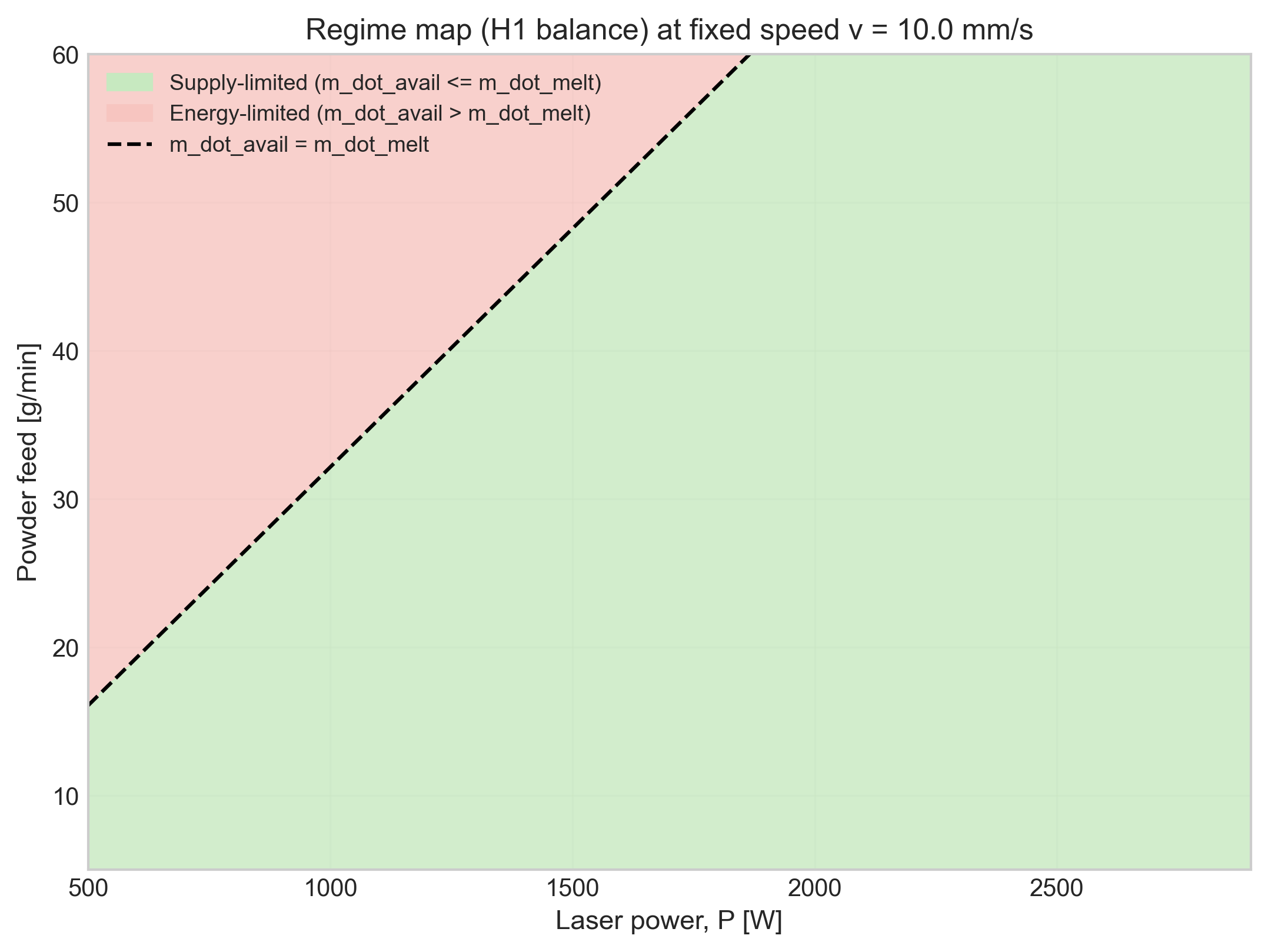
Width and height thinking
A useful model connects engineering inputs with bead-scale outputs: seam width, deposited mass, bead height and process regime. The value is interpretability, not a black-box prediction.
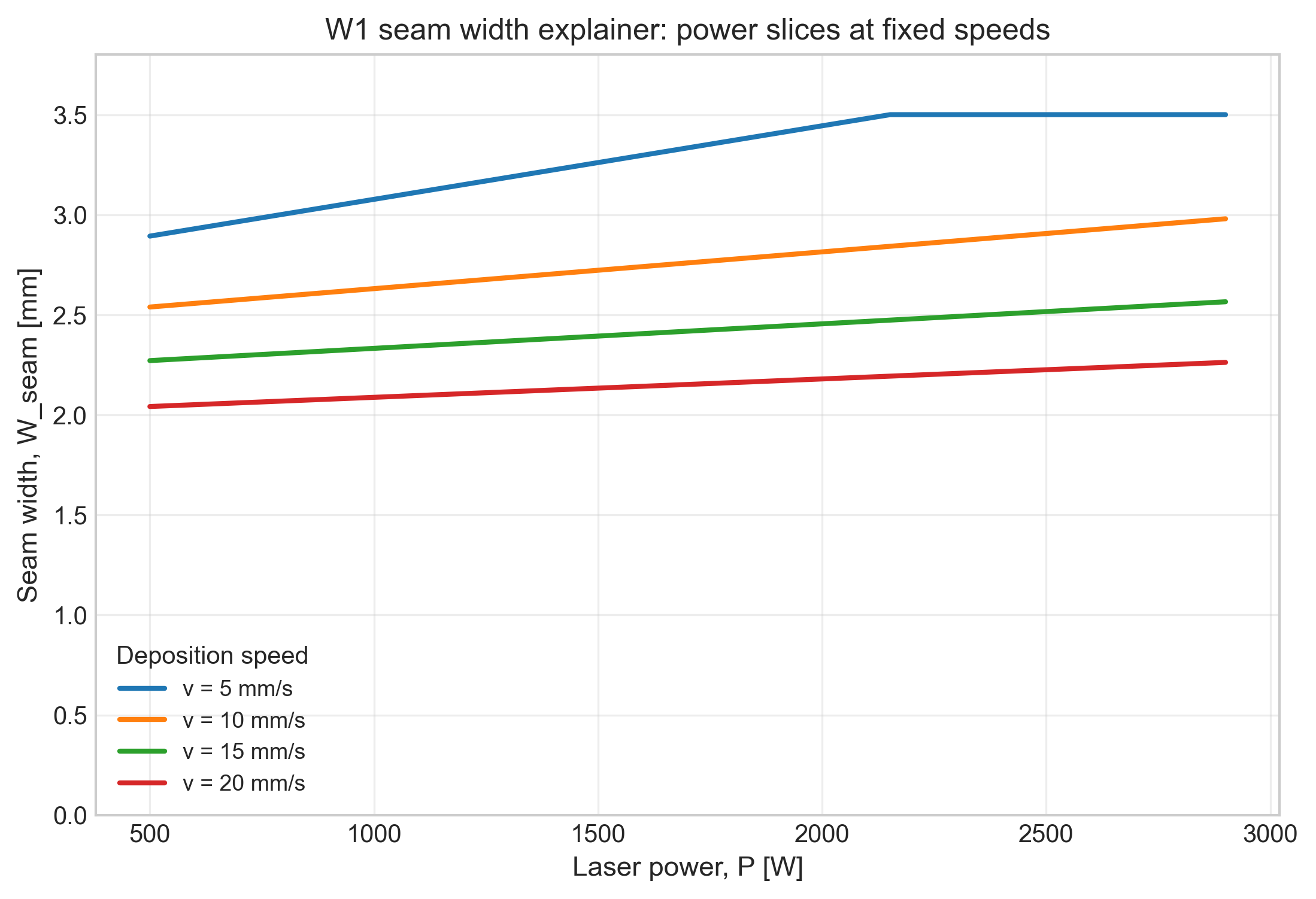
Decision table
| Model use | Good use |
|---|---|
| Screening | Reduce the number of candidate trials before coupon work. |
| Interpretation | Explain whether width or height changes follow energy or powder trends. |
| Planning | Choose the next experiment based on measured behavior and model limits. |
Readable summary: use modeling to make experiments smarter; validate selected windows physically before using them for a part.
What this proves and what it does not prove
This proves a decision-support direction for LMD process development. It does not publish fitted parameters, calibration data, customer process windows or universal model validity.
What to send for a similar review
- Material and target geometry.
- Existing bead width and height data if available.
- Target coating or wall dimensions.
- Constraints around heat input, dilution, productivity or inspection.
Recommended next steps
Use the LMD guide, monitoring article, software-stack article and the manufacturing review route.