
Modern LMD process development needs more than a robot path and a laser setpoint. The machine needs a software layer that can acquire data, interpret it, log it and keep operator authority visible.
The short answer
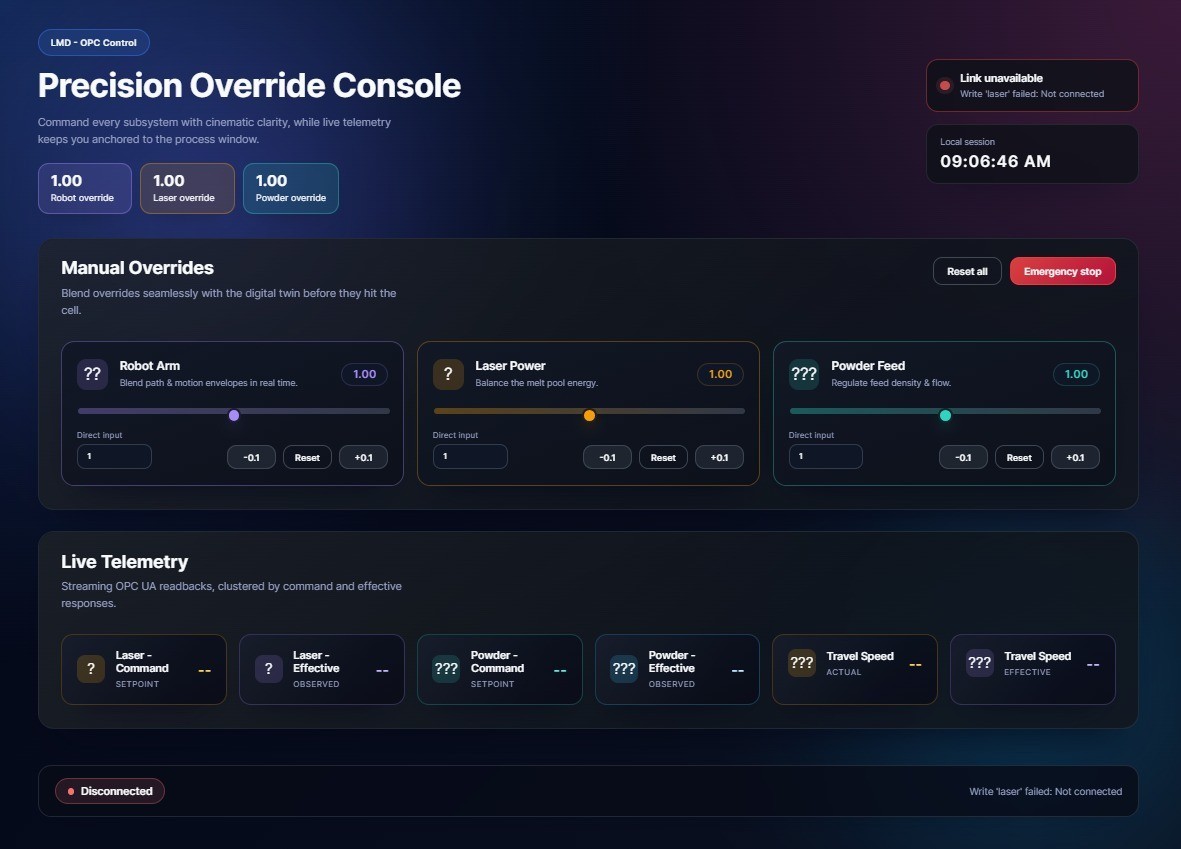
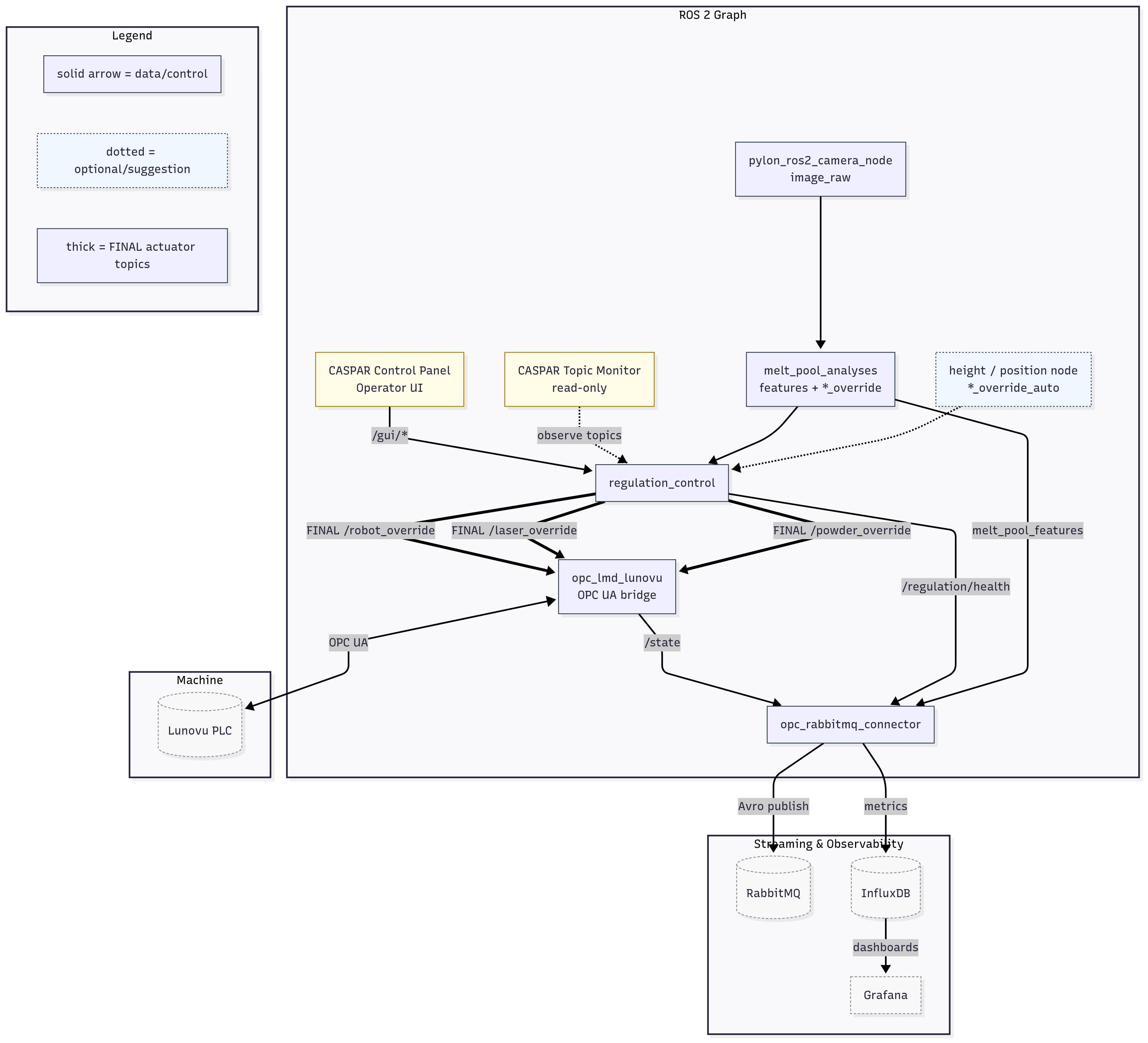
Exafuse is building a supervised process-control stack for LMD. The goal is not automation theatre. The goal is to connect sensing, analysis, operator review and bounded machine communication in a traceable workflow.
Why staged authority matters
Closed-loop control should not be treated as an on/off switch. A credible path moves through offline analysis, shadow mode, limited authority and supervised tests before any wider control scope is considered.
Decision table
| Layer | Practical purpose |
|---|---|
| Acquisition | Collect camera, sensor and machine data with timing context. |
| Analysis | Extract process features and compare against expected behavior. |
| Supervision | Keep operators in the loop with clear override paths. |
| Machine communication | Only bounded and reviewed signals should reach process actuators. |
Readable summary: build control authority gradually; do not confuse a prototype software stack with universal autonomous production.
What this proves and what it does not prove
This proves Exafuse can structure LMD monitoring and control software as an engineering system. It does not publish source code, credentials, control thresholds or final closed-loop qualification.
What to send for a similar review
- The process problem to observe or control.
- Available sensors and adjustable machine parameters.
- Required response time and authority limits.
- Data that must be logged for review.
Recommended next steps
Use the melt-pool monitoring article, AI process-control article, modeling article and the quality review route.