
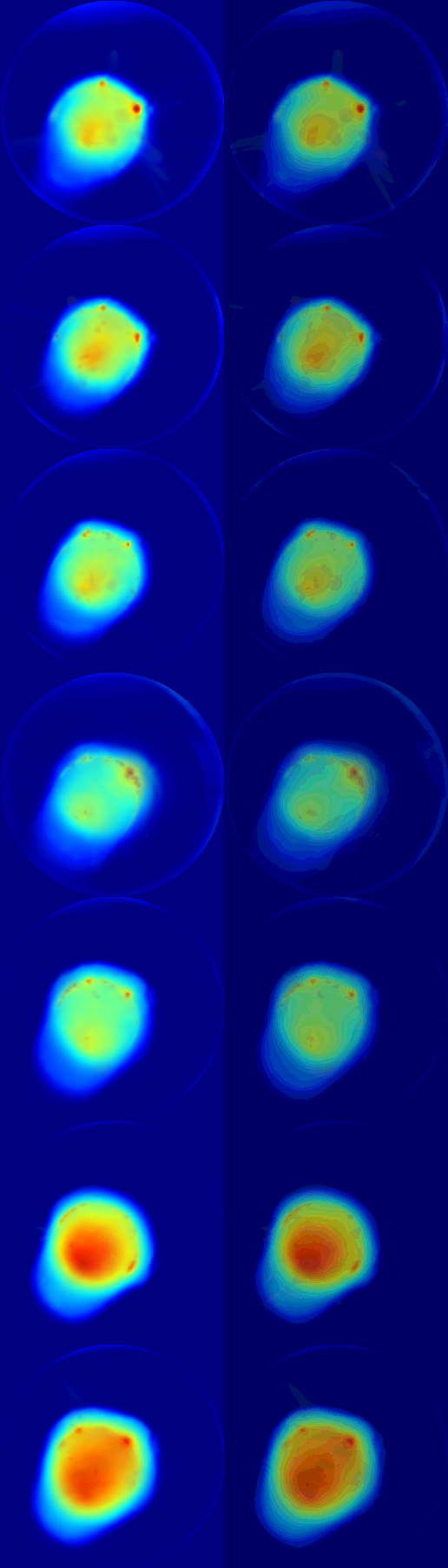
Laser Metal Deposition is a thermal process before it is a finished part. Powder flow, laser energy, travel speed, shielding, surface condition and geometry meet in one small zone: the melt pool.
The short answer
Thermal and coaxial monitoring help Exafuse observe LMD while it is running, extract process features and compare trials with data instead of relying only on finished-part photos. The useful claim is process understanding, not automatic quality release.
Operator view of the process
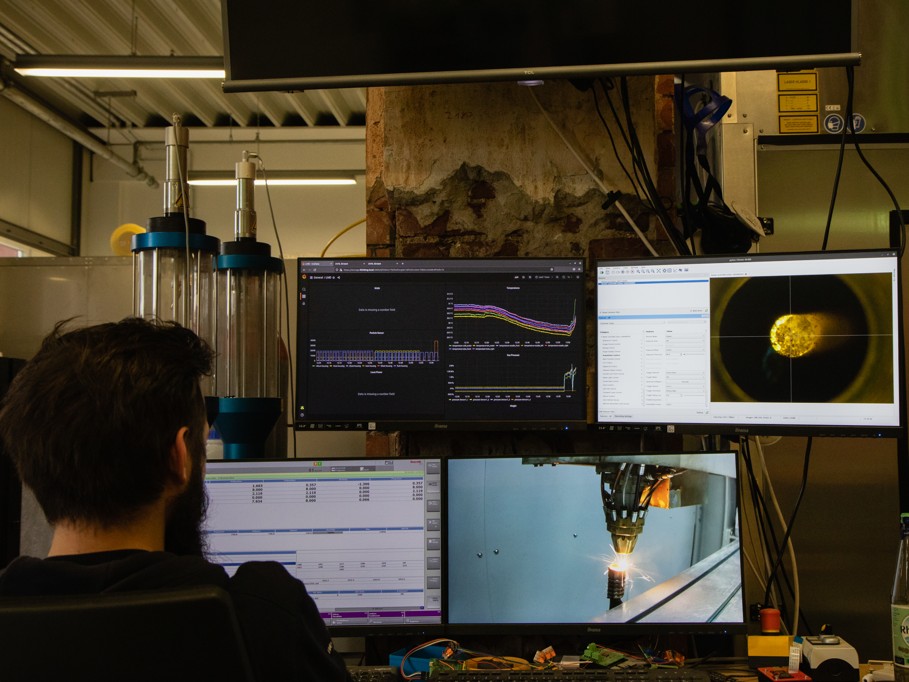
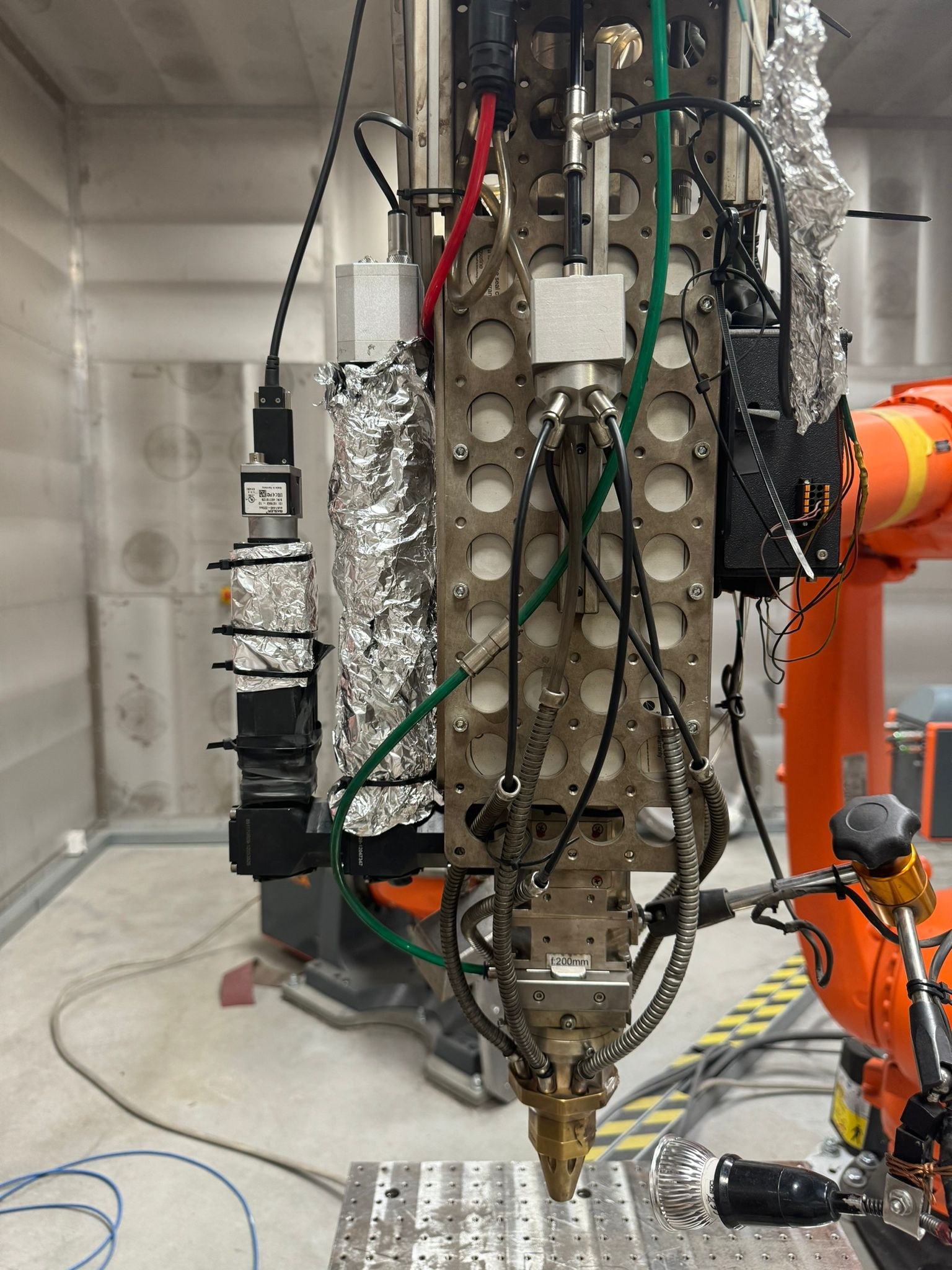
Thermal monitoring near the process head
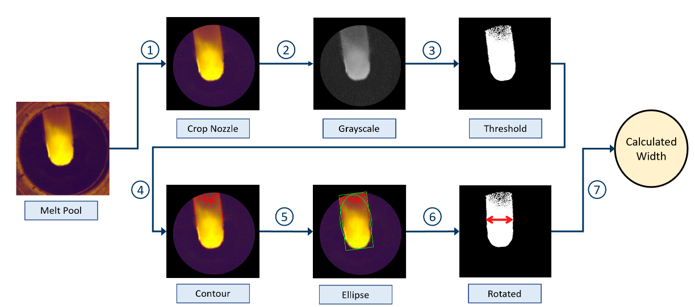
From images to process features
Raw process images are useful, but they need cleaning and segmentation before they become reliable features. Exafuse uses image-processing workflows to estimate melt-pool width, area, position and stability cues from recorded process images.
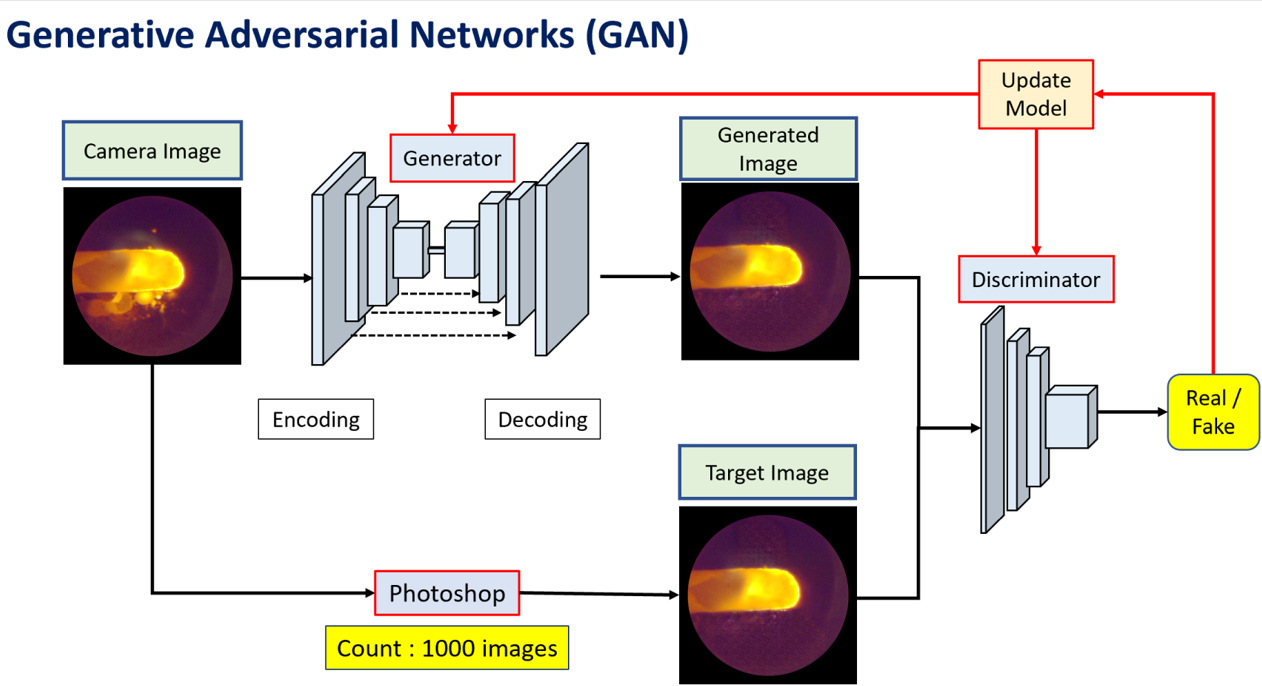
Where AI fits
AI-assisted cleaning can help when fixed thresholds are not robust enough. The goal is to improve the measurement input, not to bypass engineering judgment. Cleaned images still need physical interpretation, validation and agreement with inspection results.
Decision table
| Question | Why it matters |
|---|---|
| What signal is measured? | Width, area, thermal drift and position answer different process questions. |
| How is it validated? | Monitoring should be compared with geometry, metallography or agreed inspection. |
| What happens on drift? | Alerts, pauses and bounded corrections need a traceable response path. |
Readable summary: use monitoring to compare and improve LMD process windows; keep final release tied to physical inspection, documentation and application-specific criteria.
What this proves and what it does not prove
This proves that Exafuse is building data-driven monitoring workflows around LMD. It does not prove automatic defect detection, universal closed-loop control or final part acceptance without inspection.
What to send for a similar review
- Material and geometry.
- Which signal matters: heat accumulation, melt-pool width, drift, repeatability or anomaly review.
- Whether the data is for offline analysis, operator guidance or bounded control.
- The inspection method that will validate the process afterwards.
How this connects to the monitoring article cluster
A12, A35, A37, A40 and A41 remain useful as focused explanation pages. A59 is the practical proof page that brings the real thermal/coaxial images, measurement workflow, AI image-cleaning view and software context together.
- A12 explains why monitoring and control matter for DED / LMD.
- A35 defines what melt-pool monitoring can and cannot prove.
- A37 frames neural image processing and Pix2Pix-style work as research support.
- A40 covers computer-vision drift, false positives and false negatives.
- A41 explains the data-pipeline layer behind traceable monitoring.
Recommended next steps
Use the quality page, melt-pool monitoring guide, AI in LMD process-control guide, software-stack article and the quality review route.