
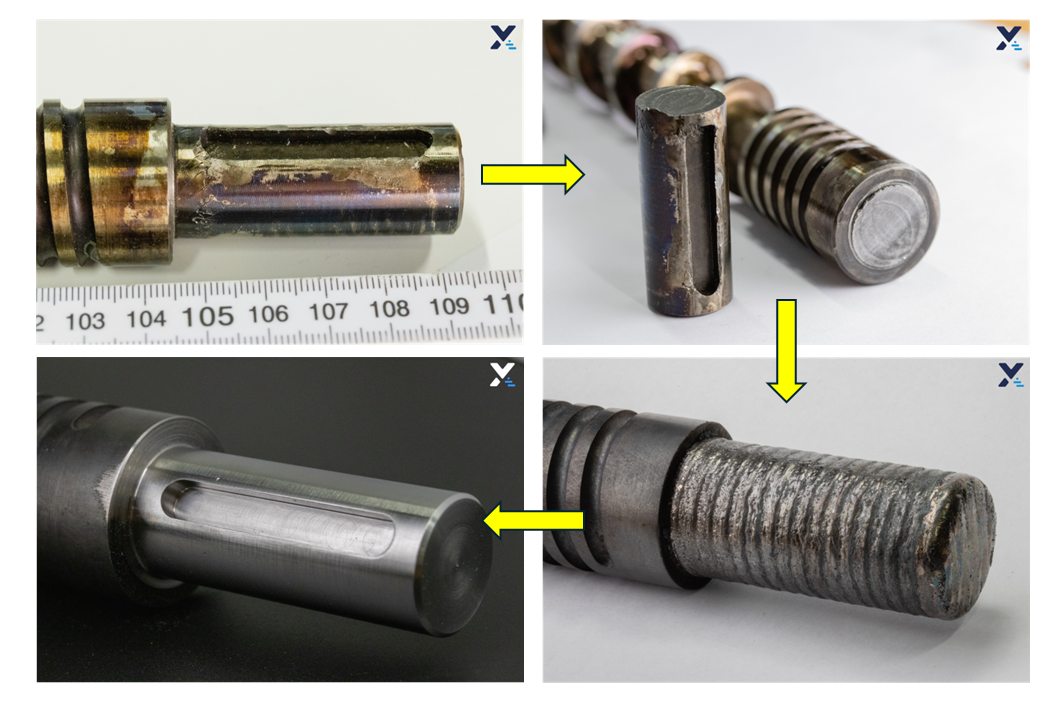
Repair is worth evaluating when the part is expensive, has long replacement lead time, has localized damage, and can be inspected after material buildup. Replacement is usually safer when the base part has systemic cracking, unknown material condition, or critical certification requirements that cannot be re-qualified.
Who this helps
This guide is for maintenance engineers and procurement teams deciding whether to repair a worn or damaged metal component with LMD/DED or replace it with a new part.
What to evaluate
- When repair beats replacement.
- The five decision variables: part value, lead time, damage location, base material, acceptance criteria.
- Repair fit / non-fit table.
- Cost model: replacement cost, downtime cost, machining, inspection, logistics.
- Risk model: hidden cracks, distortion, bonding, geometry, documentation.
- How LMD/DED repair works: inspect, prepare, deposit, machine, validate.
- What to send for a repair assessment.
Technical context
This topic connects to repair vs replace, LMD repair, DED repair, Laserauftragschweissen, industrial maintenance for industrial LMD, DED, repair, coating, or metal AM decisions.
Information for a repair review
Send photos of the damage, base material, remaining wall or usable substrate, target geometry, machining allowance and inspection requirements.