
In LMD, the nozzle does not only feed powder. It decides how much material reaches the melt pool and how stable the bead can become.
The short answer
Powder-stream imaging helps Exafuse compare cone shape, focus region and symmetry before the process is judged from a coating or wall. It is a development tool for nozzle setup, powder delivery and process-window decisions.
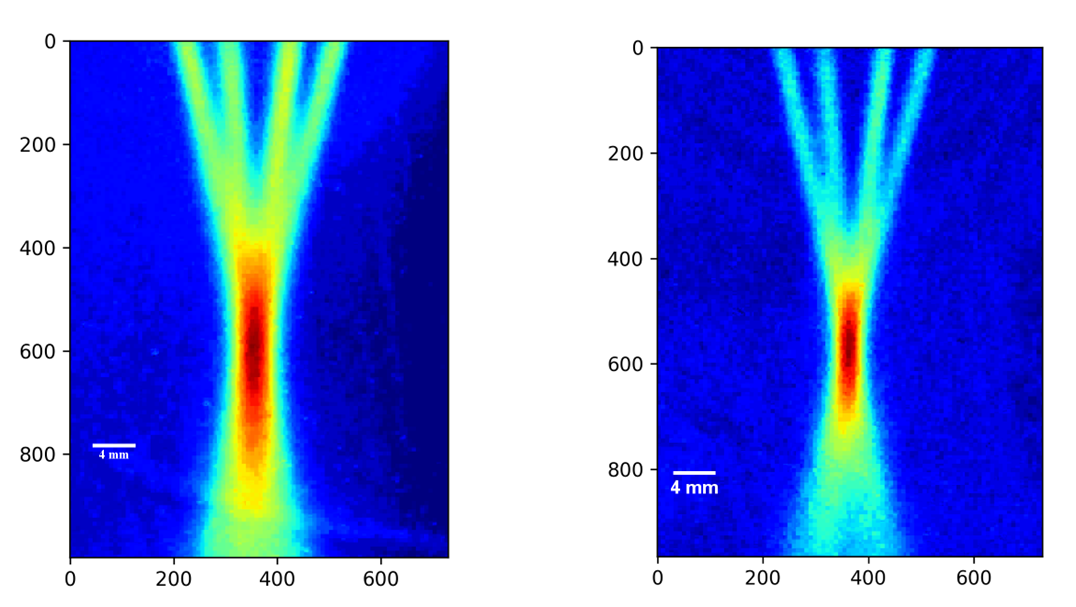
What is measured
The public workflow looks at cone width, focal region, particle distribution, standoff sensitivity and symmetry. Those features help explain why a build is asymmetric, why powder catchment changes or why coating width moves between trials.
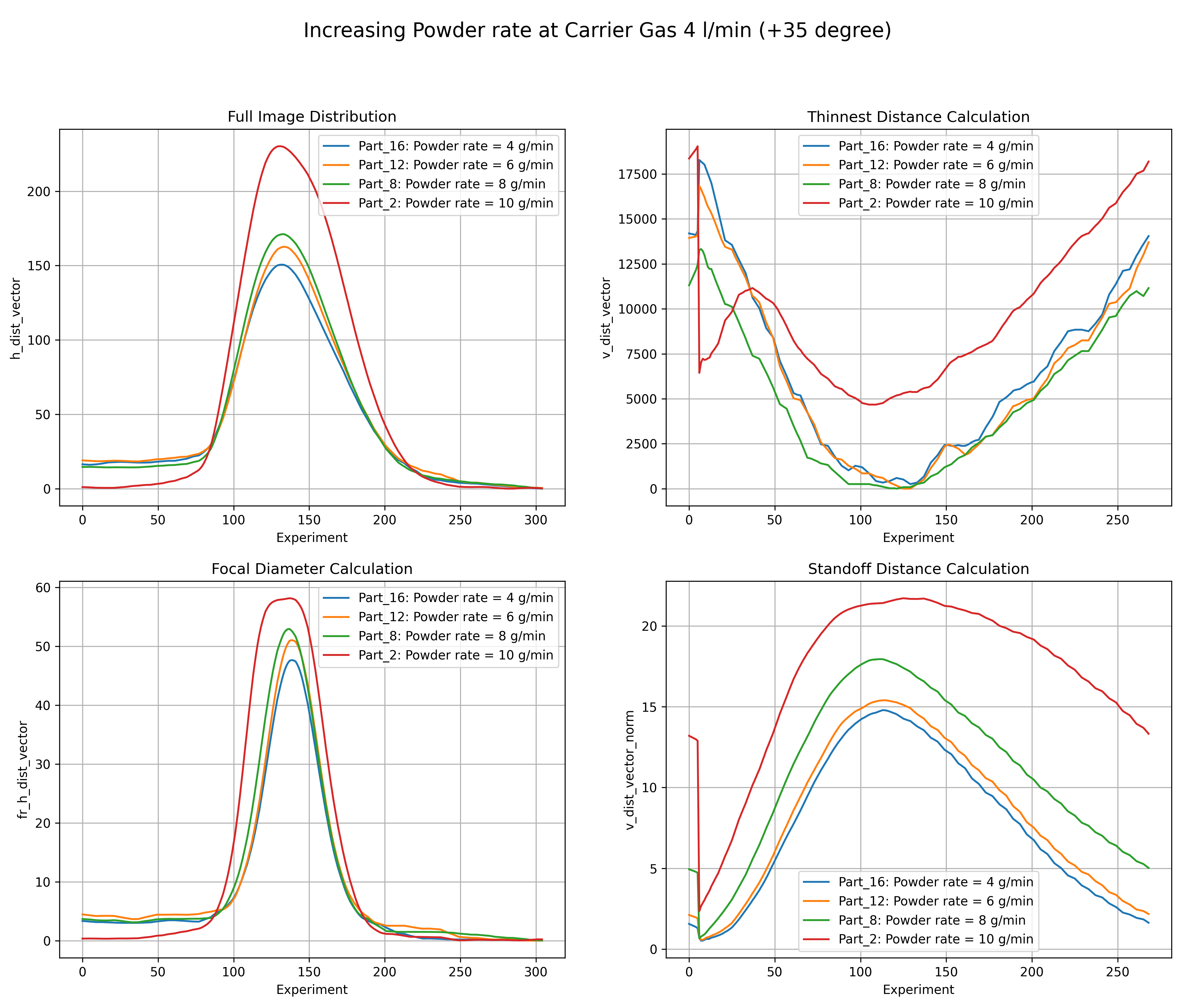
Decision table
| Observation | Possible meaning |
|---|---|
| Asymmetric cone | Nozzle alignment, powder feed or carrier-gas behavior may need review. |
| Wide or drifting focus | Standoff or setup condition may be outside the useful window. |
| Unstable distribution | Powder delivery, cleaning state or powder class may need screening. |
Readable summary: use powder diagnostics before costly process trials when nozzle behavior, powder catchment or bead consistency is unclear.
What this proves and what it does not prove
This proves a diagnostic route for powder delivery. It does not publish nozzle recipes, powder settings, calibration data or a universal catchment guarantee.
What to send for a similar review
- Nozzle type or photos.
- Powder family and particle-size class if shareable.
- Target bead or coating geometry.
- Known symptoms such as asymmetry, instability or poor catchment.
Recommended next steps
Use the metal AM page, powder development article, line-scanning article and the manufacturing review route.