
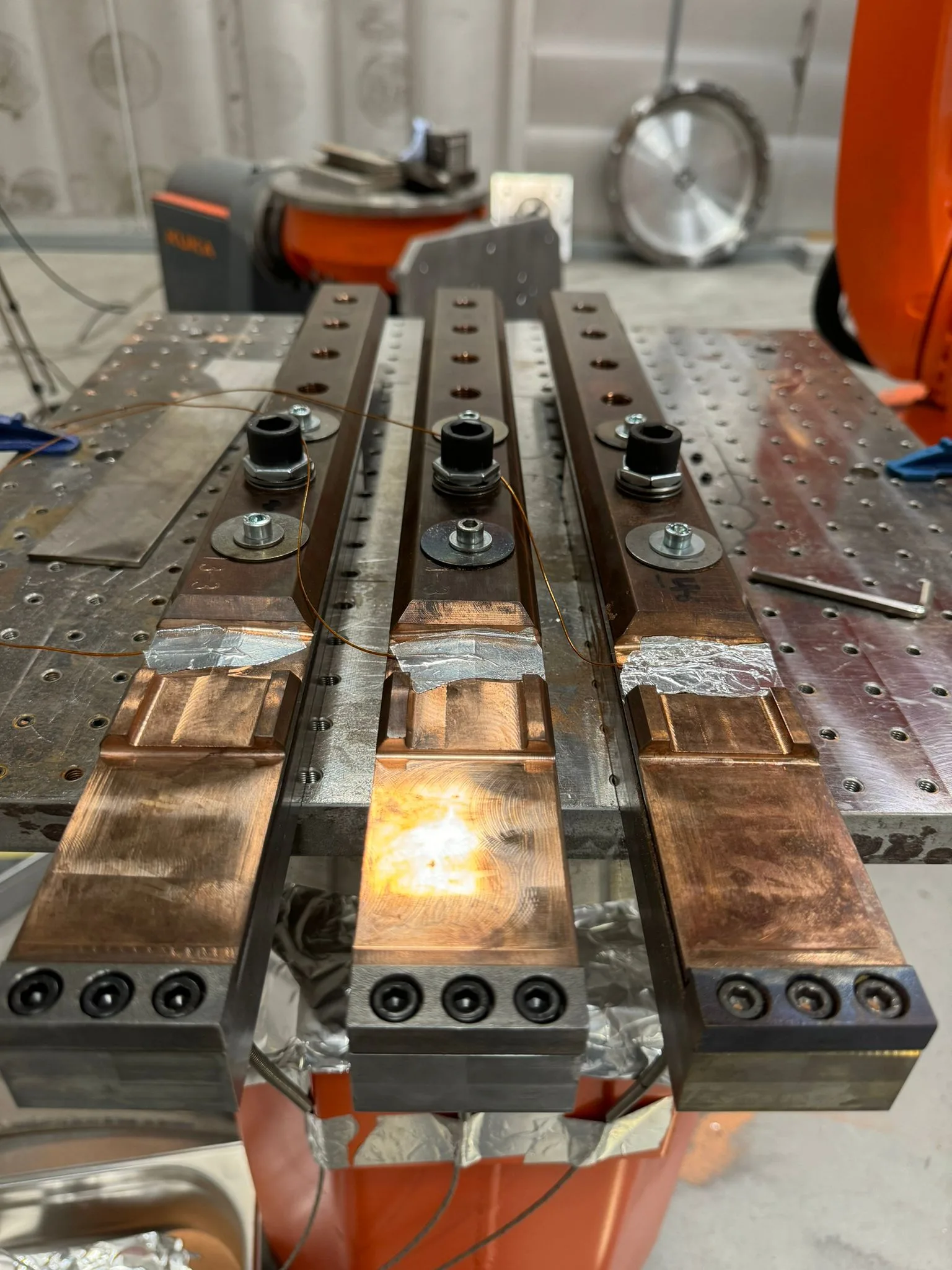
Spares for rotating equipment are costly and scarce
Rotor wedges, impellers, spindles, nozzles and sealing surfaces are among the most valuable parts of a plant. They are often made from nickel-based alloys, copper materials or special steels. Replacement takes time – and without it, the machine stands still.
There are technical hurdles too:
- Copper materials reflect part of the laser energy and draw heat rapidly out of the melt pool.
- Nickel-based alloys such as Inconel 625 and 718 are hard to machine, so material should only be added where it is needed.
- Impellers have curved blades, helical pitches and critical transitions to hub and shaft.
- Functional surfaces are exposed to wear, corrosion and temperature.
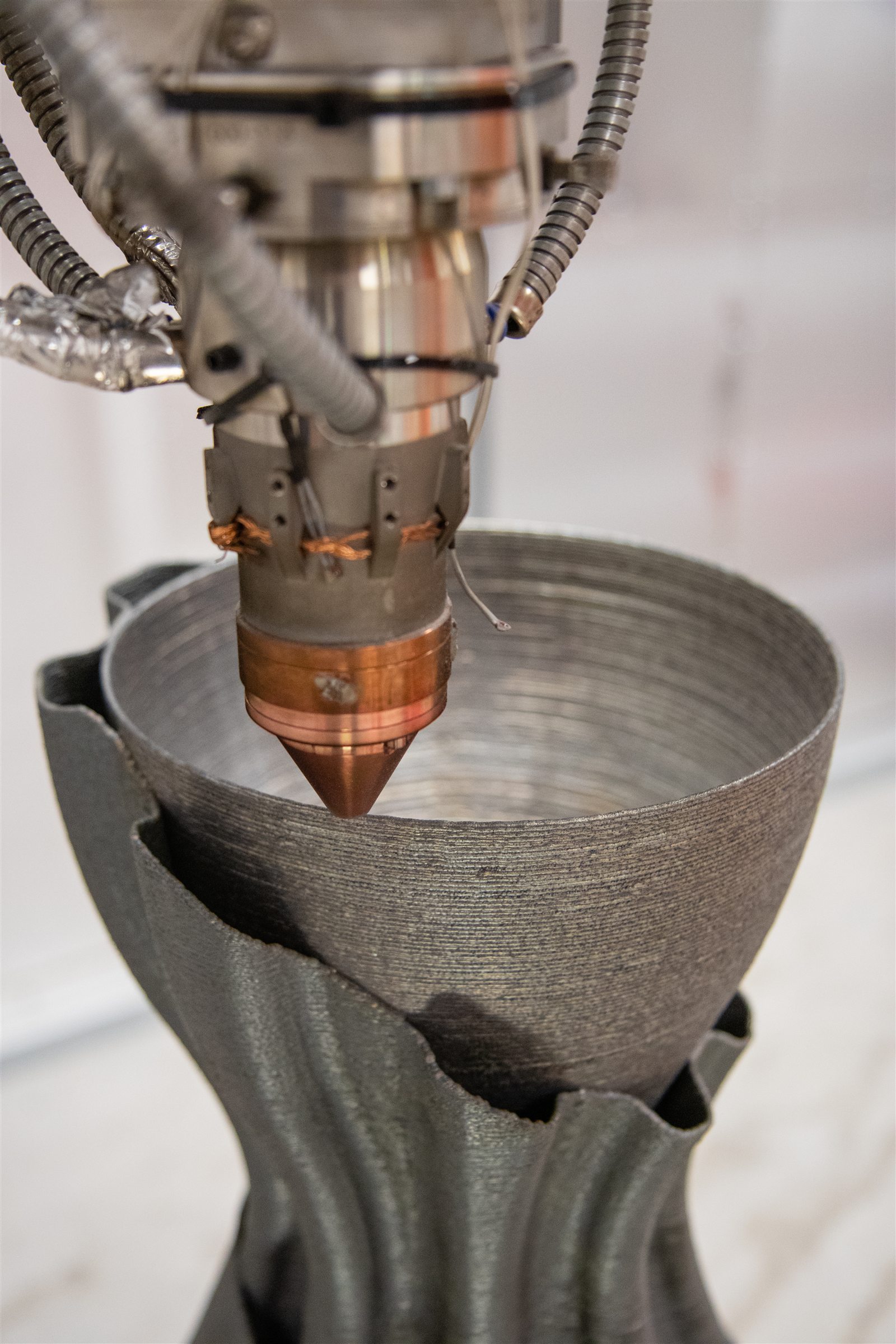
Four tasks, three manufacturing routes
1. Coat functional surfaces Rotor wedges, valve seats, wear rings and sealing surfaces receive a metallurgically bonded layer against wear and corrosion by laser cladding.
2. Restore dimensions and geometry We build up undersized spindles, shafts and bearing seats locally and machine them to final size. On one spindle, we deposited Inconel 718 over a length of 85 mm.
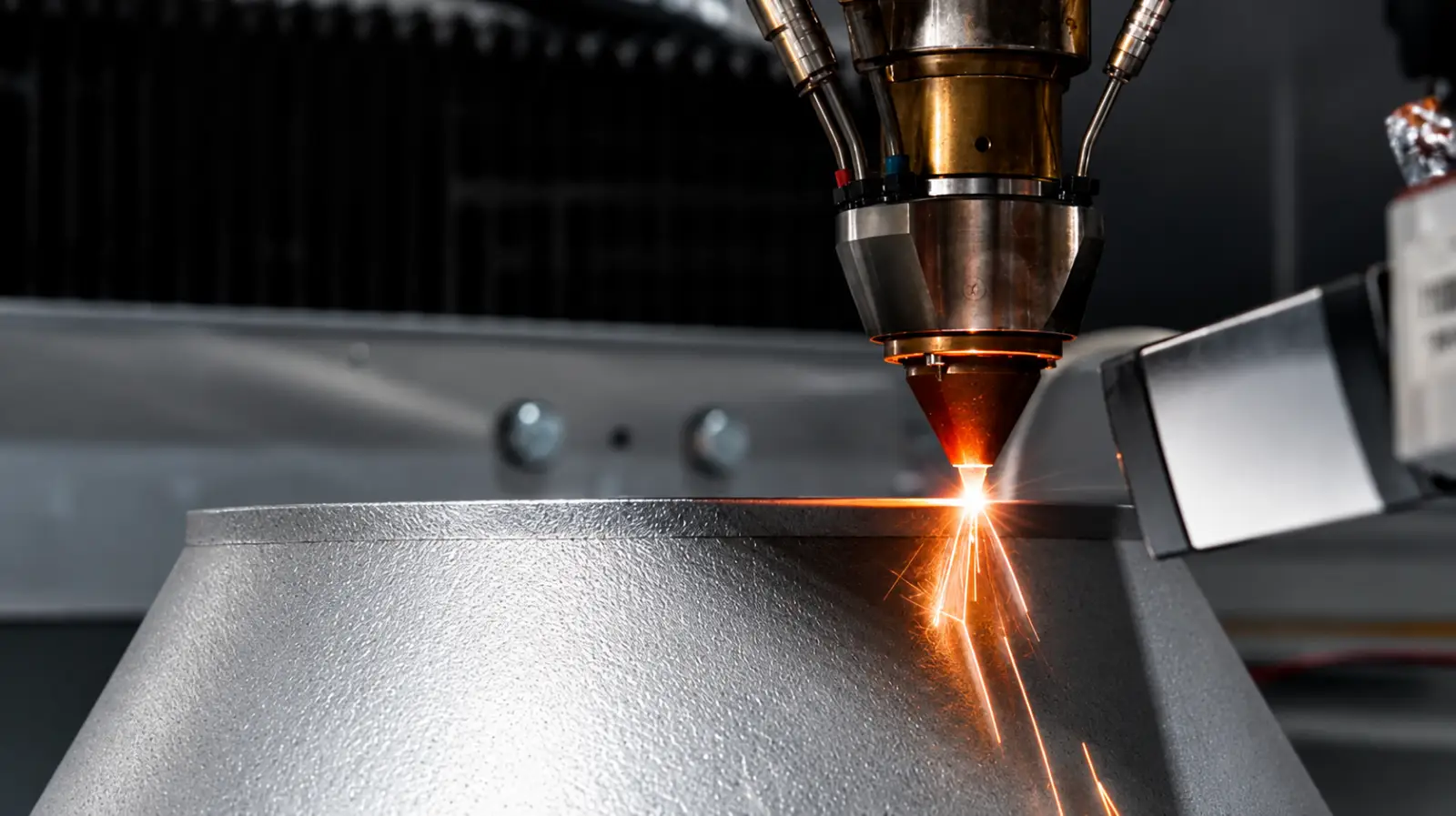
3. Build large parts in nickel-based alloys LMD produces thin-walled structures and nozzles in Inconel 625 and 718, including several material zones in one part.
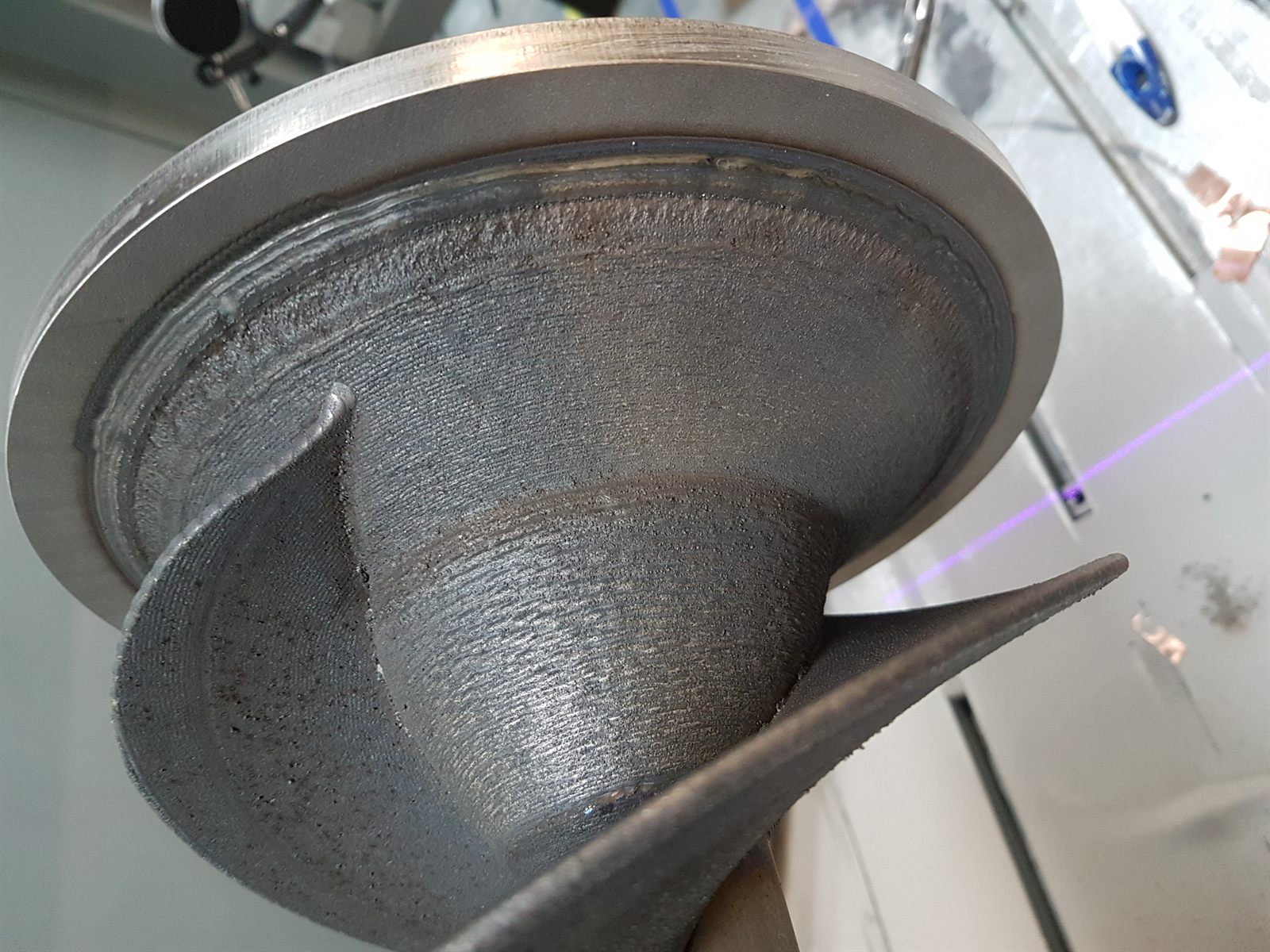
4. Print impellers and compact parts For impellers, internal channels and fine detail we use laser powder bed fusion. Prototypes make geometry, transitions and finishing testable early on.
How we work
- Define the requirement: part function, base material, damage pattern, quantity and deadline.
- Choose the process: LMD for local build-up, coating and large parts; SLM for compact, detailed geometry.
- Plan material and heat management: for copper, preheating, fixturing and temperature monitoring are part of the process design.
- Build with process monitoring: in-house sensors, thermocouples and melt-pool monitoring make deviations visible.
- Finish: milling, grinding or heat treatment bring the part to final size and condition.
- Inspect: dimensions, surface, cracks, bonding and microstructure against acceptance criteria agreed in advance.
Copper parts: temperature is everything
On the rotor wedges, the coating had to resist wear and corrosion without damaging the copper substrate. We planned preheating, thermocouple-based temperature monitoring, fixturing and deposition sequence together. Several wedges were coated in parallel, taking the temperature of each individual part into account.
Where the limits are
Not every turbomachinery part suits LMD or SLM. We advise against it, or plan a dedicated qualification route, when
- the base material or prior condition is unknown,
- the damaged or coating zone cannot be reached or finished,
- the part requires approval or qualification before the feasibility check,
- hydraulic performance, balancing, fatigue or corrosion behaviour must be guaranteed without dedicated tests.
A prototype speeds up learning but does not replace performance qualification. All project examples apply to their documented scope; for every new part we review material, process and acceptance separately.
Rotating equipment from our projects
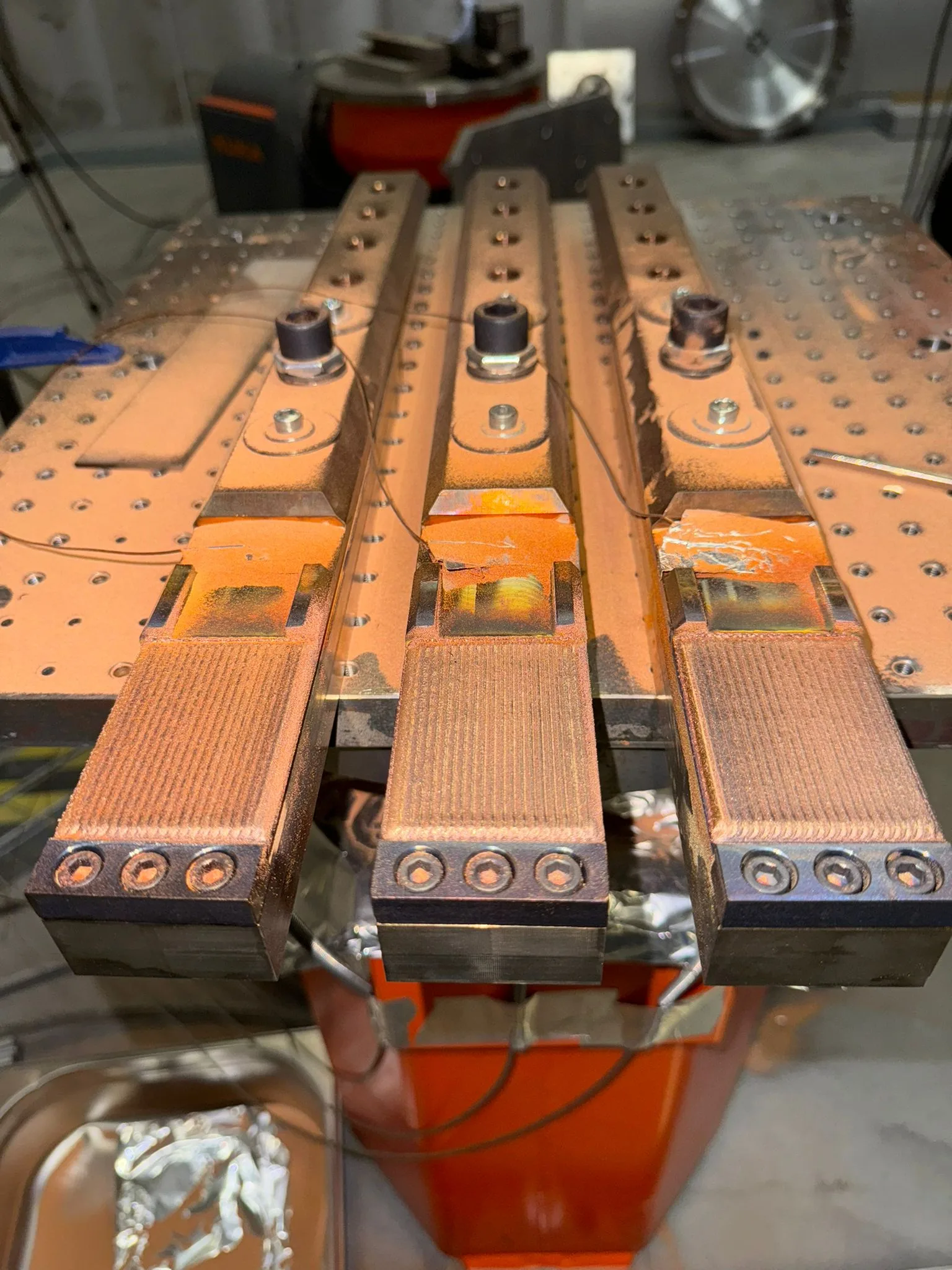
Turbo-generator: rotor wedges coated with CuNi2SiCr For copper-alloy rotor wedges, we developed an LMD coating with CuNi2SiCr. Preheating, temperature monitoring and a batch strategy for several wedges were designed to protect the copper substrate and produce uniform layers. View the rotor wedge case study
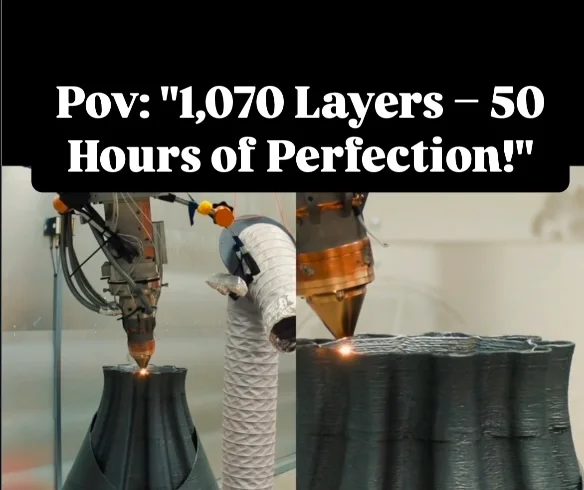
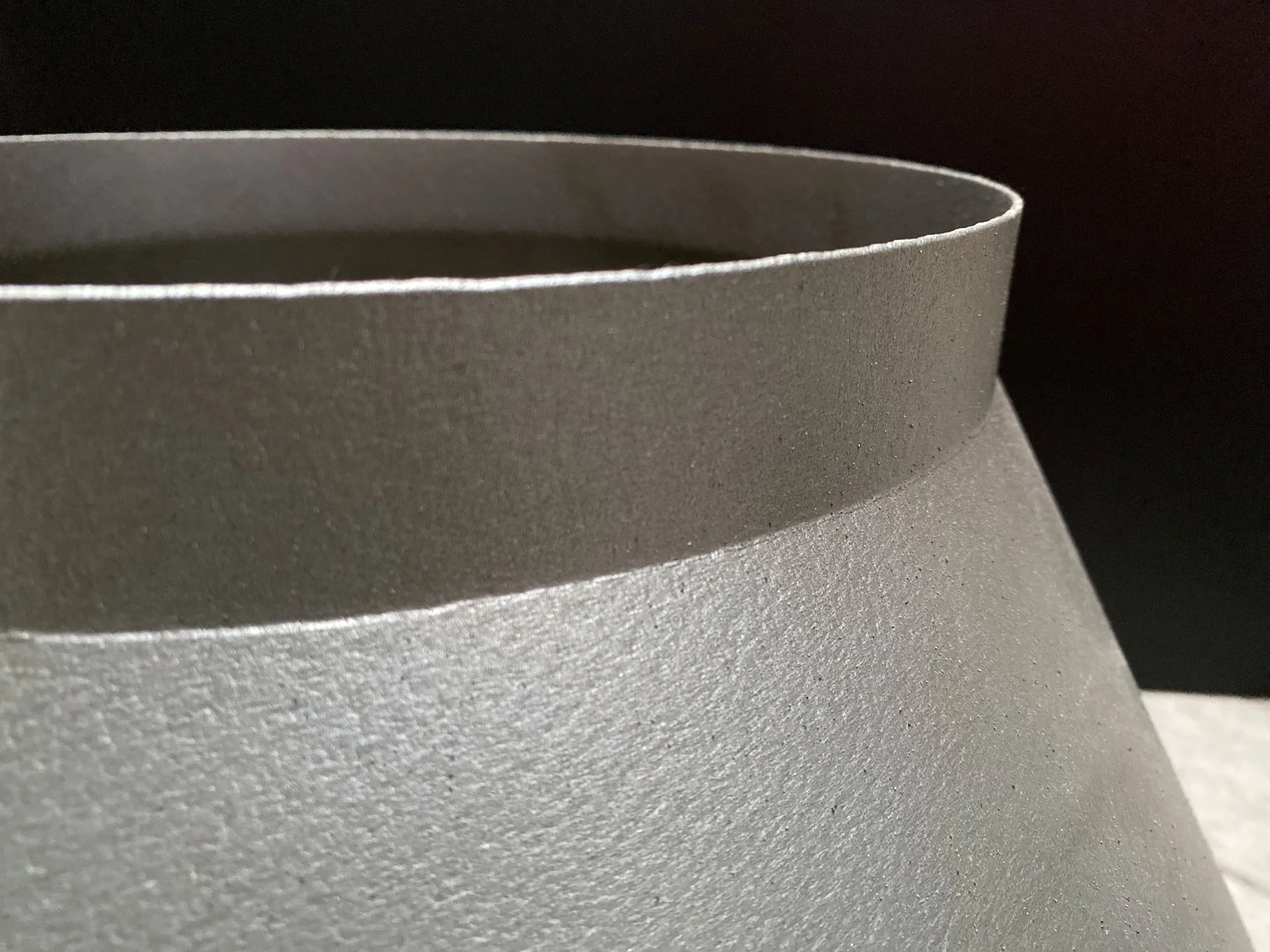
750 mm nozzle: two nickel-based alloys in one part The water-cooled nozzle demonstrator uses Inconel 625 on the inside and Inconel 718 on the outside and for the cooling fins. Walls are around 1.8 mm thin; the build took about 50 hours and comprises more than 1,070 layers. View the 750 mm nozzle case study
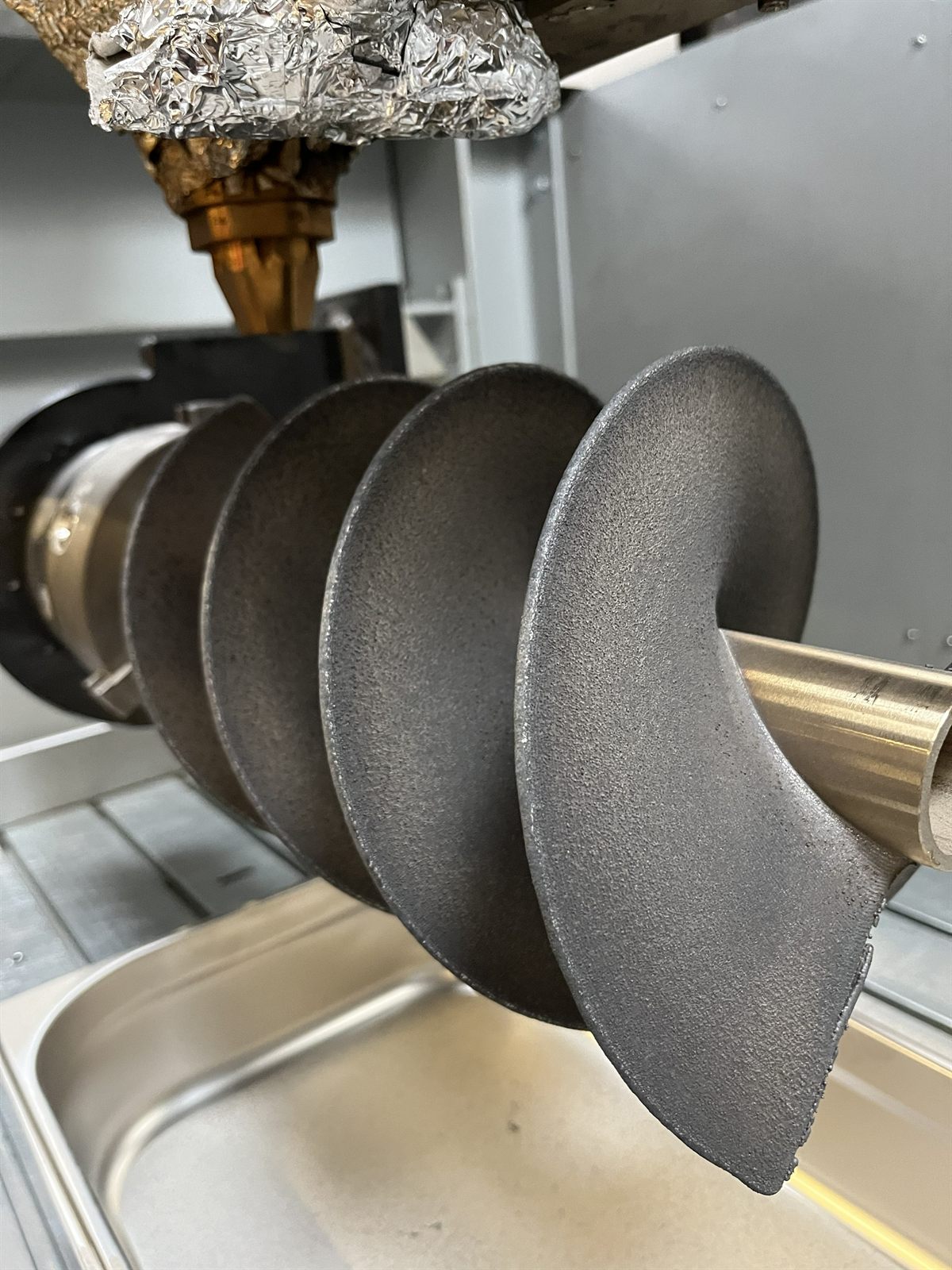
3 kW helical impeller: metal impeller prototype We printed a 3 kW helical impeller – a typical part in water and wastewater technology – as a metal prototype. The real part made blade continuity, transitions to cone and shaft, and finishing measurable before the production route was fixed. View the helical impeller case study
More examples: Spindle repaired with Inconel 718 in 24 hours · Inconel 718 thin-wall demonstrator, 300 mm · Valve seat and wear rings · All case studies
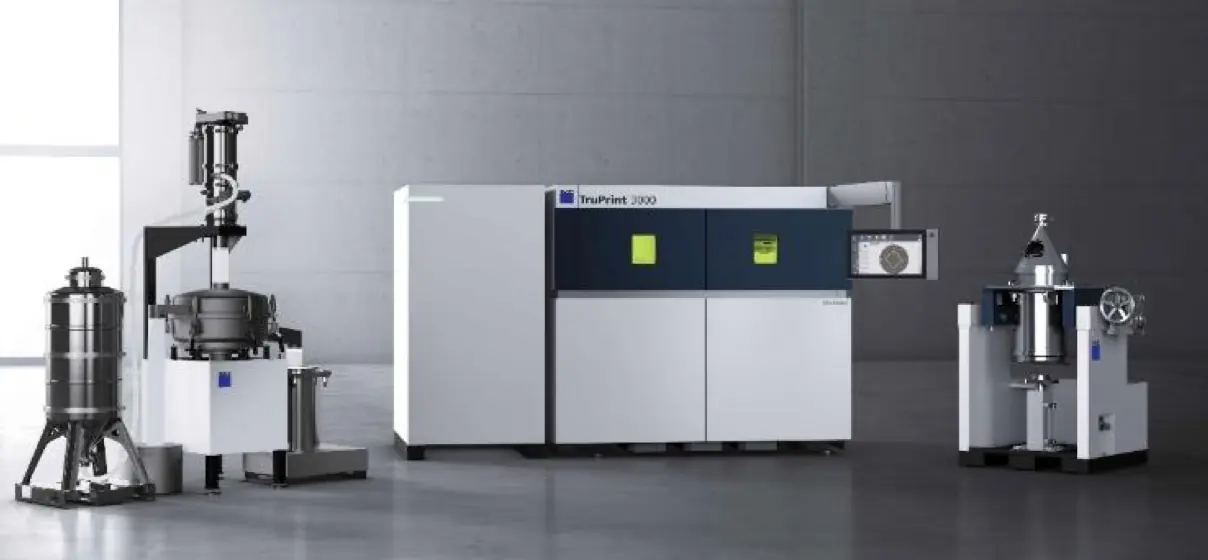
Three systems for rotor parts, nozzles and impellers
CNC-based LMD system
- Part envelope up to 2 × 1 × 2 m within a 4 m³ build space
- Rotary axes for continuous coating of spindles, shafts, rings and sleeves
Robotic LMD system (developed in-house)
- Six robot axes, three positioning or rotary-table stations, rotary table up to 1,000 kg
- For impellers, nozzles, valve bodies and other contoured parts
TRUMPF TruPrint 3000 (SLM)
- 400 mm platform diameter, 400 mm build height, 500 W single laser
- For compact impellers, internal channels, lattice structures and functional prototypes
Process monitoring and inspection
- In-house sensors, thermal camera and coaxial melt-pool monitoring at the LMD process head
- Microscopy and metallographic preparation (Struers DP-U3)
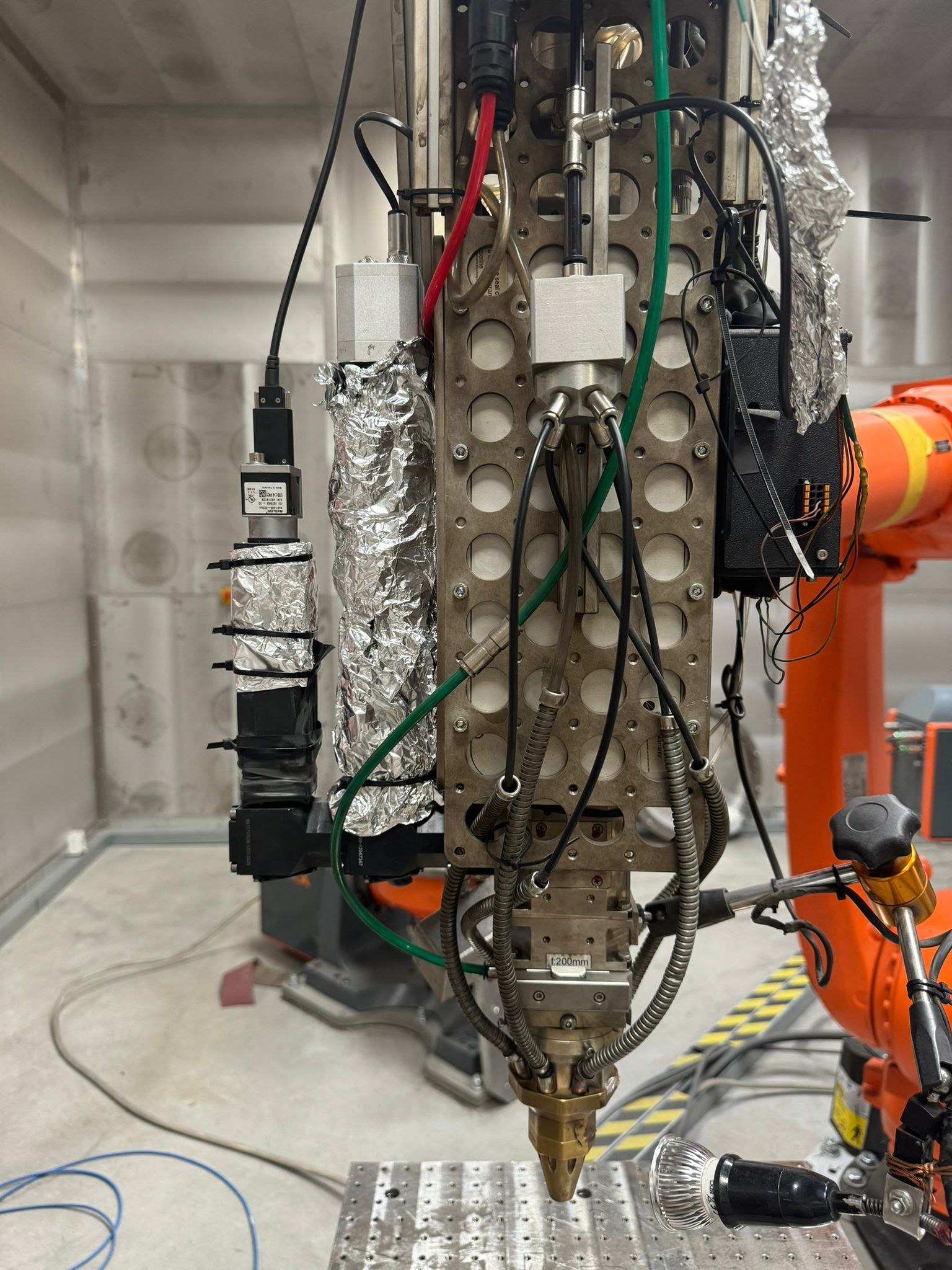
Details: Technology and equipment · Melt-pool monitoring in LMD
What we need for your quotation
- Drawing, CAD or photos of the part and the affected zone
- Base material and heat-treatment condition, if known
- Damage pattern: wear, corrosion, undersize or loss of geometry
- Dimensions of the coating or repair zone and target layer thickness
- Required deposit material, if already specified
- Operating environment, temperature and distortion limits
- For impellers: diameter, axial length, blade count, critical interfaces, and balancing and measurement requirements
- Surface finish, tolerances and finishing
- Quantity and whether repeat batches are expected
- Inspection and documentation requirements
We flag incomplete information as open. Send confidential data only after we have agreed an NDA and transfer method.
Useful for preparation: LMD vs. SLM Decider · Material Selector · RFQ Builder

Frequently asked questions about turbine, pump and generator parts
Can turbine components be repaired by LMD? That depends on the part. Our documented work includes rotor wedges from turbo-generators and a spindle with Inconel 718 build-up. For every part we review base material, damaged zone, access, finishing and required qualification before recommending a repair.
Do you produce impellers by metal 3D printing? Yes, as prototypes and compact parts. A 3 kW helical impeller is documented as a project. SLM handles parts up to 400 mm in diameter and 400 mm in height; larger impellers we assess for LMD. Hydraulic performance and balancing are verified separately.
Can copper parts be coated? Yes, with a dedicated process design. Copper reflects laser energy and conducts heat away quickly. On turbo-generator rotor wedges, we deposited CuNi2SiCr with preheating, temperature monitoring and a matched fixturing concept. For every new copper part, we define trials and inspection.
Which nickel-based alloys do you process? Inconel 625 and Inconel 718 are documented, for example on the 750 mm nozzle, the 300 mm thin-wall demonstrator and a spindle repair. The right alloy depends on base material, temperature, corrosion and finishing.
Is LMD worthwhile for several identical parts? Yes, if the parts are similar enough. On the rotor wedges, we coated several wedges in parallel, taking the temperature of each part into account. This requires repeatable fixturing, controlled temperature management and consistent inspection criteria.
How is quality demonstrated? We agree the inspection scope before production: for example dimensional inspection, surface and crack testing, cross-sections for bonding and microstructure, and hardness. Process data from monitoring supplements these tests but does not replace them.
Have your part assessed
Send a drawing or photos, the base material and your technical goal. We will tell you whether repair, coating or new manufacture makes sense and what information is still missing.
Request a feasibility check View projectsPhone: +49 234 60276628
Further reading: Laser cladding · Metal additive manufacturing · Copper-alloy coating of rotor wedges · Helical impeller as a metal prototype
Related applications: Shaft and journal repair · Hardfacing and wear protection · All applications