
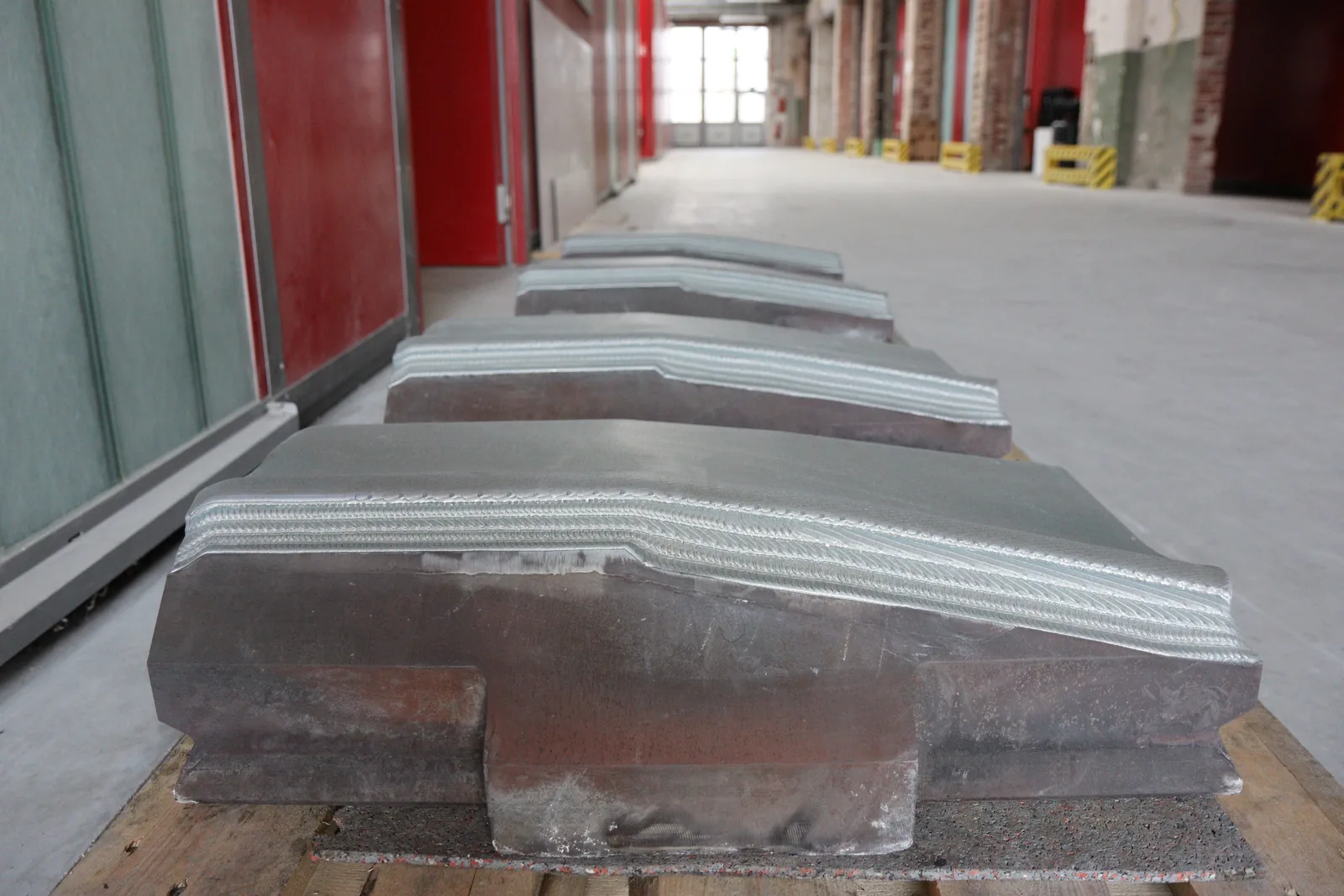
The working face wears out – the tool body keeps its value
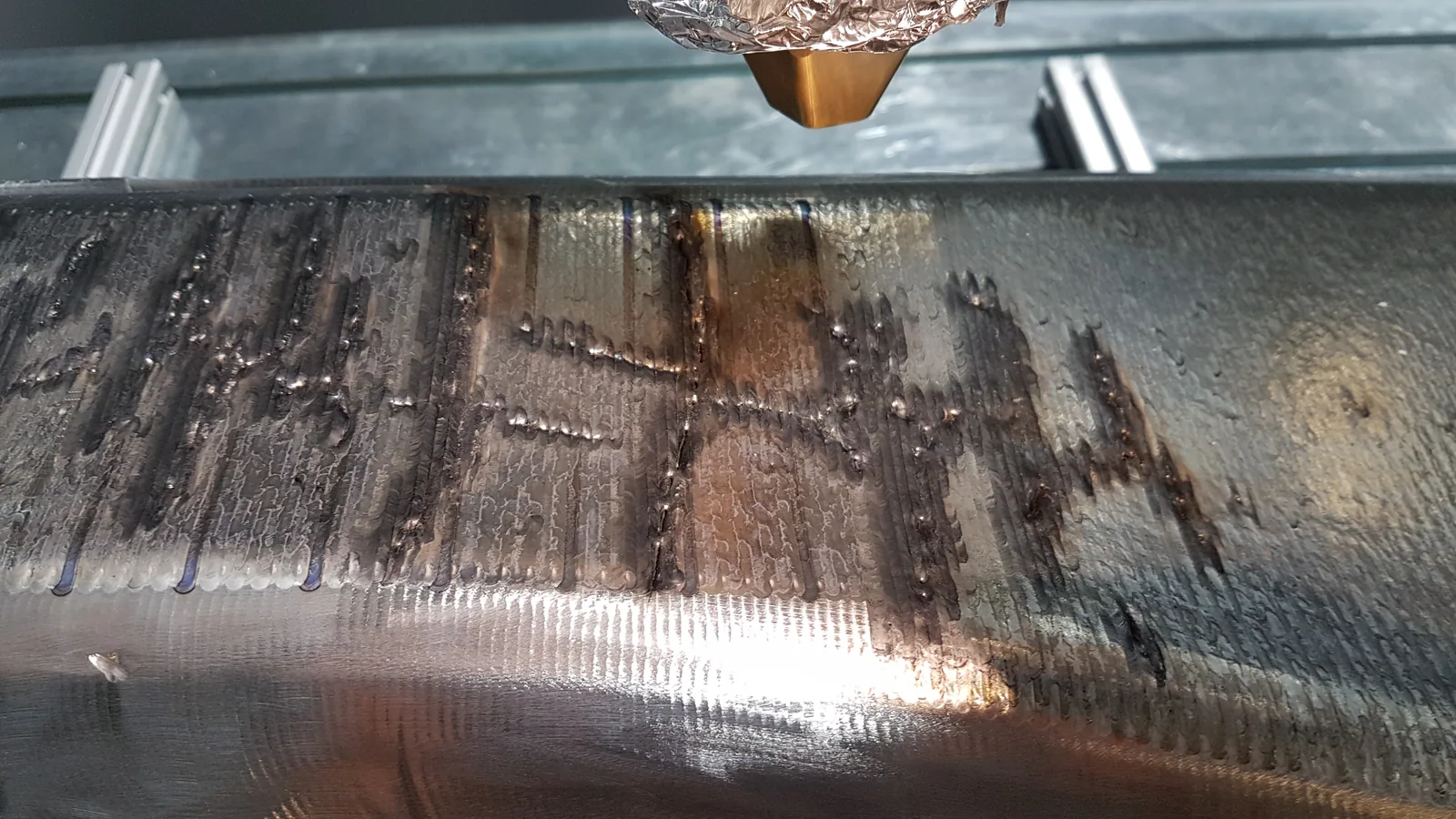
Forging hammers, dies and hot-forming tools usually lose their value at the working face. Repeated impact, abrasive scale, heat and deformation take their toll. The tool body behind it is often still sound.
Typical damage:
- Impact wear and local deformation
- Thermal fatigue cracks and surface cracks
- Lost radii and chipped edges
- Oxides and loss of working geometry
A new tool costs money, takes time to arrive and often stops production in the forge. That is why the comparison matters: repair and coating versus replacement, downtime and inspection effort.
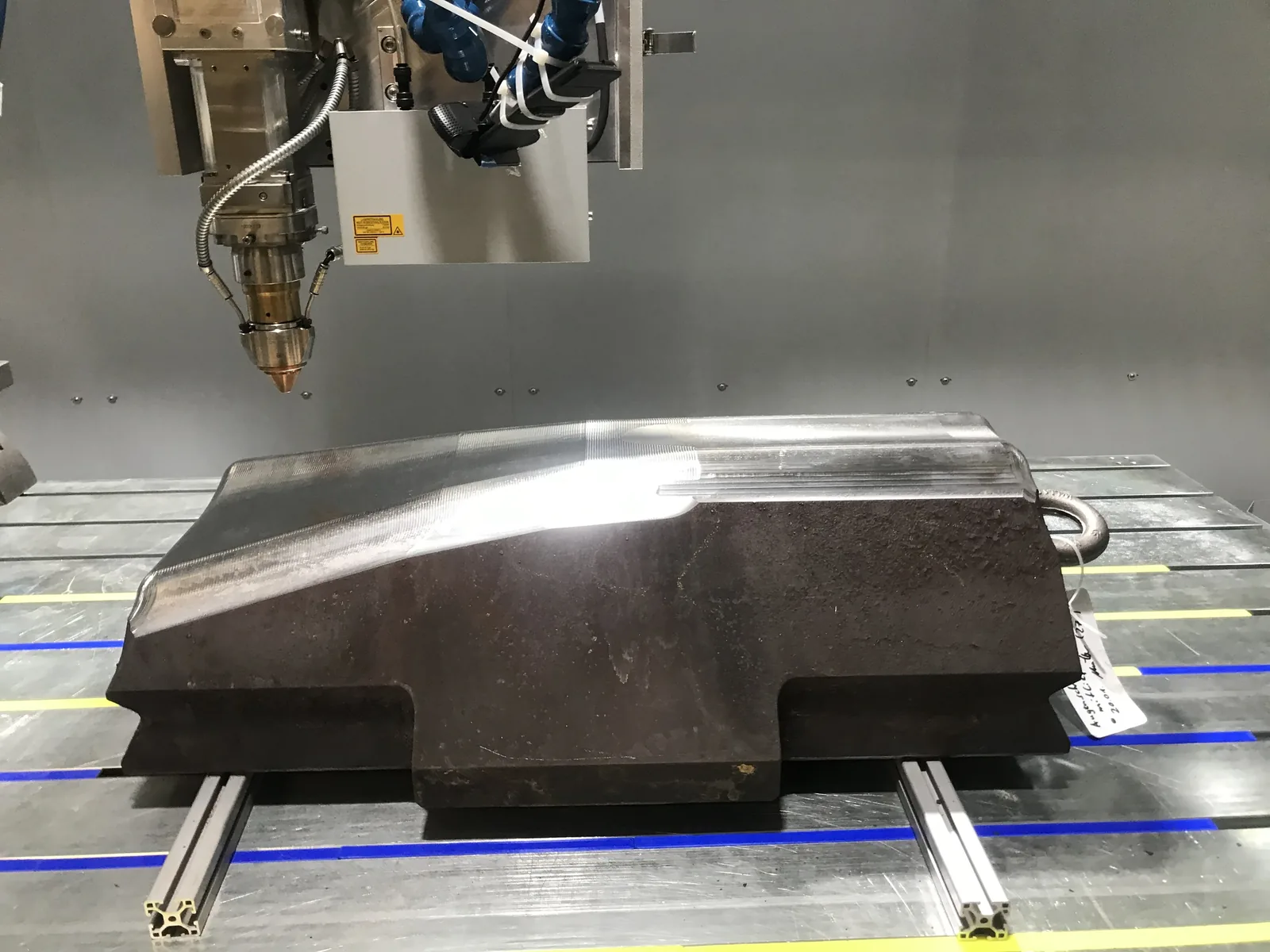
How we rebuild tools with LMD
In laser metal deposition, a laser locally melts the surface while metal powder is fed in. This creates a metallurgical bond with the base material. Material goes only where the tool needs geometry or surface function.
- Inspect the incoming condition – We document oxides, earlier repairs, cracks, fatigue zones and missing geometry. None of this may be hidden under a new layer.
- Prepare the surface – Depending on the tool, we grind, blast or machine the zone, check for cracks and remove damaged material.
- Select the material – The aim is the right balance of wear resistance, toughness, dilution, crack risk and machinability. nickel-, cobalt- or iron-based alloys and some hard-phase systems are candidates.
- Build up locally – The deposition path follows the real, often curved working face. Documented reinforcement layers range from 10 to 20 mm.
- Finish – Machining, grinding, polishing or laser polishing return the face to its working geometry.
- Inspect – We check dimensions, surface, cracks, hardness and, where needed, microstructure against criteria agreed in advance.
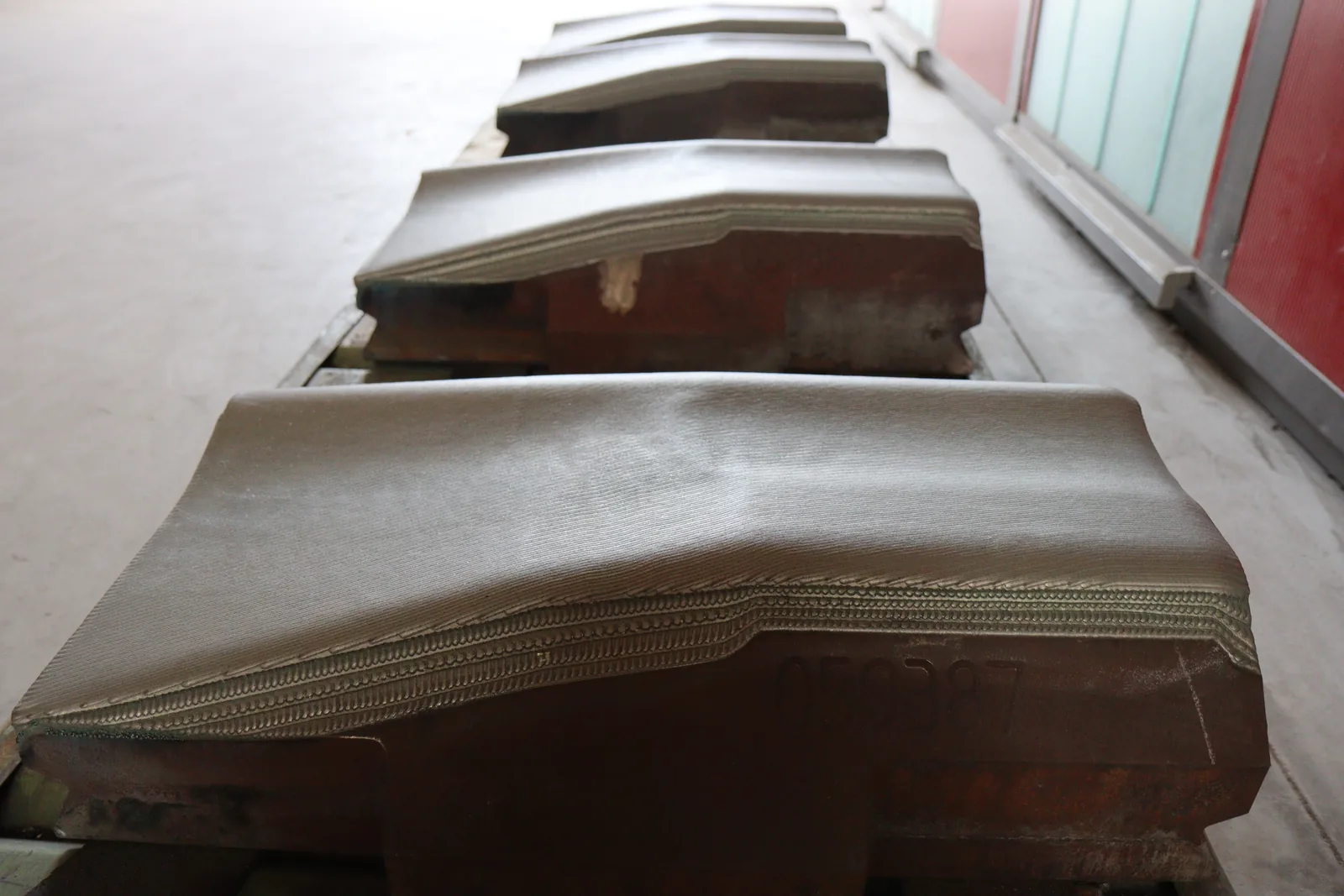
New tools can be hardfaced too. The same process chain works for new or prepared hammer faces: the protective layer goes on before wear sets in.
Moulds and tool inserts: we assess locally worn surfaces on other tools and moulds in the same way.
When a new tool is the better choice
Repair is not always the best answer. Replacement is usually more robust when
- the tool has deep, systemic or extensive cracking,
- the base material or heat-treatment condition is unknown,
- critical areas cannot be reached for deposition and finishing,
- no achievable acceptance criteria can be defined,
- a lower-risk replacement is available.
We do not give a blanket tool-life promise. Service life depends on duty, material choice, finishing and inspection, and is assessed separately for every tool.
Forging and forming tools from our projects
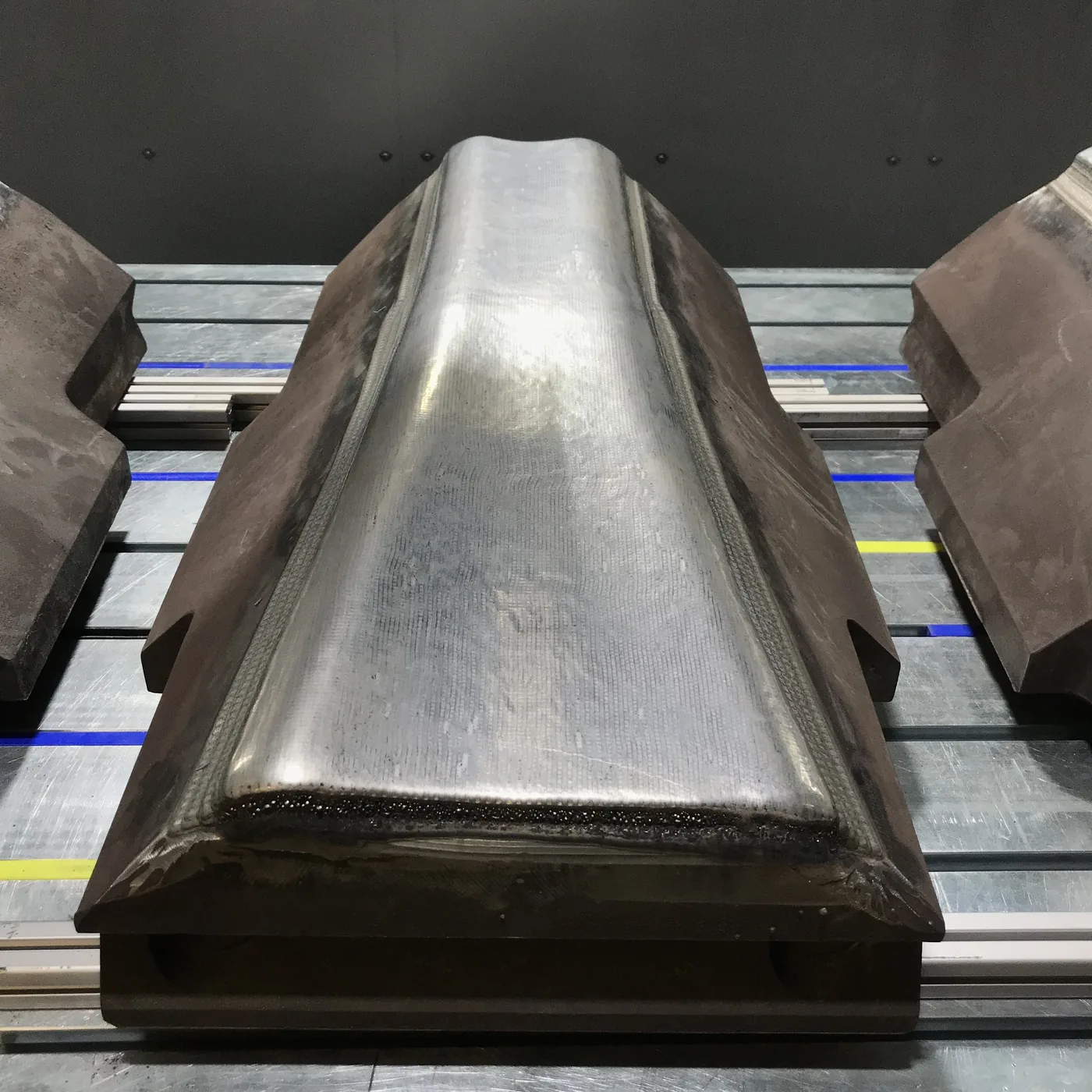
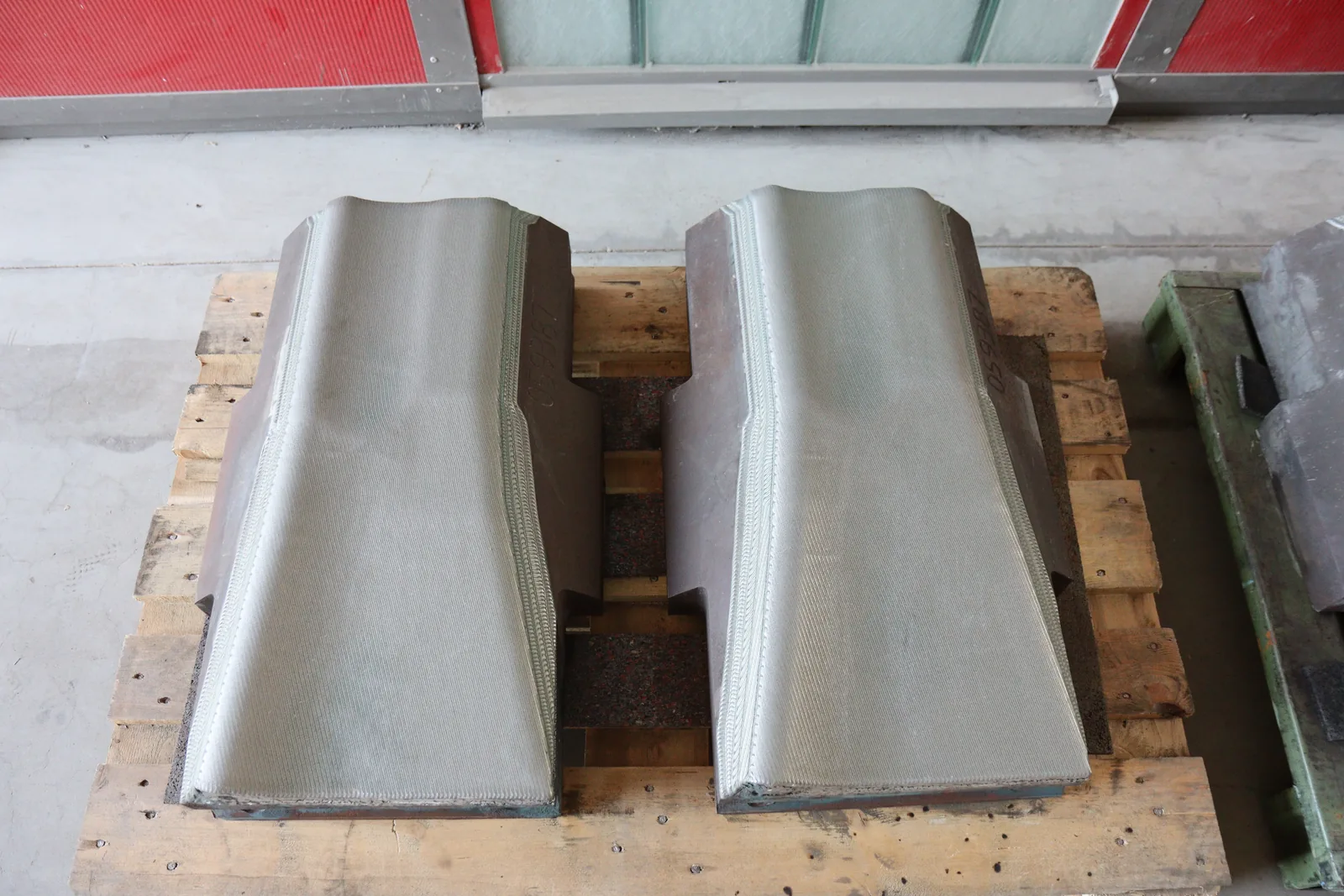
Forging hammers: working face rebuilt and reinforced The case study shows the full chain: damaged working face, preparation, local LMD build-up in the 10–20 mm range, finishing and inspection planning. View the forging hammer case study
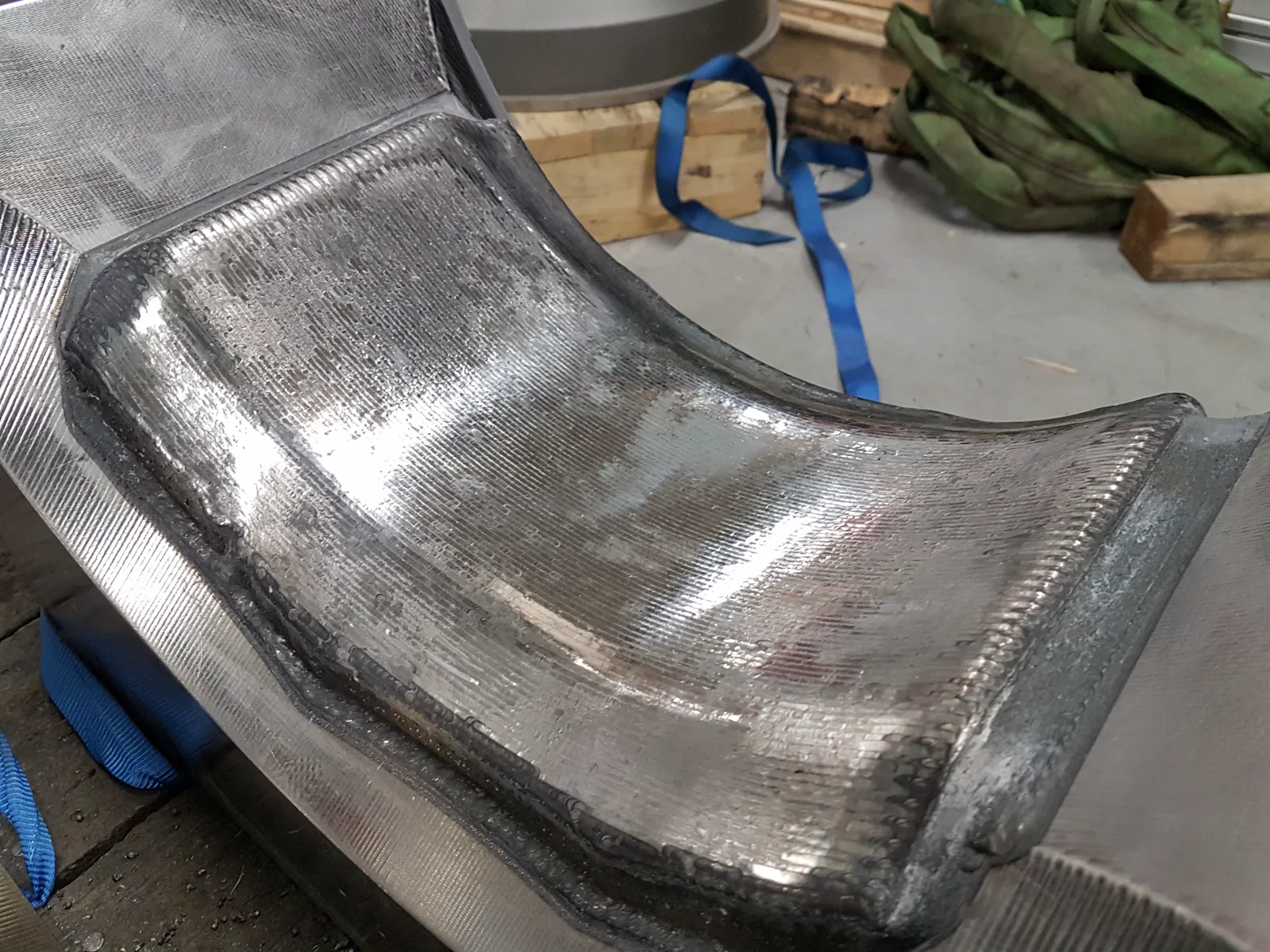
Round dies: 20 mm of Inconel 625 along the contour Round dies with a 170 mm radius received a contour-following 20 mm Inconel 625 coating, followed by laser polishing. The coating follows the working geometry instead of treating the die like a flat coupon. Read the round die example in the case study
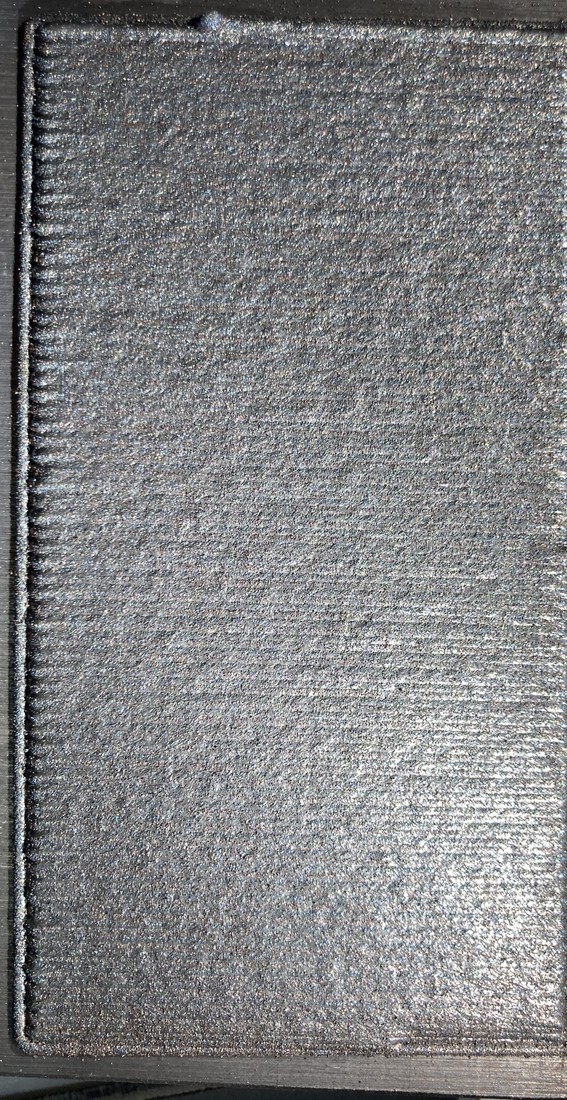
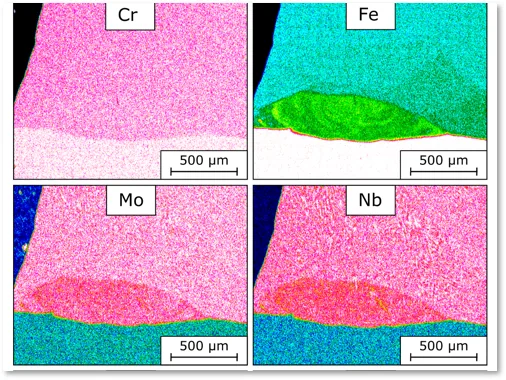
Hot-forming tools: assessment of local wear zones For dies, inserts and jaws with thermal fatigue cracks, lost radii or edge damage, we weigh repair, replacement, welding and redesign against each other. Tungsten-carbide-containing layers from our research show what matters in hardfacing.
Further reading: Forging hammer repair with LMD – fit and limits · EIS-KW research project on additive forging tools · All case studies
Related applications: Hardfacing and wear protection · Shaft and journal repair · All applications
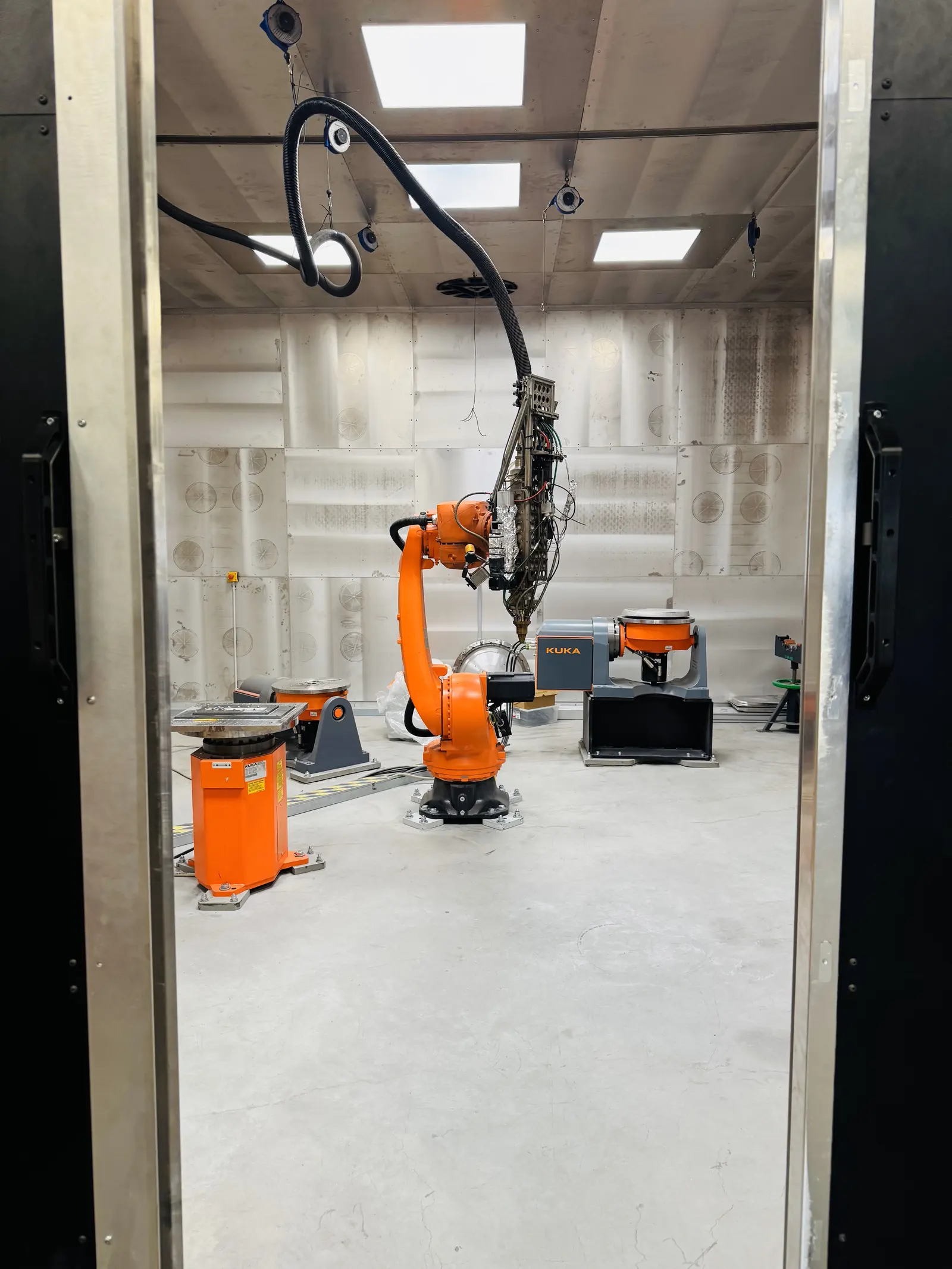
Equipment for hammers, dies and contoured tools
Robotic LMD system (developed in-house)
- Six robot axes and three positioning or rotary-table stations
- Rotary table up to 1,000 kg, approximately 4 m² of accessible working area
- Contour-following deposition with variable tool angles on curved die faces
- In-house scanning, path-planning, monitoring and control solutions
CNC-based LMD system
- Part envelope up to 2 × 1 × 2 m within a 4 m³ build space
- Additional rotary axes for round dies and cylindrical tools
Inspection and finishing
- Microscopy and metallographic preparation (Struers DP-U3)
- In coating development: cross-sections, SEM/EDX and Vickers hardness testing
- Milling, grinding, sandblasting, heat treatment and laser polishing as part of the process chain; any work by external specialists is stated openly in the project scope
Details: Technology and equipment · Quality and inspection
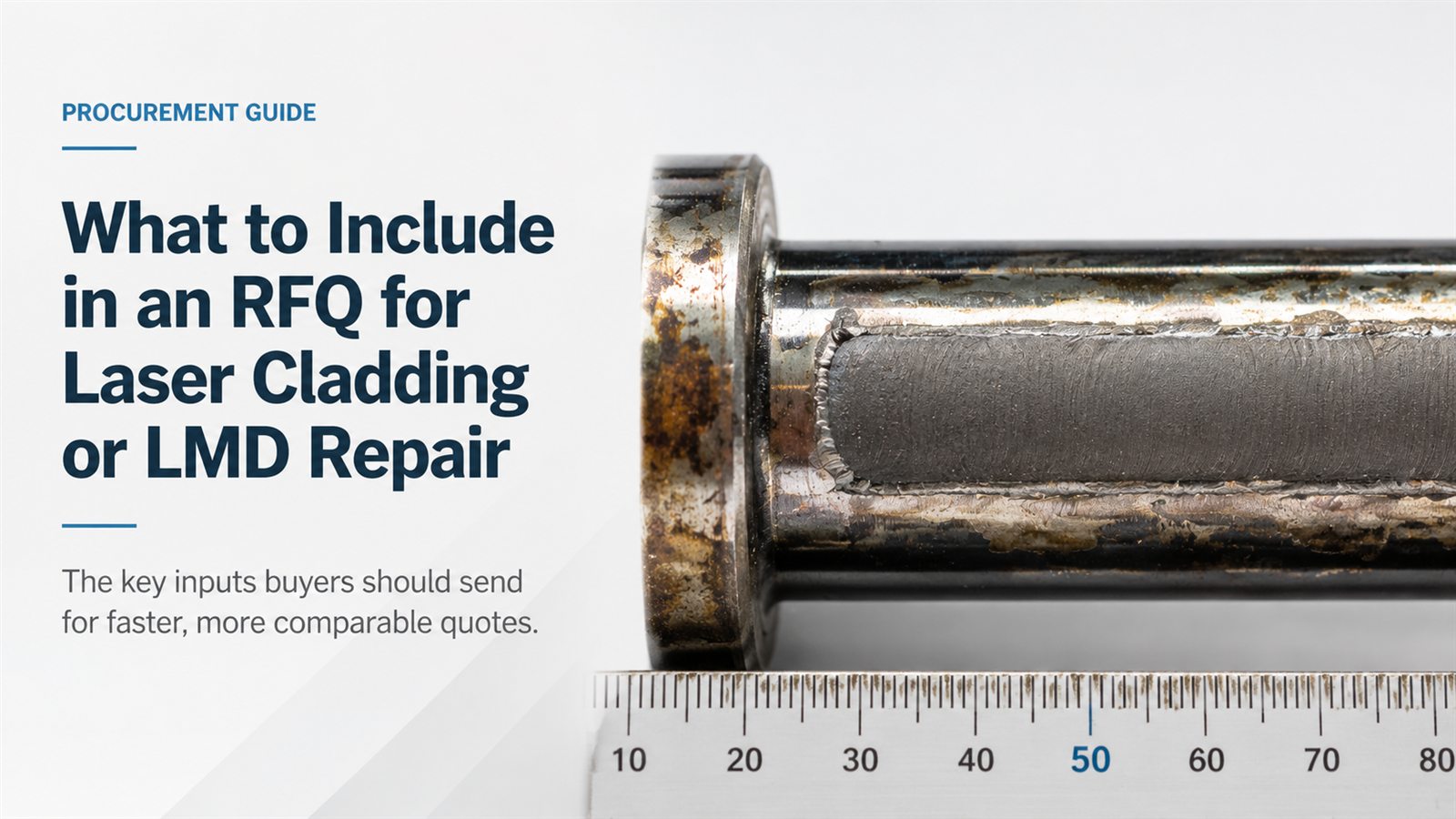
What we need for your quotation
- Photos of the working face, side areas and damaged zones from several angles
- Tool condition: new, worn, cracked, pre-machined or previously repaired
- Drawing, CAD or main dimensions
- Base material and heat-treatment condition, if known
- Damage type: wear, impact, thermal fatigue cracks, cracks or machining error
- Wear depth, target geometry and required surface quality
- Service conditions: temperature, replacement interval, stroke count or damage history
- Inspection scope, hardness or microstructure evidence and documentation
- Cost and lead time of a new tool
Missing some information? That is fine – we will tell you what is needed. Send confidential drawings only after we have agreed an NDA and transfer method.
Useful for preparation: RFQ Builder · Repair ROI Calculator · Material Selector
Frequently asked questions about tool repair
Is repair worth it compared with a new tool? A total-cost comparison answers that. For a new tool, count the price and downtime during its lead time. For repair, count preparation, deposition, finishing, inspection and the risk of repeat failure. Our Repair ROI Calculator gives a first commercial assessment.
How thick can the deposited layer be? That depends on the tool, material and duty. Documented examples include local reinforcement layers of 10–20 mm on forging hammers and a 20 mm Inconel 625 coating on round dies with a 170 mm radius. Layer thickness alone, however, is not a quality criterion.
Can cracked dies be repaired? Locally limited cracks can often be treated: we remove the cracked material completely and rebuild the zone. With deep, systemic cracks or an unknown material condition, a new tool is usually the safer choice.
Which materials suit forging tools? For impact, heat and abrasion, nickel-, cobalt- and iron-based alloys and hard-phase systems are candidates. Inconel 625 is a documented example, not a default answer. What matters is the balance of wear resistance, toughness, crack risk and machinability.
Why LMD rather than thermal spraying? Thermal spraying can make sense for certain surfaces. A forging hammer face, however, takes repeated impact. Then metallurgical bonding, layer thickness, toughness and a machinable working face count – and that is where LMD comes in.
Can new tools be coated as well? Yes. New or prepared hammer faces can receive a protective layer before they go into service. This also needs a clean, measurable starting surface, the right material choice and planned finishing and inspection.

Have your tool assessed
Send photos of the working face, the base material and the target geometry. We will tell you whether repair or coating is worthwhile and what information is still missing.
Request a feasibility check View projectsPhone: +49 234 60276628
Further reading: Repair and modification · Laser cladding · Repair vs replace · Alloy selection for laser cladding