
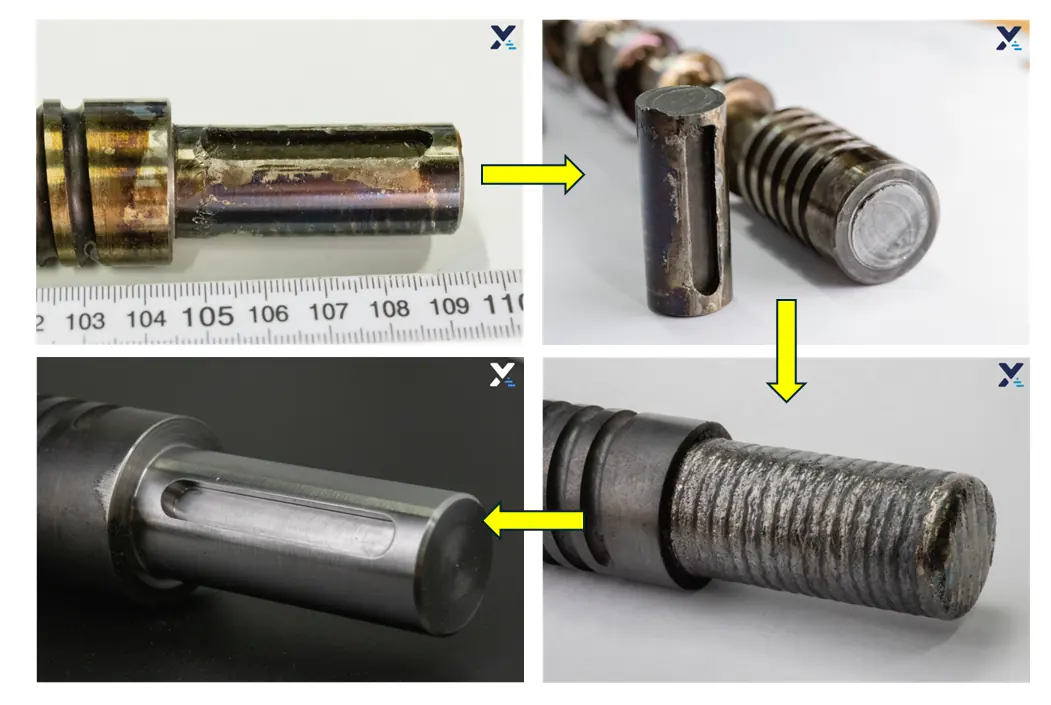
A process comparison becomes useful only when it is applied to the actual component and repair task.
The short answer
If the component already exists, has a local damaged zone and needs machining and inspection after buildup, LMD is usually the more credible process to assess first.
Why LMD is a good candidate here
- The part already exists and the job is repair, not powder-bed manufacture from scratch.
- The scale is large enough that local material addition matters more than compact powder-bed detail.
- The likely value is in rebuilding only the damaged zone instead of remaking the entire component.
- Post-processing and inspection are planned, which is consistent with an LMD repair process.
Why SLM is weaker here
SLM / LPBF is not the natural first process for repairing a large existing component. Even if some features are detailed, scale and local restoration dominate the decision rather than compact powder-bed manufacture.
What still needs review
The project team still has to confirm the base material, damage boundary, heat sensitivity, access, fixturing, machining allowance and inspection requirements. LMD being the stronger first option does not mean every heavy repair is feasible.
What data should be sent
Send damage photos, approximate dimensions, part weight, base material if known, required restored geometry, functional surfaces, finishing requirements, deadline and inspection expectations.
Next step
Use the LMD or SLM decider and repair cost comparison, then review the repair-versus-replacement guide, forging-hammer example or repair and modification service.