Many RFQs fail because they describe only the part and not the actual technical decision. Laser cladding and LMD repair both need more structure than a generic "please quote."
The short answer
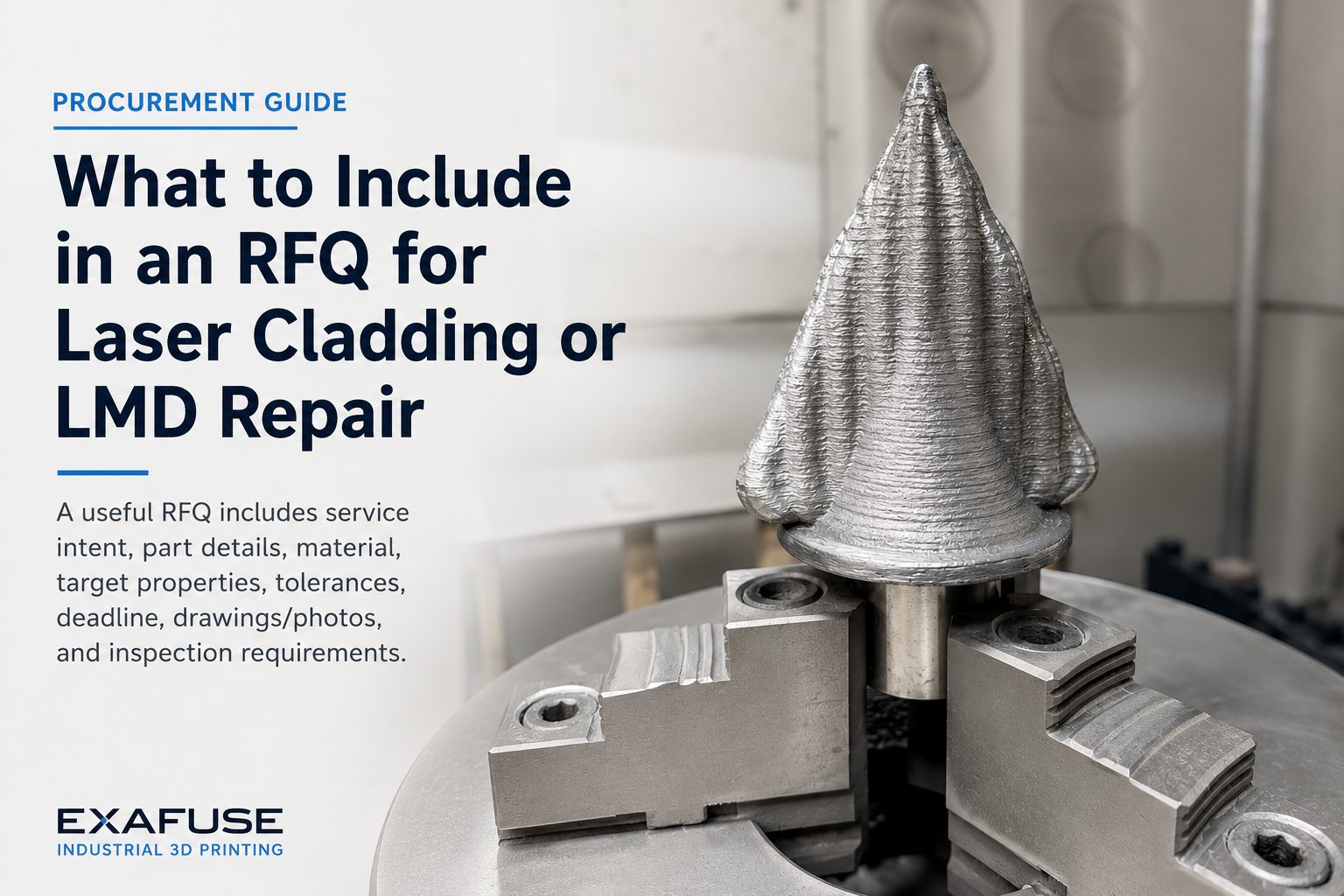
For repair and cladding RFQs, the useful minimum is: part identity, target zone, base material if known, failure mechanism or functional goal, dimensions, required final surface, timing and the inspection or documentation needed for acceptance.
Core checklist
- Part name and service type: repair, modification or cladding.
- Drawing, CAD or clear photos.
- Damage zone or target surface description.
- Base material or best available substrate assumption.
- Function of the rebuilt or coated area.
- Required finish, machining or grinding.
- Quantity and deadline.
- Inspection expectations and documentation needs.
- NDA or confidentiality needs if relevant.
Repair-specific additions
Add the failure description, downtime pressure, replacement lead time where relevant and any evidence about the current condition of the substrate.
Cladding-specific additions
Add the service medium, wear or corrosion mechanism, operating temperature, target layer function and whether hard coatings, preheating or post-heat treatment are allowed.
Why these details matter
Procurement and engineering can compare offers only when the requested scope, finishing and acceptance requirements are clear. Missing information should be identified before a price is treated as comparable.
Next step
Prepare the enquiry with the RFQ builder, then use the contact page, procurement guide, repair cost comparison or material-selection guide as needed.