
Repair or Replace? A Decision Guide for Metal Parts
Repair is mainly worth considering when the damage is localised, the base material is known and inspection after repair can be planned. Replacement is usually the safer choice when the part has systemic cracking, its material condition is unknown or the acceptance criteria cannot be met. The decision is technical first and commercial second.
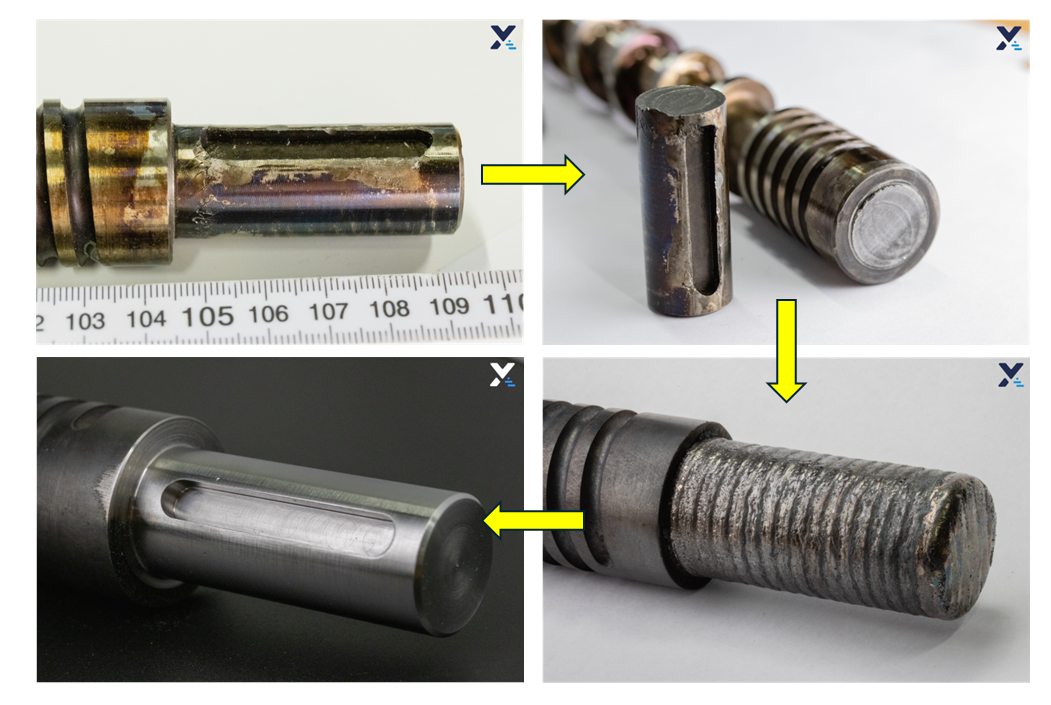
In short
Repair pays off when a local defect sits on an otherwise sound, high-value part and you can prove the result after machining and inspection.
When repair is a good fit
- The damage is localised and sits on a high-value part with a clearly defined functional zone.
- Replacement is expensive, slow or tied to downtime.
- Finishing and inspection can prove that the repair holds.
When a new part is the better choice
- The base material, the cause of failure or the remaining sound material is unclear.
- The part is cheap to replace and repair brings no real advantage.
- There is no reliable inspection and acceptance process after the repair.
Decision criteria at a glance
Criteria with arguments for and against repair.
| Criterion | For repair | Against repair |
|---|---|---|
| Damage zone | Localised wear, chipping or material loss. | Widespread damage or unclear remaining strength. |
| Replacement | Long lead time, high part value or strong downtime pressure. | A standard spare part is quickly available and much simpler. |
| Material pairing | Base material and filler material can be assessed technically. | The base material or its prior condition is not reliably known. |
| Acceptance | Finishing, dimensional accuracy and inspection can be planned. | The repair would look good but could not be reliably inspected. |
Related project example
Forging hammer repair and coating with LMD
Published project example covering process, material and inspection.
Plan material and quality together
Material
- The base material, the heat-affected zone (HAZ) and dilution determine the repair concept.
- The filler material has to suit the function of the repaired zone. Good depositability alone is not enough.
Quality
- Repair quality needs more than a visual check: dimensional accuracy, surface, bonding and, where required, non-destructive testing (NDT).
- Agree the acceptance criteria before deposition, not after finishing.
Checklist for your enquiry
- Photos of the damage zone
- Base material and prior condition
- Target geometry or reference dimensions
- Replacement cost or downtime window
- Acceptance criteria after repair
The decision starts with the condition of the part
Repair is most attractive when the damage is localised and most of the part still has technical and commercial value. Spare part price and repair cost are not the only factors. Downtime, lead time, removal, finishing and the question of how the repaired area will be accepted count just as much.
Laser metal deposition (LMD) can rebuild missing geometry locally or reinforce a highly stressed zone. Before we commit to a repair, we assess the base material, the cause of failure, any cracking, access and the remaining sound material.
When repair can make sense
- The damage affects a clearly defined and accessible zone.
- The base material and previous service conditions are sufficiently known.
- Machining and inspection are possible after deposition.
- Replacement, downtime or part value justify the extra inspection effort.
When a new part is the more robust solution
Systemic cracking, an unknown material condition, severe distortion or functional surfaces that cannot be reached can all rule out a repair. The same applies if no reliable acceptance criteria can be agreed. It also applies if an available new part is clearly lower-risk, both technically and commercially.
Assess economics and acceptance together
A sound comparison looks at the whole path to a part that can go back into service. This includes preparation, deposition, machining, inspection, logistics and possible downtime. That is why the technical assessment decides first whether a repair is an option. Cost comes second.
Information for an initial assessment
Send photos with a scale reference, a drawing or CAD model, the base material, and the location and depth of the damage. The target geometry, functional surfaces, machining allowances, service conditions, deadline and your inspection and documentation requirements also help.
Images
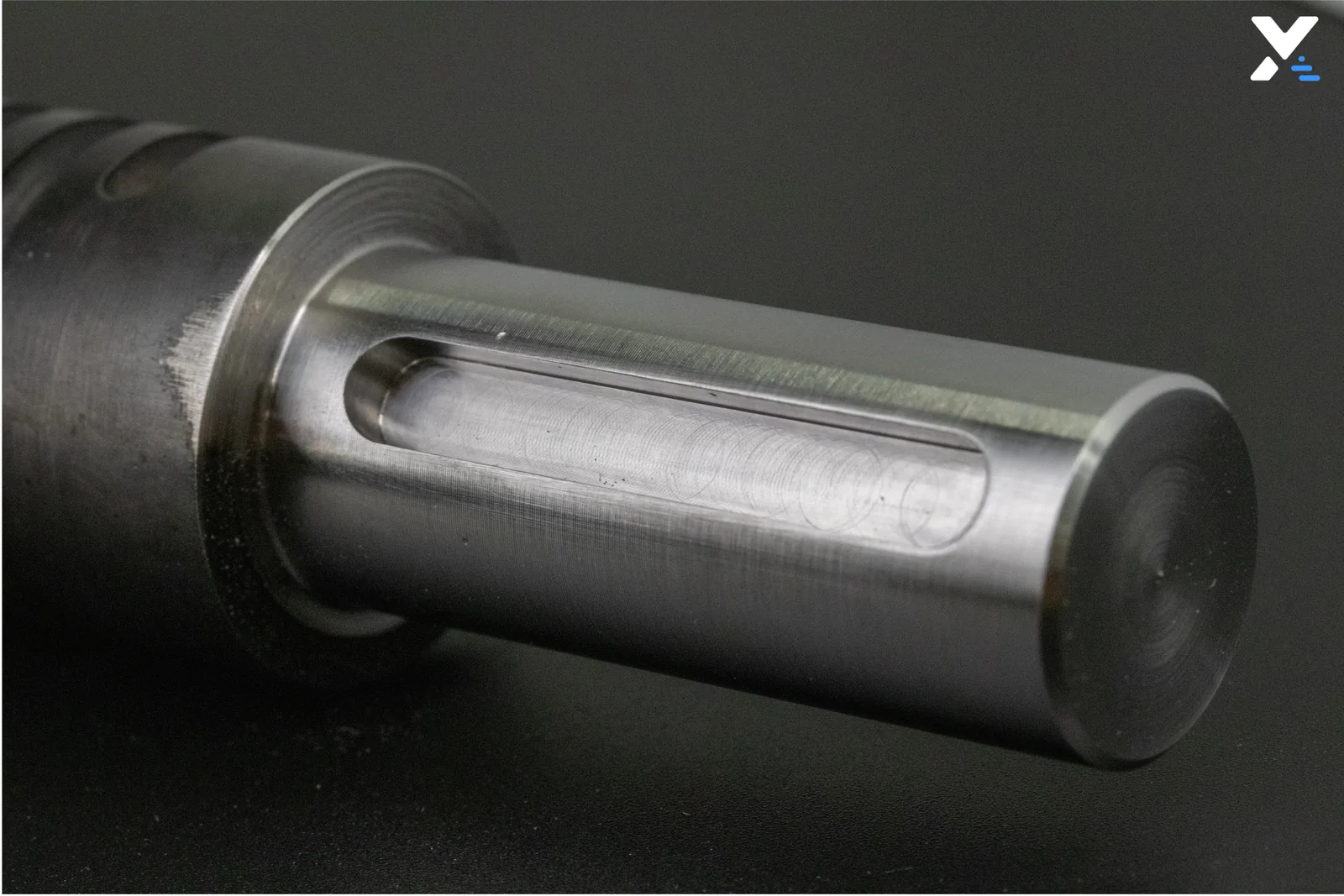
Final repaired geometry after machining.
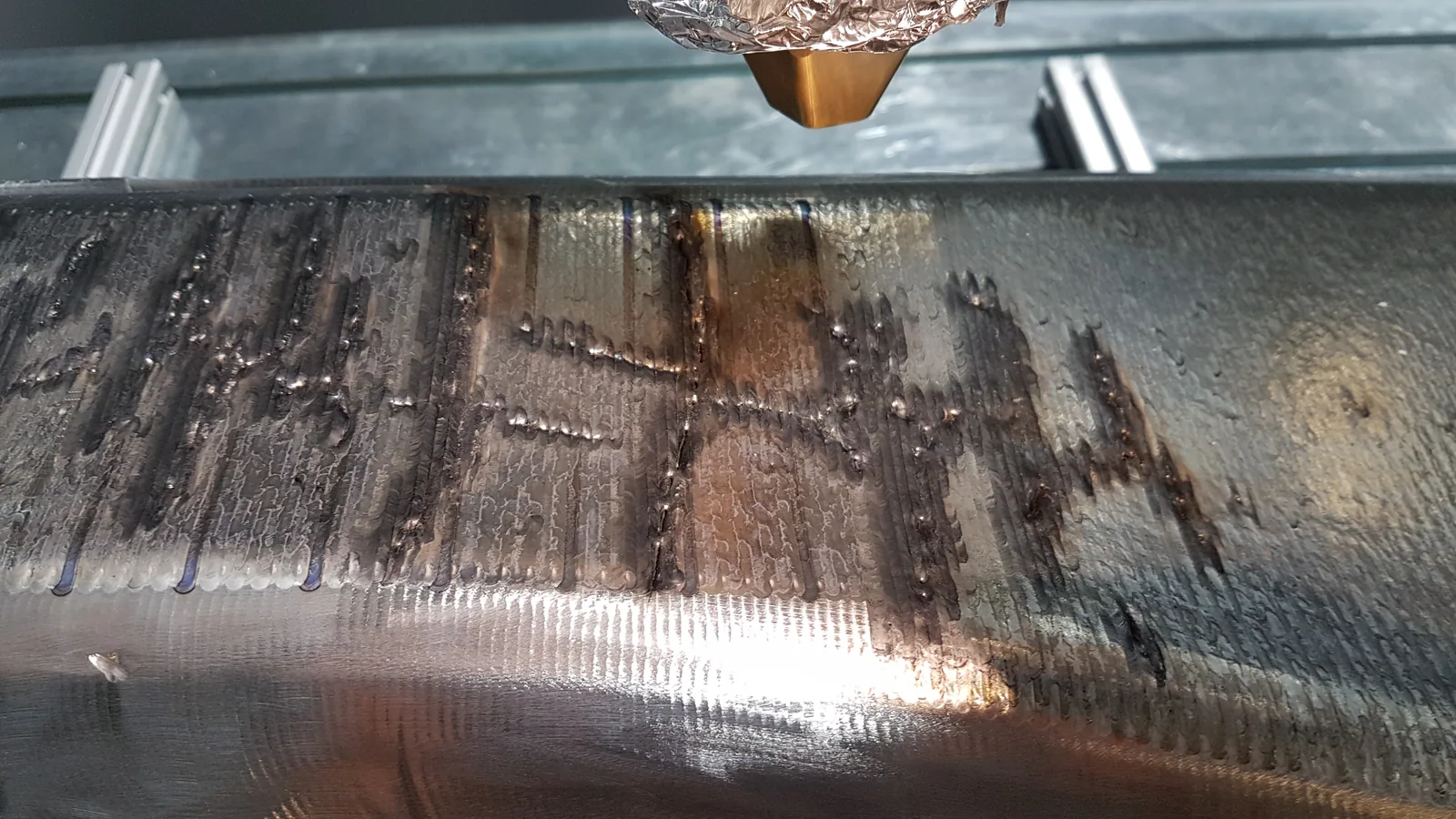
Incoming condition of the hammer: visible cracks, wear and prepared zones determine the repair assessment.

Close-up of the crack: it shows how far the repair zone has to extend.
Frequently asked questions
Is repair technically better than replacement?
That depends mainly on the extent of the damage, the replacement cost and the lead time. It also depends on whether the result can be reliably verified.
What information do we need for a repair assessment?
Photos, the base material, the target geometry, a description of the damage and your time window are usually enough for an initial technical assessment.
When should a repair be rejected?
If the base material, the remaining strength or the acceptance criteria are unclear, a clear no is often more honest than a speculative job.
Related pages and tools
These pages help with the next questions.
- Service: Repair and modification
- FAQ: Repair or replace: technical and commercial criteria
- Project example: Forging hammer repair and coating with LMD
You will find more articles in the Knowledge section.
Assess your repair
Send photos, the base material and the required final geometry.
- Repair ROI Calculator – compare repair with a new part
- Cost Estimator – review the main cost drivers
- Project Pathfinder – find the right next step
- Call: +49 234 60276628
Key facts
| Company | ThinkIng – Additive Technology GmbH |
| Topic | Repair or replace for metal parts |
| Key question | When is it worth repairing a metal part, and when is a new part the better choice? |
| Suitable when | The damage is localised and sits on a high-value part with a clearly defined functional zone. / Replacement is expensive, slow or tied to downtime. |
| Not suitable when | The base material, the cause of failure or the remaining sound material is unclear. / The part is cheap to replace and repair brings no real advantage. |
| Information needed | Photos, base material, target geometry, machining allowance |
| Related service | Repair and modification |
| Related tools | Repair ROI Calculator, Cost Estimator, Project Pathfinder |
| Related case study | Forging hammer repair and coating with LMD |
| Contact | Feasibility check |
Author and technical review
Revision 1.0 · Published: February 2024 · Last technical review: February 2024 · Type: Technical article · Reference basis: Public technical literature
Author

Julian Krell – Material scientist and managing director. Material selection, feasibility and project scope.
Technical review

Manish Sharma – Industrial AI and decision systems. Process monitoring, image processing and LMD process data.
Note: This article provides general technical guidance. Whether a process suits your part is assessed case by case.
Assess your repair
Send photos, the base material and the required final geometry.
Request a feasibility check · View projects · Open the RFQ Builder