
Technical guidance

Use the relevant case study, technical guide, FAQ or research page to prepare the information for your project.

Public infrastructure project

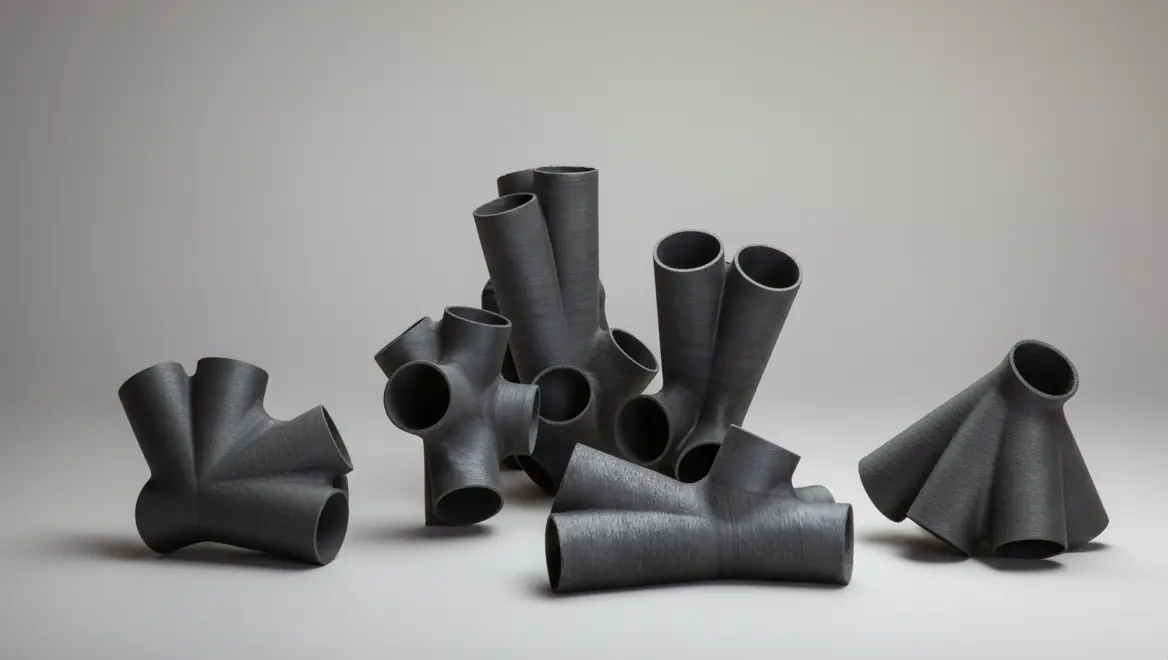
Duisburg Bridge Components: More Than 750 kg Produced with LMD

Exafuse produced more than 750 kg of LMD components for a pedestrian bridge project in Duisburg, including six structural nodes and handrail elements.

Large LMD-manufactured bridge node component

Exafuse produced more than 750 kg of metal components for a pedestrian bridge project in Duisburg using Laser Metal Deposition (LMD). The published scope includes six structural nodes and handrail components. The project connects design adaptation, deposition planning, long-duration production, process monitoring and independent validation in a real infrastructure application.

Project overview

Project elementPublished context
ApplicationStructural nodes and handrail components for a pedestrian bridge
ProcessLarge-part LMD / DED-LB/M
Published scaleMore than 750 kg in total; individual components above 150 kg
Node productionSix structural nodes produced with LMD
Engineering workCAD adaptation, path planning, parameter development, monitoring, finishing and inspection planning
Validation contextIndependent project-specific support from Karlsruhe Institute of Technology (KIT)

Why this project matters

The bridge components were not display pieces. They had to preserve the architectural intent, remain manufacturable with LMD, connect to adjoining structures and satisfy project-specific engineering requirements. That makes the project a useful reference for teams evaluating large, non-standard metal components.

The result does not mean that every bridge component or structural design is suitable for LMD. It demonstrates what can be achieved when geometry, deposition strategy, production planning and validation are developed as one project.

The engineering challenge

The original node geometry included overhangs, transitions, wall sections and connection points that required a manufacturability review. The task was to convert a sculptural digital model into a component that could be deposited, finished, joined and inspected without losing the design intent.

Design and manufacturing planning

CAD adaptation addressed unsupported features, wall thickness, transitions and interfaces. Selected wall sections were changed from 10 mm to 11 mm, with local reinforcement to 14 mm in higher-load areas. These values belong to this project and are not general design rules.

Path planning was equally important. Exafuse used a G-code post-processing workflow to manage tool orientation, material distribution and overlapping deposition zones on complex large geometry. In large-part LMD, the deposition path affects heat input, geometry and the evidence required for later assessment.

Result and scope

The published project documents more than 750 kg of LMD bridge components, including six structural nodes and handrail elements. It combines CAD adaptation, process development, production planning, monitoring and independent validation support. It is not a blanket approval for another bridge, material or structural design.

Information for a similar project

Provide the CAD model and drawings, approximate mass, target material, structural function, critical interfaces, acceptable design changes, finishing requirements, quantity, schedule and the required testing and documentation. Structural engineering, inspection and acceptance criteria must be defined for the individual application.

Project overview

Duisburg bridge components: large-part LMD in an infrastructure project.

The published project connects CAD adaptation, path planning, long-duration LMD production, monitoring and independent validation support for structural nodes and handrail components.

What this shows

Key points from the published project.

  • The published project includes more than 750 kg of LMD bridge components, six structural nodes and handrail elements.
  • CAD adaptation, deposition-path development, long-build monitoring and production planning were handled as one project.
  • Independent project-specific validation support formed part of the engineering work.

What remains project-specific

What still requires separate review for another part.

  • The project is not a blanket approval for another bridge or safety-critical component.
  • It does not replace structural engineering, inspection, certification or customer acceptance for another application.
  • Published rates and production figures are project records, not commitments for every geometry or material.
Project factsView the technical project contextApplication, process, material, inspection and the information needed for a comparable review.
Technical project facts and scope boundaries
Application / part typeStructural nodes and handrail components for a pedestrian bridge
ProcessLarge-part LMD / DED-LB/M with CAD adaptation, path planning, production and inspection planning
Material contextThe published case focuses on component scale and process development; material acceptance remains project-specific.
Technical difficultyScale, redesign, deposition strategy, interfaces, finishing, monitoring and validation had to be coordinated.
Inspection and validationIndependent project-specific support is part of the published record; another structure requires its own engineering and acceptance process.
Suitable whenLarge, high-value metal components where design adaptation, deposition, finishing and validation can be planned together.
Not suitable whenStandard catalog parts, fixed unmanufacturable geometry or projects without defined engineering and inspection requirements.
Required inputsCAD, drawings, approximate mass, target material, structural function, interfaces, finishing and validation requirements.
Project-specific limitsA public infrastructure reference, not final engineering approval for another structure.
Technical appendixProduction and validation detailsDetailed project information for readers who need a closer view of process development, monitoring or inspection.

Parameter development and Knoten 19

Knoten 19 was produced twice with different parameter sets. The first iteration did not fully meet the project-specific mechanical target. Exafuse reviewed the microstructure and path strategy before producing a second iteration with an adjusted process. The published deposition range of approximately 0.8-1 kg/h belongs to this development context and is not a general production-rate commitment.

Independent validation

The revised Knoten 19 process received independent project-specific validation support from Karlsruhe Institute of Technology (KIT). The public description covers microstructural review, mechanical testing and assessment against project requirements. Exact values remain in the approved project record.

Process monitoring and data

Long builds were supported by melt-pool imaging, multi-camera observation and sensor-based process review. These data helped the team understand process behavior and investigate interruptions. Monitoring does not replace physical inspection, mechanical testing or the agreed acceptance process.

Printing the structural nodes

The published production record includes 219 hours and about 8 km of robot travel for Knoten 10, and roughly 38 km of robot travel across all six nodes. These figures describe this project only. They should not be read as standard cycle times for other components.

Printing and joining the handrails

The handrails required a different manufacturing plan. Exafuse used the CNC-based LMD system, divided the curved geometry into manufacturable segments and added joining sections by LMD before alignment, joining and dimensional review.

Final inspection and completion

Project completion included weight and dimensional checks together with the agreed validation work. A comparable structural application still needs its own inspection plan, documentation and customer acceptance criteria.

Technical guide for this project

Large Structural LMD for Bridge Components: Lessons from the Duisburg Bridge Project

The Duisburg bridge project documents large structural LMD in a public infrastructure context, including component scale, manufacturing effort and the limits of what the published data can establish.

Open technical guide

Publication details

Authorship and technical context.

Revision 1.0
AuthorJulian Krell, material scientist and managing director at Exafuse
Julian KrellMaterial scientist and managing director

Material selection, feasibility and project scope

Technical reviewerManish Sharma, AI and R&D lead for process monitoring and LMD/DED systems at Exafuse
Manish SharmaIndustrial AI and decision systems

Process monitoring, image processing and LMD/DED data systems

Reference basis
Approved public project material

This project example documents the published application. It is not a general qualification or guarantee for other parts and materials.

Recommended next steps

Review a comparable part.

Compare Duisburg Bridge Components: More Than 750 kg Produced with LMD with the manufacturing, finishing and inspection needs of your own part.